Wednesday, November 30, 2005 8:20 PM
Hobgoblin?Brian Davies is a professor of mathematics at King's College London. In the December Notices of the American Mathematical Society, he claims that arithmetic may, for all we know, be inconsistent:
Platonistically-inclined mathematicians would deny the possibility that Peano arithmetic could be flawed. From Kronecker onwards many consider that they have a direct insight into the natural numbers, which guarantees their existence. If the natural numbers exist and Peano’s axioms describe properties that they possess then, since the axioms can be instantiated, they must be consistent."
"It is not possible to prove that Peano arithmetic is consistent"...?!
Where did Gödel say this? Gödel proved, in fact, according to a well-known mathematician at Princeton, that (letting PA stand for Peano Arithmetic),
-- Edward Nelson,
Mathematics and Faith (pdf)
Remarkably, even after he has stated correctly Gödel's result, Nelson, like Davies, concludes that
I prefer the argument that the existence of a model ensures the consistency of a theory.
For instance, the Toronto philosopher William Seager writes that
-- Yesterday's Algorithm:
Penrose and the Gödel Argument
The relationship between consistency and the existence of a model is brought home by the following weblog entry that neatly summarizes a fallacious argument offered in the AMS Notices by Davies:
Consider the following list A1 of axioms.
(1) There is a natural number 0.
(2) Every natural number a has a successor, denoted by S(a).
(3) There is no natural number whose successor is 0.
(4) Distinct natural numbers have distinct successors: a = b if and only if S(a) = S(b).
(5) If a property is possessed by 0 and also by the successor of every natural number which possesses it, then it is possessed by all the natural numbers.
Now consider the following list A2 of axioms.
(1) G is a set of elements and these elements obey the group axioms.
(2) G is finite but not isomorphic to any known list of finite simple groups.
(3) G is simple, in other words, if N is a subset of G satisfying certain properties then N=G.
We can roughly compare A2 with A1. The second axiom in A2 can be thought of as analogous to the third axiom of A1. Also the third axiom of A2 is analogous to the fifth axiom of A1, insofar as it refers to an unspecified set with cetain properties and concludes that it is equal to G.
Now, as is generally believed by most group theorists, the system A2 is internally inconsistent and the proof its inconsistency runs for more than 10000 pages.
So who is to deny that the system A1 is also probably internally inconsistent! Particularly since Godel proved that you can not prove it is consistent (staying inside the system). May be the shortest proof of its inconsistency is one hundred million pages long!
-- Posted by Krishna,
11/29/2005 11:46:00 PM,
at his weblog,
"Quasi-Coherent Ruminations"
Therefore, according to Seager's argument, A1 is consistent and A2 may or may not be consistent.
The degree to which Seager's argument invokes Platonic realism is debatable. Less debatable is the quasireligious faith in nominalism proclaimed by Davies and Nelson. Nelson's own account of a religious experience in 1976 at Toronto is instructive.
-- Edward Nelson,
Mathematics and Faith (pdf)
-- Edward Nelson,
Mathematics and Faith (pdf)
Belief in the consistency of arithmetic may or may not be foolish, and therefore an Emersonian hobgoblin of little minds, but bullshit is bullshit, whether in London, in Princeton, in Toronto, or in Rome.
Wednesday, November 30, 2005 1:00 AM
For St. Andrew's Day "The
miraculous enters.... When we investigate these problems, some
fantastic things happen...."
-- John H. Conway and N. J. A. Sloane, Sphere Packings, Lattices
and Groups, preface to first edition (1988)
A picture of the Miracle Octad Generator, with my comments, is available online.

Related
material:
Mathematics
and Narrative.
Tuesday, November 29, 2005 12:25 AM

"The Chinese... speak of a great
thing (the greatest thing) called the Tao.
It is the reality beyond all predicates, the abyss that was before the
Creator Himself. It is Nature, it is the Way, the Road. It is the Way
in which the universe goes on, the Way in which things everlastingly
emerge, stilly and tranquilly, into space and time. It is also the Way
which every man should tread in imitation of that cosmic and
supercosmic progression, conforming all activities to that great
exemplar."
-- C. S. Lewis in The Abolition of Man
"In his preface to That
Hideous Strength, Lewis says the novel has a serious point that
he has tried to make in this little book, The Abolition of Man. The
novel is a work of fantasy or science fiction, while Abolition
is a short philosophical work about moral education, but as we shall
see the two go together; we will understand either book better by
having read and thought about the other."
-- Dale Nelson, Notes on The
Abolition of Man
"In
Epiphany Term, 1942, C.S. Lewis delivered the Riddell Memorial
Lectures... in.... the University of Durham.... He
delivered three
lectures entitled 'Men without Chests,' 'The Way,' and 'The Abolition
of Man.' In them he set out to attack and confute what he saw as
the
errors of his age. He started by quoting some fashionable lunacy from
an educationalists' textbook, from which he developed a general attack
on moral subjectivism. In his second lecture he argued against
various
contemporary isms, which purported to replace traditional objective
morality. His final lecture, 'The Abolition of Man,' which also
provided the title of the book published the following year, was a
sustained attack on hard-line scientific anti-humanism. The intervening
fifty years have largely vindicated Lewis."
-- J. R. Lucas, The Restoration of Man
Monday, November 28, 2005 1:00 PM
Part II:
Einstein's Orgy
In a recent Edge article, "The Vagaries of Religious Experience," a Harvard psychologist, Daniel Gilbert, quotes Einstein on his own religious vagaries:
"(I had) a deep religiosity, which, however, found an abrupt ending at the age of 12. Through the reading of popular scientific books I soon reached the conviction that much in the stories of the Bible could not be true. The consequence was a positively fanatic orgy* of freethinking coupled with the impression that youth is intentionally being deceived by the state through lies. It was a crushing impression. Suspicion against every kind of authority grew out of this experience, a skeptical attitude towards the convictions which were alive in any specific social environment-- an attitude which has never again left me." (Autobiographical Notes, 1949)
Gilbert adds,
"Einstein's
orgy* of freethinking forever changed our understanding of space and
time, and the phrase 'Religion for Dummies' became, in the view of many
scientists, a redundancy."
Here is another Einstein quotation, from the
paragraph in Autobiographical Notes
following the paragraph quoted by Gilbert:
"It is quite clear to me that the religious paradise of youth, which was thus lost, was a first attempt to free myself from the chains of the 'merely-personal,' from an existence which is dominated by wishes, hopes and primitive feelings. Out yonder there was this huge world, which exists independently of us human beings and which stands before us like a great, eternal riddle, at least partially accessible to our inspection and thinking. The contemplation of this world beckoned like a liberation.... The road to this paradise was not as comfortable and alluring as the road to the religious paradise; but it has proved itself as trustworthy, and I have never regretted having chosen it."
Einstein describes "the road to the religious paradise" as "comfortable and alluring." He might therefore have profited by the book saluted in the previous entry... a book that might be described, to adapt Gilbert's charming phrase, as "Religion for Dummies like Einstein."
For an approach to the contemptible religion of Scientism that is more subtle than Gilbert's, see "Einstein's Third Paradise," by Gerald Holton, another Harvard savant.
* In the original, the words "orgy of" appear in
square brackets to indicate an interpolation by the editor, Paul A.
Schilpp, a Methodist minister (pdf). Einstein's own
words were "eine geradezu fanatische
Freigeisterei."
Gilbert's omission of the brackets indicates both the moral
slovenliness typical of those embracing Scientism and the current low
standards of scholarship at Harvard. (Related material: The Crimson
Passion.)
Monday, November 28, 2005 4:00 AM
Part I:
For John Bunyan's
Birthday

Click on picture to enlarge.
-- The Pilgrim's Progress, by John Bunyan
Friday, November 25, 2005 9:00 PM
Holy GeometryWhat was "the holy geometry book" ("das heilige Geometrie-Büchlein," p. 10 in the Schilpp book below) that so impressed the young Albert Einstein?
"At
the age of 12 I experienced a second wonder of a totally different
nature: in a little book dealing with Euclidian plane geometry, which
came into my hands at the beginning of a schoolyear. Here were
assertions, as for example the intersection of the three altitudes of a
triangle in one point, which-- though by no means evident-- could
nevertheless be proved with such certainty that any doubt appeared to
be out of the question. This lucidity and certainty made an
indescribable impression upon me."
("Im
Alter von 12 Jahren erlebte ich ein zweites Wunder ganz verschiedener
Art: An einem Büchlein über Euklidische Geometrie der Ebene, das ich am
Anfang eines Schuljahres in die Hand bekam. Da waren Aussagen wie
z.B.
das Sich-Schneiden der drei Höhen eines Dreieckes in einem Punkt, die--
obwohl an sich keineswegs evident-- doch mit solcher Sicherheit
bewiesen werden konnten, dass ein Zweifel ausgeschlossen zu sein
schien. Diese Klarheit und Sicherheit machte einen
unbeschreiblichen
Eindruck auf mich.")
-- Albert Einstein, Autobiographical Notes, pages 8 and 9 in Albert Einstein: Philosopher-Scientist,
ed. by Paul A. Schilpp
From a website by Hans-Josef Küpper:
"Today it cannot be said with certainty which book is Einstein’s 'holy geometry book.' There are three different titles that come into question:
Theodor Spieker, 1890
Lehrbuch
der ebenen Geometrie. Mit Übungsaufgaben für höhere Lehranstalten.
Heinrich Borchert Lübsen,
1870
Ausführliches
Lehrbuch der ebenen und sphärischen Trigonometrie. Zum
Selbstunterricht. Mit Rücksicht auf die Zwecke des praktischen Lebens.
Adolf Sickenberger, 1888
Leitfaden
der elementaren Mathematik.
Young
Albert Einstein owned all of these three books. The book by T. Spieker
was given to him by Max Talmud (later: Talmey), a Jewish medic. The
book by H. B. Lübsen was from the library of his uncle Jakob Einstein
and the one of A. Sickenberger was from his parents."
Küpper does not state clearly his source for the geometry-book information.
According to Banesh Hoffman and Helen Dukas in Albert Einstein, Creator and Rebel, the holy geometry book was Lehrbuch der Geometrie zum Gebrauch an höheren Lehranstalten, by Eduard Heis (Catholic astronomer and textbook writer) and Thomas Joseph Eschweiler.An argument for Sickenberger from The Young Einstein: The Advent of Relativity (pdf), by Lewis Pyenson, published by Adam Hilger Ltd., 1985:
"Throughout
Einstein's five and a half years at the Luitpold Gymnasium, he was
taught mathematics from one or another edition of the separately
published parts of Sickenberger's Textbook
of Elementary Mathematics.
When it first appeared in 1888 the book constituted a major
contribution to reform pedagogy. Sickenberger based his book on
twenty
years of experience that in his view necessarily took precedence over
'theoretical doubts and systematic scruples.' At the same time
Sickenberger made much use of the recent pedagogical literature,
especially that published in the pages of Immanuel Carl Volkmar
Hoffmann’s Zeitschrift für
mathematischen und naturwissenschaftlichen Unterricht,
the leading pedagogical mathematics journal of the day. Following
in
the tradition of the reform movement, he sought to present everything
in the simplest, most intuitive way possible. He opposed
introducing
scientific rigour and higher approaches in an elementary text. He
emphasised that he would follow neither the synthesis of Euclidean
geometry nor the so-called analytical-genetic approach. He opted
for a
great deal of freedom in the form of presentation because he believed
that a textbook was no more than a crutch for oral instruction.
The
spoken word, in Sickenberger's view, could infuse life into the dead
forms of the printed text. Too often, he insisted in the preface
to
his text, mathematics was seen and valued 'as the pure science of
reason.' In reality, he continued, mathematics was also 'an
essential
tool for daily work.' In view of the practical dimension of
mathematics Sickenberger sought most of all to present basic
propositions clearly rather than to arrive at formal
conciseness.
Numerous examples took the place of long, complicated, and boring
generalities. In addition to the usual rules of arithmetic
Sickenberger introduced diophantine equations. To solve three
linear,
homogeneous, first-order equations with three unknowns he specified
determinants and determinant algebra. Then he went on to
quadratic
equations and logarithms. In the second part of his book,
Sickenberger
treated plane geometry.
According to a biography of Einstein
written by his step-son-in-law, Rudolf Kayser-- one that the
theoretical physicist described as 'duly accurate'-- when he was twelve
years old Einstein fell into possession of the 'small geometry book'
used in the Luitpold Gymnasium before this subject was formally
presented to him. Einstein corroborated Kayser's passage in
autobiographical notes of 1949, when he described how at the age of
twelve 'a little book dealing with Euclidean plane geometry' came into
his hands 'at the beginning of a school year.' The 'lucidity and
certainty' of plane geometry according to this 'holy geometry booklet'
made, Einstein wrote, 'an indescribable impression on me.'
Einstein
saw here what he found in other texts that he enjoyed: it was 'not too
particular' in logical rigour but 'made up for this by permitting the
main thoughts to stand out clearly and synoptically.' Upon
working his
way through this text, Einstein was then presented with one of the many
editions of Theodor Spieker's geometry by Max Talmey, a medical student
at the University of Munich who dined with the Einsteins and who was
young Einstein’s friend when Einstein was between the ages of ten and
fifteen. We can only infer from Einstein's retrospective judgment
that
the first geometry book exerted an impact greater than that produced by
Spieker's treatment, by the popular science expositions of Aaron
Bernstein and Ludwig Büchner also given to him by Talmey, or by the
texts of Heinrich Borchert Lübsen from which Einstein had by the age of
fourteen taught himself differential and integral calculus.
Which text constituted the 'holy geometry booklet'? In his will
Einstein gave 'all his books' to his long-time secretary Helen
Dukas.
Present in this collection are three bearing the signature 'J
Einstein': a logarithmic and trigonometric handbook, a textbook on
analysis, and an introduction to infinitesimal calculus. The
signature
is that of Einstein's father's brother Jakob, a business partner and
member of Einstein's household in Ulm and Munich. He presented
the
books to his nephew Albert. A fourth book in Miss Dukas's
collection,
which does not bear Jakob Einstein's name, is the second part of a
textbook on geometry, a work of astronomer Eduard Heis's which was
rewritten after his death by the Cologne schoolteacher Thomas Joseph
Eschweiler. Without offering reasons for his choice Banesh
Hoffmann
has recently identified Heis and Eschweiler's text as the geometry book
that made such an impression on Einstein. Yet, assuming that
Kayser's
unambiguous reporting is correct, it is far more likely that the
geometrical part of Sickenberger's text was what Einstein referred to
in his autobiographical notes. Sickenberger's exposition was
published
seven years after that of Heis and Eschweiler, and unlike the latter it
appeared with a Munich press. Because it was used in the Luitpold
Gymnasium, copies would have been readily available to Uncle Jakob or
to whoever first acquainted Einstein with Euclidean geometry."
What might be the modern version of a "holy geometry book"?

Click on picture for details.
Friday, November 25, 2005 3:48 PM
Rehearsing HellArt critic Michael Kimmelman
in today's New York Times:
A teenage girl dressed like a hillbilly recounts a nonsense parable in the manner of H. P. Lovecraft crossed with William Faulkner as part of a faux-reality show....
Did I mention the church confirmation in which a plump female communicant morphs into a devil worshiper, and teenage boys dressed in Nazi outfits suddenly rap about sex with fat women?....
... Mr. Kelley's deep roots are in the performance tradition going back to the Vienna Actionists.
For descriptions of the Vienna Actionists, do a Google search.
From yesterday:
Even devils too
Wait to show
How far we come
To joy
It seems that Mike Kelley and Michael Kimmelman are among Chris Whitley's "devils." Let us hope that they enjoy the company of General Augusto Pinochet (see previous entry) in the afterlife.
Related material: Art Wars and The Crimson Passion.
Friday, November 25, 2005 2:28 PM
Buckley and PinochetYesterday, William F. Buckley, Jr., author of God and Man at Yale, turned 80.
Here is an entry from yesterday, postponed until today so it would not intervene between yesterday's related entries "Crossroads" and "For Constantine's Angel."
for William F. Buckley, Jr.
- Joyce and Aquinas (Yale Studies in English)
- God and Man in Twentieth-Century Fiction
- Modern Literature and the Sense of Time
- Three Young Men in Rebellion
- James Joyce: Unfacts, Fiction, and Facts
- Yeats and the Human Body
- Poetry and Prayer
Thought to accompany the above reading list:
"And now I was beginning to surmise:
Here was the library of Paradise."
-- Hermann Hesse, Magister Ludi
Before he attains to Paradise, Buckley's reading list in Purgatory might include the complete weblog of Andrew Cusack, a young Christian Fascist at the University of St. Andrews.According to "Today in History," by the Associated Press, for Nov. 25, 2005,
Thursday, November 24, 2005 3:33 PM
In memory of Diego Rivera,
who died on this date in 1957
-- Harvard Law Review
I Paint What I See
[A Ballad of Artistic Integrity]
by E.B. White
The New Yorker, 20 May 1933
"'What do you paint, when you paint on a wall?'
Said John D.'s grandson Nelson.
'Do you paint just anything there at all?
'Will there be any doves, or a tree in fall?
'Or a hunting scene, like an English hall?'
'I paint what I see,' said Rivera.
'What are the colors you use when you paint?'
Said John D.'s grandson Nelson.
'Do you use any red in the beard of a saint?
'If you do, is it terribly red, or faint?
'Do you use any blue? Is it Prussian?'
'I paint what I paint,' said Rivera.
'Whose is that head that I see on the wall?'
Said John D.'s grandson Nelson.
'Is it anyone's head whom we know, at all?
'A Rensselaer, or a Saltonstall?
'Is it Franklin D.? Is it Mordaunt Hall?
Or is it the head of a Russian?
'I paint what I think,' said Rivera.
'I paint what I paint, I paint what I see,
'I paint what I think,' said Rivera,
'And the thing that is dearest in life to me
'In a bourgeois hall is Integrity;
'However . . .
'I'll take out a couple of people drinkin'
'And put in a picture of Abraham Lincoln;
'I could even give you McCormick's reaper
'And still not make my art much cheaper.
'But the head of Lenin has got to stay
'Or my friends will give the bird today,
'The bird, the bird, forever.'
'It's not good taste in a man like me,'
Said John D.'s grandson Nelson,
'To question an artist's integrity
'Or mention a practical thing like a fee,
'But I know what I like to a large degree,
'Though art I hate to hamper;
'For twenty-one thousand conservative bucks
'You painted a radical. I say shucks,
'I never could rent the offices-----
'The capitalistic offices.
'For this, as you know, is a public hall
'And people want doves, or a tree in fall
'And though your art I dislike to hamper,
'I owe a little to God and Gramper,
'And after all,
'It's my wall . . .'
'We'll see if it is,' said Rivera.
Related material:
Pictures of the Rockefeller Center mural,
"Man at the Crossroads," and
Rivera's re-creation of the mural,
"Man, Controller of the Universe."
See also another treatment of the "Man at the Crossroads" theme--
of Donald E. Knuth:
In Hoc Signo
(from Feb. 18),
continued --

This holy icon
appeared at
N37°25.638'
W122°09.574'
on August 22, 2003,
at the Stanford campus.
-- Log24, Feb. 19, 2005
Thursday, November 24, 2005 4:00 AM
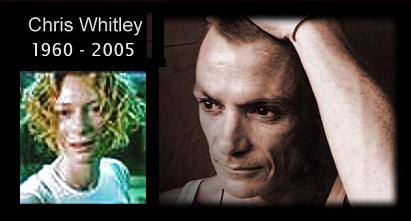
who died on Sunday,
November 20, 2005:
Angels
Even devils too
Wait to show
How far we come
To joy
Wednesday, November 23, 2005 12:00 PM
Also on Saint Cecilia's Day(Release date: 11/22/2005)...
Illustrated

Reba #1's
Reba McEntire
Album Length Compact Disc
For Reba,
a very bright star,
the symbol of Venus
always shines:

Tuesday, November 22, 2005 3:09 PM
For St. Cecilia's Day--A flashback to June 8, 2004:
Illustrated

Paul Klee
From
today's
Arts & Letters Daily:
Critics
in Mozart’s agethrew up their hands
at the dark Don Giovanni,
calling it perverse, amoral.
These days, such qualities
turn us on... more»

Paul Klee,
The Bavarian Don Giovanni,
1919, watercolor and ink
on paper
There's a little black spot
on the sun today....
Tuesday, November 22, 2005 4:23 AM
(continued)
By LARRY CELONA, JOHN MAZOR and DAN MANGAN
November 21, 2005 -- The former tour manager for superstars Paul Simon and Billy Joel was stabbed to death yesterday by his prostitute girlfriend on his 57th birthday less than a block from Gracie Mansion, cops said.
"It looked like a horror movie in
there," said an NYPD detective after
seeing the blood-drenched bed in the couple's sixth-floor studio at 530
East 89th St., where cops say music producer Danny Harrison was stabbed
twice in the chest with a long butcher knife by his live-in lover just
before 1 p.m.
I need a photo opportunity
I want a shot at redemption
Don't want to end up a cartoon
In a cartoon graveyard
-- Paul Simon
who also died on Sunday, Nov. 20,
with a horse from yesterday's entry.

And his name, that sat on him,
was Death. And Hell
followed with him."
-- Johnny Cash
Related material:
Log24 entries of
Sept. 15, 2003.
Monday, November 21, 2005 12:00 PM
Tragedy:
Detail by
Lou Myers,
1915-2005

Myers died yesterday,
the 30th anniversary
of the death of
Francisco Franco.
For the source of
the above picture,
see ZAKS illustrators.
Original caption of cartoon
from which the above picture
was excerpted:
"Picasso's tragedy was that
he was an artist who
ran out of new things
to paint."
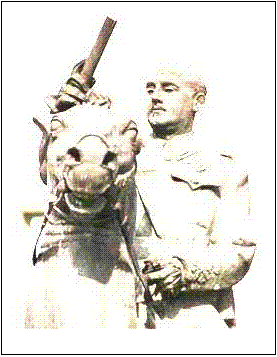
"... behold: a pale horse.
And his name,
that sat on him,
was Death. And Hell
followed with him."
-- Johnny Cash
Sunday, November 20, 2005 4:04 PM


"There is a pleasantly discursive treatment of Pontius Pilate's unanswered question 'What is truth?'"
-- H. S. M. Coxeter,
1987, introduction to Richard J. Trudeau's remarks on the "Story
Theory" of truth as opposed to the "Diamond Theory" of truth in The Non-Euclidean Revolution
"A new epistemology is emerging to replace the Diamond Theory of truth.
I will call it the 'Story Theory' of truth: There are no diamonds.
People make up stories about what they experience. Stories that catch
on are called 'true.' The Story Theory of truth is itself a story that
is catching on. It is being told and retold, with increasing frequency,
by thinkers of many stripes*...."
-- Richard J. Trudeau in
The Non-Euclidean Revolution
"'Deniers' of truth... insist that each of us is
trapped in his own
point of view; we make up stories about the world and, in an exercise
of power, try to impose them on others."
-- Jim Holt in The New Yorker.
Exercise of Power:
Show that a white horse--

a figure not unlike the
symbol of the mathematics
publisher Springer--
is traced, within a naturally
arranged rectangular array of
polynomials, by the powers of x
modulo a polynomial
irreducible over a Galois field.
This horse, or chess knight--
"Springer," in German--
plays a role in "Diamond Theory"
(a phrase used in finite geometry
in 1976, some years before its use
by Trudeau in the above book).
Related
material
On this date:
In 1490, The White Knight
(Tirant lo Blanc  )--
)--
a major influence on Cervantes--
was published, and in 1910
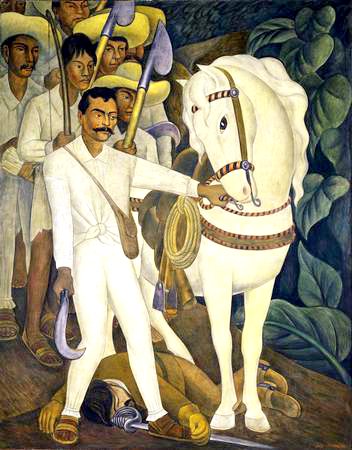
the Mexican
Revolution began.
Illustration:
Zapata by Diego Rivera,
Museum of Modern Art,
New York
"First
published in the Catalan language in Valencia in 1490.... Reviewing the
first modern Spanish translation in 1969 (Franco had ruthlessly
suppressed the Catalan language and literature), Mario Vargas Llosa
hailed the epic's author as 'the first of that lineage of
God-supplanters-- Fielding, Balzac, Dickens, Flaubert, Tolstoy, Joyce,
Faulkner-- who try to create in their novels an all-encompassing
reality.'"
Friday, November 18, 2005 2:56 AM
a fight for love and...
Wikipedia on the tesseract:
Robert A. Heinlein in Glory Road:
And opened it again.
And kept on opening it-- And kept right on unfolding its sides and letting them down until the durn thing was the size of a small moving van and even more packed....
... Anyone who has studied math knows that the inside does not have to be smaller than the outside, in theory.... Rufo's baggage just carried the principle further."
Johnny Cash: "And behold, a white horse."
On The Last Battle, a book in the Narnia series by C. S. Lewis:
Lewis said in "The Weight of Glory"--
See the description of the Eater of Souls in Glory Road and of Scientism in
- and the C. S. Lewis classic,
That Hideous Strength.
Friday, November 18, 2005 1:00 AM
One night in Bangkok
and the world's your oyster...
Tonight's Bangkok Post
on a new $100 laptop
from an MIT designer:

Details from Wired News
Kevin Poulsen, 12:58 PM Nov. 17, 2005 PT:
TUNIS, Tunisia -- If tech luminary Nicholas Negroponte has his way, the pale light from rugged, hand-cranked $100 laptops will illuminate homes in villages and townships throughout the developing world, and give every child on the planet a computer of their own by 2010.
The MIT Media Lab and Wired magazine founder stood shoulder to shoulder with U.N. Secretary-General Kofi Annan to unveil the first working prototype of the "$100 laptop" -- currently more like $110 -- at the U.N. World Summit on the Information Society here Wednesday. The Linux-based machine instantly became the hit of the show, and Thursday saw diplomats and dignitaries, reporters and TV cameras perpetually crowded around the booth of One Laptop Per Child -- Negroponte's nonprofit -- craning for a glimpse of the toy-like tote.
With its cheery green coloring and Tonka-tough shell, the laptop certainly looks cool. It boasts a 7-inch screen that swivels like a tablet PC, and an electricity-generating crank that provides 40 minutes of power from a minute of grinding.Thursday, November 17, 2005 2:22 PM
(See also Time and
All the King's Horses.)
LEAR:
Now you better do some thinkin'
then you'll find
You got the only daddy
that'll walk the line.

FOOL:
I've always been different
with one foot over the line....
I've always been crazy
but it's kept me from going insane.
For related material, see
and last night's winner of

the National Book Award
for nonfiction, i.e.,
"all hard facts, all reality, with
no illusions and no fantasy."
|
A Story That Works
|
Thursday, November 17, 2005 4:04 AM
Wednesday, November 16, 2005 4:04 PM
Images"The best of the books are the ones... where the allegory is at a minimum and the images just flow."
"'Everything began with images,' Lewis wrote...."
"We go to the writing of the marvellous, and to children’s books, for stories, certainly, and for the epic possibilities of good and evil in confrontation, not yet so mixed as they are in life. But we go, above all, for imagery: it is the force of imagery that carries us forward. We have a longing for inexplicable sublime imagery...."
"The religious believer finds consolation, and relief, too, in the world of magic exactly because it is at odds with the necessarily straitened and punitive morality of organized worship, even if the believer is, like Lewis, reluctant to admit it. The irrational images-- the street lamp in the snow and the silver chair and the speaking horse-- are as much an escape for the Christian imagination as for the rationalist, and we sense a deeper joy in Lewis’s prose as it escapes from the demands of Christian belief into the darker realm of magic. As for faith, well, a handful of images is as good as an armful of arguments, as the old apostles always knew."
Related material:

Click on pictures for details.
See also Windmills and
Verbum sat sapienti?
as well as
an essay
at Calvin College
on Simone Weil,
Charles Williams,
Dante, and
"the way of images."