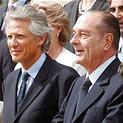
From the journal of Steven H. Cullinane...
2005 June 1-9
Thursday, June 9, 2005
2:56 AM
Kernel of Eternity
continued
"At that instant he saw,
in one blaze of light,
an image of unutterable conviction....
the core of life, the essential pattern
whence all other things proceed,
the kernel of eternity."
-- Thomas Wolfe,
Of Time and the River
From "The Relations between
Poetry and Painting," by Wallace Stevens:
"The
theory of poetry, that is to say, the total of the theories of poetry,
often seems to become in time a mystical theology or, more simply, a
mystique. The reason for this must by now be clear. The reason is the
same reason why the pictures in a museum of modern art often seem to
become in time a mystical aesthetic, a prodigious search of appearance,
as if to find a way of saying and of establishing that all things,
whether below or above appearance, are one and that it is only through
reality, in which they are reflected or, it may be, joined together,
that we can reach them. Under such stress, reality changes from
substance to subtlety.... It was from the point of view of... [such a]
subtlety that Klee could write: 'But he is one chosen that today comes
near to the secret places where original law fosters all evolution. And
what artist would not establish himself there where the organic center
of all movement in time and space—which he calls the mind or heart of
creation— determines every function.' Conceding that this sounds a bit
like sacerdotal jargon, that is not too much to allow to those that
have helped to create a new reality, a modern reality, since what has
been created is nothing less."
As
yesterday's entry "Kernel of Eternity" indicated, the word "kernel" has
a definite meaning in mathematics. The Klein four group, beloved
of structural anthropologists and art theorists, is a particularly apt example of a kernel. (See PlanetMath for details.)
Diagrams of this group may have influenced Giovanni Sambin, professor of mathematical logic at the University of Padua; the following impressive-looking diagram is from Sambin's
Sambin argues that this diagram reflects some of the basic structures
of thought itself... making it perhaps one way to describe what
Klee called the "mind or heart of creation."
But this
verges on what Stevens called the sacerdotal. It seems that a
simple picture of the "kernel of eternity" as the four group, a picture
without reference to logic or philosophy, and without distracting
letters and labels, is required. The following is my attempt to
supply such a picture:

This is a picture of the four group
as a permutation group on four points.
Pairs of colored arrows indicate the three
transformations other than the identity,
which may be regarded either as
invisible or as rendered by
the four black points themselves.
Update of 7:45 PM Thursday:
Review of the above (see comments)
by a typical Xanga reader:
"Ur a FUCKIN' LOSER!!!!! LMFAO!!!!"
For more merriment, see
The Optical Unconscious
and
The Painted Word.
A recent Xangan movie review:
"Annakin's
an idiot, but he's not an idiot because that's the way the character
works, he's an idiot because George Lucas was too lazy to make him
anything else. He has to descend to the Daaaahk Side, but the dark side
never really seems all that dark. He kills children, but offscreen. We
never get to see the transformation. One minute he cares about the
republic, the next he's killing his friends, and then for some reason
he's duelling with Obi Wan on a lava flow. Who cares? Not me....
So a big ol' fuck you to George Lucas. Fuck you, George!"
Both Xangans seem to be fluent in what Tom Wolfe has called the "fuck patois."
A related suggestion from Google:
These remarks from Xangans and Google
suggest the following photo gift,
based on a 2003 journal entry:

Wednesday, June 8, 2005
6:26 PM
The Power of Myth
"Myths have no life of their own. They wait for us to give them flesh."
-- Albert Camus, Prometheus in the Underworld
"Prometheus -- One of the Titans of Greek myth, famous as a benefactor of man"
-- Log24 yesterday, 9:39 PM
The New York Times on today's maiden speech of the new prime minister of France:
"PARIS, June 8 -- ... In replying to his critics, Mr. De Villepin
quoted from Albert Camus's description of Prometheus, saying, 'He is
harder than his rock and more patient than his vulture.'"
Wednesday, June 8, 2005
4:00 PM
Kernel of Eternity
Today is the feast day of Saint Gerard Manley Hopkins, "immortal diamond."
"At
that instant he saw, in one blaze of light, an image of unutterable
conviction, the reason why the artist works and lives and has his
being--the reward he seeks--the only reward he really cares about,
without which there is nothing. It is to snare the spirits of mankind
in nets of magic, to make his life prevail through his creation, to
wreak the vision of his life, the rude and painful substance of his own
experience, into the congruence of blazing and enchanted images that
are themselves the core of life, the essential pattern whence all other
things proceed, the kernel of eternity."
-- Thomas Wolfe, Of Time and the River
"...
the stabiliser of an octad preserves the affine space structure on its
complement, and (from the construction) induces AGL(4,2) on it. (It
induces A8 on the octad, the kernel of this action being the translation group of the affine space.)"
-- Peter J. Cameron,
The Geometry of the Mathieu Groups (pdf)
"... donc Dieu existe, réponse!"
-- attributed, some say falsely, to Leonhard Euler
Wednesday, June 8, 2005
11:11 AM
Quest
"Mike Nichols, who oversaw Monty Python's Spamalot, picked up the prize for directing a musical.
A
somewhat flustered Nichols told the audience he had forgotten what he
intended to say, but then went on to thank his company and Eric Idle,
'from whom all blessings flow.'"
-- The Age, Monday, June 6
One of my
favorite books:
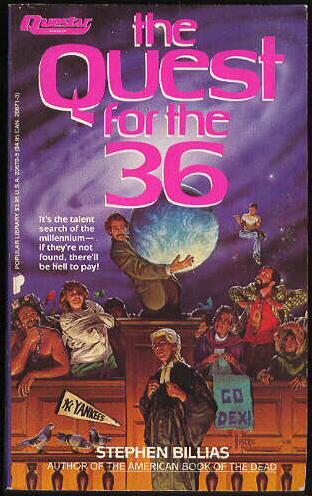
Excerpt from the chapter
"All Blessings Flow (Very Large Array)"--
"I started to cry. My search was over.
In a home for the deranged I had found
the last of the holy Thirty-Six....
'Beam me up, Scotty.'"
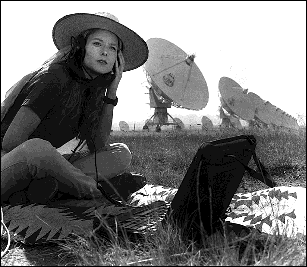
Related material:
Tuesday, June 7, 2005
9:39 PM
|
939, or
Too Clever by Half
On the new
Prime Minister of France:
"In Praise of Those Who Stole the Fire,
M. de Villepin's grandest literary effort to date.... will enhance his
reputation within a small Paris set, but not in Washington, where he is
already regarded as too clever by half."
-- Philip Delves Broughton,
"De Villepin bares soul
as France's politician poet ,"
The Telegraph, May 23, 2003
From a Study Guide to Frankenstein, or The Modern Prometheus:
The
Titan Prometheus was "'... chained to Mount Caucasus where an eagle
preyed on his liver' (Bullfinch [sic] 939)." The study guide does
not say whether 939 is a page number or paragraph number, nor does it
name which edition of Bulfinch's Mythology is meant.
The rest of the story:
"Prometheus -- One of the Titans of Greek myth, famous as a
benefactor of man. Zeus had him make men out of mud and water; however,
pitying mankind, he stole fire from heaven and gave it to them. As
punishment, Zeus chained him to Mount Caucasus where an eagle preyed on
his liver all day, the liver being renewed at night. Hercules
eventually released him and killed the eagle. Zeus sent Pandora to
Earth with her box of evils to balance the gift of fire."
Postscript for John Nash: Why 939 signifies "too clever by half" -- see 6:26 and 313. See also  
|
Tuesday, June 7, 2005
6:26 PM
Blair Insists
EU Treaty Not Dead
From BBC News:
Is it me or have we all been locked in a Monty Python sketch this week? ... Dutch Voter: Hello, I wish to complain about this treaty what I voted for not half an hour ago. Eurocrat: Oh yes, the EU Constitution. What, uh... what's wrong with it? DV: I'll tell you what's wrong with it, my lad. Its dead, that's what's wrong with it! E: No, no, uh... what we need now is a period of reflection. DV: Look matey, I know a dead treaty when I see one, and I'm looking at one right now. E: No, no it's not dead, it's being ratified. Remarkable treaty, the EU Constitution, innit, eh? 300 pages! DV:
The verbosity don't enter into it, my lad. It's stone dead. It's passed
on! This treaty is no more! It has ceased to be! It's expired and gone
to meet its maker! It's a stiff! Bereft of life, it rests in peace! If
the senior politicians hadn't been ramming it down our throats, it'd be
pushing up daisies! It's off the table. It's kicked the waste paper
basket. It's in the shredder. It's shuffled off its mortal coil, run
down the curtain and joined the bleedin' choir invisible! THIS IS AN
EX-TREATY! E: Well, I'd better replace it then. [takes a quick peek around Brussels] E: Sorry squire, I've had a look around Brussels, and uh, we're right out of treaties. DV: I see. I see, I get the picture. E: I've got a Charter of Fundamental Rights. DV: Pray, does it lead us to an increasingly united federation of nation states? E: Not really. DV: WELL IT'S HARDLY A BLOODY REPLACEMENT THEN, IS IT? -- Jonathan Rowles, Fleet
|
Tuesday, June 7, 2005
1:01 PM
"A SINGLE VERSE by Rimbaud,"
writes Dominique de Villepin,
the new French Prime Minister,
"shines like a powder trail
on a day’s horizon.
It sets it ablaze all at once,
explodes all limits,
draws the eyes
to other heavens."
-- Ben Macintyre,
The London Times, June 4:
When Rimbaud Meets Rambo
"Room 101 was the place where your worst fears were realised in George Orwell's classic Nineteen Eighty-Four. [101 was also]
Professor Nash's office number
in the movie 'A Beautiful Mind.'" -- Prime Curios
Classics Illustrated --
|
Monday, June 6, 2005
9:00 PM
Monday, June 6, 2005
6:01 PM
It was the best of times,
it was the worst of times.
Monday, June 6, 2005
1:00 PM
I

A. A violent order is a disorder; and
 B. A great disorder is an order. These
 Two things are one. (Pages of illustrations.)

   IV

A. Well, an old order is a violent one.
 This proves nothing. Just one more truth, one more
 Element in the immense disorder of truths.

B. It is April as I write. The wind
 Is blowing after days of constant rain.
 All this, of course, will come to summer soon.
 But suppose the disorder of truths should ever come
 To an order, most Plantagenet, most fixed. . . .
 A great disorder is an order. Now, A
 And B are not like statuary, posed
 For a vista in the Louvre. They are things chalked
 On the sidewalk so that the pensive man may see.

V

The pensive man . . . He sees that eagle float
 For which the intricate Alps are a single nest.
Related material:
"Derrida
on Plato on writing says 'In order for these contrary values
(good/evil, true/false, essence/appearance, inside/outside, etc.) to be
in opposition, each of the terms must be simply EXTERNAL to the other,
which means that one of these oppositions (the opposition between
inside and outside) must already be accredited as the matrix of all
possible opposition.' "
-- Peter J. Leithart Lps. The keys to. Given! A way a lone
a last a loved a long the
PARIS,
1922-1939 |
"There is never any ending to Paris."
-- Ernest Hemingway
|
Monday, June 6, 2005
3:35 AM
Mot Juste?
From today's New York Times, on the effort of Paris to be chosen as the host of the 2012 Olympics:
"'To have the games would bring a little fun, as you say, a breath of fresh air,' said Benoît Génuini, president of the French operation of Accenture,
a global consulting company, on a balcony of the Louvre last week
during an event to highlight the city's cultural attractions as an
Olympic host. He remarked that the country was morose and that the city
itself had become a sort of museum. 'The games would put Paris back in
the saddle and lead it into the 21st century,' he said, 'get it out of
its stupor.'"
Attributed to Dominique de Villepin, the new Prime Minister of France: words about his book on poetry--
Saturday, June 4, 2005
7:00 PM
Drama of the Diagonal
The 4x4 Square:
French Perspectives
Earendil_Silmarils:

Les Anamorphoses:

"Pour construire un dessin en perspective,
le peintre trace sur sa toile des repères:
la ligne d'horizon (1),
le point de fuite principal (2)
où se rencontre les lignes de fuite (3)
et le point de fuite des diagonales (4)."
_______________________________
Serge Mehl,
Perspective &
Géométrie Projective:
"... la géométrie projective était souvent
synonyme de géométrie supérieure.
Elle s'opposait à la géométrie
euclidienne: élémentaire...
La géométrie projective, certes supérieure
car assez ardue, permet d'établir
de façon élégante des résultats de
la géométrie élémentaire."
Similarly...
Finite projective geometry
(in particular, Galois geometry)
is certainly superior to
the elementary geometry of
quilt-pattern symmetry
and allows us to establish
de façon élégante
some results of that
elementary geometry.
Other Related Material...
from algebra rather than
geometry, and from a German
rather than from the French:
"This is the relativity problem:
to fix objectively a class of
equivalent coordinatizations
and to ascertain
the group of transformations S
mediating between them."
-- Hermann Weyl,
The Classical Groups,
Princeton U. Press, 1946

Evariste Galois
Weyl also says that the profound branch
of mathematics known as Galois theory
"... is nothing else but the
relativity theory for the set Sigma,
a set which, by its discrete and
finite character, is conceptually
so much simpler than the
infinite set of points in space
or space-time dealt with
by ordinary relativity theory."
-- Weyl, Symmetry,
Princeton U. Press, 1952
Metaphor and Algebra...
"Perhaps every science must
start with metaphor
and end with algebra;
and perhaps without metaphor
there would never have been
any algebra."
-- attributed, in varying forms, to
Max Black, Models and Metaphors, 1962 For metaphor and
algebra combined, see

"Symmetry invariance
in a diamond ring,"
A.M.S. abstract 79T-A37,
Notices of the
American Mathematical Society,
February 1979, pages A-193, 194 —
the original version of the 4x4 case
of the diamond theorem.
More on Max Black...
"When
approaching unfamiliar territory, we often, as observed earlier, try to
describe or frame the novel situation using metaphors based on
relations perceived in a familiar domain, and by using our powers of
association, and our ability to exploit the structural similarity, we
go on to conjecture new features for consideration, often not noticed
at the outset. The metaphor works, according to Max Black, by
transferring the associated ideas and implications of the secondary to
the primary system, and by selecting, emphasising and suppressing
features of the primary in such a way that new slants on it are
illuminated."
-- Paul Thompson, University College, Oxford,
The Nature and Role of Intuition
in Mathematical Epistemology
A New Slant...
That
intuition, metaphor (i.e., analogy), and association may lead us astray
is well known. The examples of French perspective above show what
might happen if someone ignorant of finite geometry were to associate
the phrase "4x4 square" with the phrase "projective geometry."
The results are ridiculously inappropriate, but at least the second
example does, literally, illuminate "new slants"-- i.e., diagonals--
within the perspective drawing of the 4x4 square.
Similarly,
analogy led the ancient Greeks to believe that the diagonal of a square
is commensurate with the side... until someone gave them a new slant on the subject.
Saturday, June 4, 2005
2:00 PM
|
Drama of the Diagonal,
continued
"I could name other writers
who share this sense of a world
larger than ourselves; their writing provides
a field in which something like
a sacramental imagination is clearly at play."
-- Paul Mariani,
God and the Imagination
"... the horizon is not the limit of meaning,
but that which extends meaning
from what is directly given
to the whole context in which it is given,
including a sense of a world."
X
It is a giant, always, that is evolved,
To be in scale, unless virtue cuts him, snips
Both size and solitude or thinks it does,
As in a signed photograph on a mantelpiece.
But the virtuoso never leaves his shape,
Still on the horizon elongates his cuts,
And still angelic and still plenteous,
Imposes power by the power of his form.
XI
Here, then, is an abstraction given head,
A giant on the horizon, given arms,
A massive body and long legs, stretched out,
A definition with an illustration, not
Too exactly labeled, a large among the smalls
Of it, a close, parental magnitude,
At the center of the horizon, concentrum, grave
And prodigious person, patron of origins.
XII
That's it. The lover writes, the believer hears,
The poet mumbles and the painter sees,
Each one, his fated eccentricity,
As a part, but part, but tenacious particle,
Of the skeleton of the ether, the total
Of letters, prophecies, perceptions, clods
Of color, the giant of nothingness, each one
And the giant ever changing, living in change.
Related material
(Click on pictures
for details.)

Logos Alogos
by S. H. Cullinane
|
Thursday, June 2, 2005
2:00 PM
Related quotation:
Barry Mazur on a seminal paper of algebraist Saunders Mac Lane:
The
paper was rejected "because the editor thought that it was 'more devoid
of content' than any other he had read. 'Saunders wrote back and
said, "That’s the point,"' Mazur said. 'And in some ways that’s
the genius of it. It’s the barest, most Beckett-like vocabulary that
incorporates the theory and nothing else.'"
Other related material:
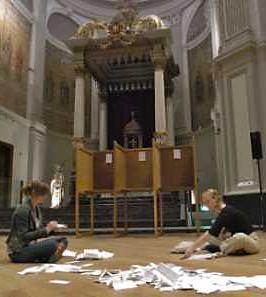
From Reuters:
"Members of the ballot commission manually count EU referendum votes in the Duifkerk
in Amsterdam June 1st, 2005. Dutch voters soundly rejected the European
Union constitution in a referendum on June 1..... Photo by...
Ronald Fleurbaaij"
"M.
de Villepin positively worships Napoleon, and models himself after his
hero. In a 600-page biography, Villepin wrote admiringly about the
difference between great men like Napoleon and the 'common run' of men.
It is worth reading every word carefully.
'Here
we touch on that particular essence of great men, on what distinguishes
Napoleon or Alexander, Caesar or de Gaulle, from the common run. It is
excess, exaltation, and a taste for risk that forms their genius. It is
why they are often better understood in their élan by writers
and poets, who are possessed of the same thirst for the absolute, than
by those who pray at the altar of facts.'
(New Republic)
And in praise of French nationalism, de Villepin wrote,
'The
Gaullist adventure renewed the élan of [Napoleon's] Consulate
through the restoration of a strong executive and the authority of the
State, the same scorn for political parties and for compromise, a
common taste for action, and an obsession with the general interest and
the grandeur of France.'
Those
words come straight from 1800. Napoleon’s 'genius,' his 'thirst for the
absolute,' 'excess, exaltation, and a taste for risk,' 'a strong
executive and the authority of the State,' 'his 'scorn for political
parties and for compromise,' and 'an obsession with the grandeur of
France' --- it is all classic national hero worship. But today that
kind of thinking is used to promote a new vision of destiny, the
European Union."
-- James Lewis at The American Thinker,
Jan. 4, 2005
Wednesday, June 1, 2005
7:20 PM
The Road to Brussels
"History is not, of course, a cookbook offering pretested recipes. It
teaches by analogy, not by maxims. It can illuminate the consequences
of actions in comparable situations, yet each generation must discover
for itself what situations are in fact comparable."
"Along
the road from Ohain to Braine-l'Alleud that hemmed in the plain of
Mont-St-Jean and cut at right angles the road to Brussels, which the
Emperor wished to take, he [Wellington] had placed 67,000 men and 184
cannons." -- Fr. Libert, Waterloo
Wednesday, June 1, 2005
3:57 AM
Just Say Nee
 Click on picture
for details.
Click on picture
for details.