Miss Gould,
photo from
Oberlin site
Monday, February 28, 2005 7:00 PM
The Meaning of 3:16"Wittgenstein once averred that 'there can never be surprises in logic.'""Miss Gould," by David Remnick, pages 34-35:
"She was a fiend for problems of sequence and logic.... Her effect on a piece of writing could be like that of a master tailor on a suit; what had once seemed slovenly and overwrought was suddenly trig and handsome."Suddenly:

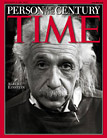
Einstein on his
"holy geometry book" --
"Here were assertions, as for example the intersection of the three altitudes of a triangle in one point, which-- though by no means evident-- could nevertheless be proved with such certainty that any doubt appeared to be out of the question. This lucidity and certainty made an indescribable impression upon me."

"I need a photo opportunity,
I want a shot at redemption...."
Monday, February 28, 2005 3:16 PM
Monday, February 28, 2005 1:23 AM
Terrain
On the 77th annual Academy Awards:"... in the Sarabande of Suite 6 Ma's phrasing suggests we are in the same spiritual terrain as Beethoven's late quartets."
-- Thomas May
Amen.
For more on Bach, quartets, and film, see Eight is a Gate and 8/8/04.
Sunday, February 27, 2005 3:00 PM


 )...."
Saturday, February 26, 2005 1:23 PM
Friday, February 25, 2005 10:53 AM
Mr. Holland's Week,
continued
The question is widened and elongated in the case of the Juilliard String Quartet."
-- Bernard Holland in the New York Times,
Monday, May 20, 1996
"Robert Koff, a founding member of the Juilliard String Quartet and a concert violinist who performed on modern and Baroque instruments, died on Tuesday at his home in Lexington, Mass. He was 86....
Mr. Koff, along with the violinist Robert Mann, the violist Raphael Hillyer and the cellist Arthur Winograd, formed the Juilliard String Quartet in 1946...."
-- Allan Kozinn in the New York Times,
Friday, February 25, 2005
"One listened, for example, to the dazed, hymnlike beauty of the F Major's Lento assai, and then to the acid that Beethoven sprinkles all around it. It is a wrestling match, awesome but also poignant. Schubert at the end of his life had already passed on to another level of spirit. Beethoven went back and forth between the temporal world and the world beyond right up to his dying day."
-- Bernard Holland in the New York Times,
Monday, May 20, 1996
Words move, music moves
Related material: Elegance and the following description of Beethoven's last quartet.
| Program note by Eric Bromberger: String Quartet in F major, Op. 135 This
quartet - Beethoven's last complete composition - comes from the fall
of 1826, one of the blackest moments in his life. During the previous
two years, Beethoven had written three string quartets on commission
from Prince Nikolas Galitzin, and another, the Quartet in C-sharp minor, Op. 131,
composed between January and June 1826. Even then Beethoven was not
done with the possibilities of the string quartet: he pressed on with
yet another, making sketches for the Quartet in F major during the
summer of 1826. At that point his
world collapsed. His twenty-year-old nephew Karl, who had become
Beethoven's ward after a bitter court fight with the boy's mother,
attempted suicide. The composer was shattered: friends reported that he
suddenly looked seventy years old. When the young man had recovered
enough to travel, Beethoven took him - and the sketches for the new
quartet - to the country home of Beethoven's brother Johann in
Gneixendorf, a village about thirty miles west of Vienna. Here, as he
nursed Karl back to health, Beethoven's own health began to fail. He
would get up and compose at dawn, spend his days walking through the
fields, and then resume composing in the evening. In Gneixendorf he
completed the Quartet in F major in October and wrote a new finale to his earlier Quartet in B-flat major, Op. 130.
These were his final works. When Beethoven return to Vienna in
December, he took almost immediately to bed and died the following
March. One would expect music composed under such turbulent circumstances to be anguished, but the Quartet in F major
is radiant music, full of sunlight - it is as if Beethoven achieved in
this quartet the peace unavailable to him in life. This is the shortest
of the late quartets, and many critics have noted that while this music
remains very much in Beethoven's late style, it returns to the
classical proportions (and mood) of the Haydn quartets. The opening movement, significantly marked Allegretto rather than the expected Allegro,
is the one most often cited as Haydnesque. It is in sonata form -
though a sonata form without overt conflict - and Beethoven builds it
on brief thematic fragments rather than long melodies. This is poised,
relaxed music, and the finale cadence - on the falling figure that has
run throughout the movement - is remarkable for its understatement. By
contrast, the Vivace bristles with energy. Its outer sections
rocket along on a sharply-syncopated main idea, while the vigorous trio
sends the first violin sailing high above the other voices. The very
ending is impressive: the music grows quiet, comes to a moment of
stasis, and then Beethoven wrenches it to a stop with a sudden,
stinging surprise. The slow movement - Beethoven carefully marks it Lento assai, cantante e tranquillo
- is built on the first violin's heartfelt opening melody; the even
slower middle section, full of halting rhythms, spans only ten measures
before the return of the opening material, now elaborately decorated.
The final movement has occasioned the most comment. In the manuscript,
Beethoven noted two three-note mottoes at its beginning under the
heading Der schwer gefasste Entschluss: "The Difficult
Resolution." The first, solemnly intoned by viola and cello, asks the
question: "Muss es sein?" ("Must it be?"). The violins' inverted
answer, which comes at the Allegro, is set to the words "Es
muss sein!" ("It must be!"). Coupled with the fact that this quartet is
virtually Beethoven's last composition, these mottoes have given rise
to a great deal of pretentious nonsense from certain commentators,
mainly to the effect that they must represent Beethoven's last
thoughts, a stirring philosophical affirmation of life's possibilities.
The actual origins of this motto are a great deal less imposing, for
they arose from a dispute over an unpaid bill, and as a private joke
for friends Beethoven wrote a humorous canon on the dispute, the theme
of which he then later adapted for this quartet movement. In any case,
the mottoes furnish material for what turns out to be a powerful but
essentially cheerful movement. The coda, which begins pizzicato,
gradually gives way to bowed notes and a cadence on the "Es muss sein!"
motto. |
Thursday, February 24, 2005 12:00 PM


Thursday, February 24, 2005 2:45 AM
It's Quarter to Three
(continued)
I could tell you a lot
But you gotta be true to your code....
Tuesday, February 22, 2005 2:20 PM
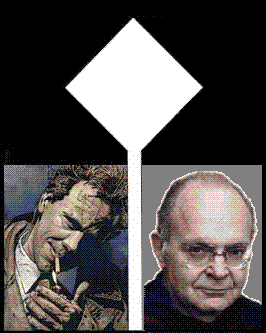
John Constantine,
cartoon character, and
Donald E. Knuth,
Lutheran mathematician
Tuesday, February 22, 2005 12:48 PM

Hunter S. Thompson, photos
from The New York Times
Excerpt from Fritz Leiber's
"Damnation Morning," 1959:
Monday, February 21, 2005 2:45 AM

Monday, February 21, 2005 1:09 AM

Sunday, February 20, 2005 11:47 PM
Hunter ThompsonSunday, February 20, 2005 2:20 PM
Relativity Blues"In The Death of Adam, Robinson shows Jean Cauvin to be the foremost prophet of humanism whose Protestant teachings against the hierarchies of the Roman church set in motion the intellectual movements that promoted widespread literacy among the middle and lower classes, led to both the American and French revolutions, and not only freed African slaves in the United States but brought about suffrage for women. It's odd then that through our culture's reverse historicism, the term 'Calvinism' has come to mean 'moralistic repression.'"For more on what the Calvinist publishing firm Eerdmans calls "redemptive transcendence," see various July 2003 Log24.net entries. If these entries include a fair amount of what Princeton philosophers call bullshit, let the Princeton philosophers meditate on the summary of Harvard philosophy quoted here on November 5 of last year, as well as the remarks of November 5, 2003, and those of November 5, 2002.
"Lord Arglay had a suspicion that the Stone would be purely logical. Yes, he thought, but what, in that sense, were the rules of its pure logic?"A recent answer:
) ).
). ?
?Saturday, February 19, 2005 4:01 PM
"There is no highway in the sky."
-- Quotation attributed to
Albert Einstein.
(See Gotthard Günther's website
"Achilles and the Tortoise, Part 2".)
"Don't give up until you
Drink from the silver cup
And ride that highway in the sky."
-- America, 1974
Finally, after years of waiting, it is your turn to put a question to the Oracle of Philosophy...you humbly approach and ask the question that has been consuming you for as long as you can remember: 'Tell me, O Oracle, what there is. What sorts of things exist?' To this the Oracle responds: 'What? You want the whole list? ...I will tell you this: everything there is is concrete; nothing there is is abstract....'Suppose we continue the fable a little. Impressed with what the Oracle has told you, you return to civilization to spread the concrete gospel. Your first stop is at [your school here]...."

Friday, February 18, 2005 3:33 PM
In Hoc Signo
Sources:
Hellblazer: Highwater,
from a graphic-novel
series that is the source
of Keanu Reeves's latest
spiritual adventure --

Another source...
The home page of Donald E. Knuth.
 .
.
"When there's nothing to believe in
Still you're coming back,
you're running back
You're coming back for more
So put me on a highway...."
-- The Eagles, 1975
Thursday, February 17, 2005 1:00 PM
)). ?"'What is this Stone?' Chloe asked....
'...It is told that, when the Merciful One
made the worlds, first of all He created
that Stone and gave it to the Divine One
whom the Jews call Shekinah,
and as she gazed upon it
the universes arose and had being.'"
- Many Dimensions,
by Charles Williams, 1931
(Eerdmans paperback,
April 1979, pp. 43-44)
"Its discoverer was of the opinion that
he had produced the equivalent of
the primordial protomatter
which exploded into the Universe."
- The Stars My Destination,
by Alfred Bester, 1956
(Vintage hardcover,
July 1996, p. 216)
Wednesday, February 16, 2005 1:25 AM
Tuesday, February 15, 2005 5:28 PM

Monday, February 14, 2005 3:21 PM
Sunday, February 13, 2005 8:00 PM
Eight is a Gate,
continued
"The eighth letter of the Hebrew alphabet is called 'Chet' (rhymes
with 'let') and has the (light scraping) sound of 'ch' as in 'Bach.'"
Sunday, February 13, 2005 2:00 PM
"The old men know
when an old man dies."
-- Ogden Nash

Mais il y a un autre sens dans la dédicace que je trouve plus profond encore. Il s'agit de se dédier soi-même. Le terme que l'on traduit par dédicace est en japonais ekô, littéralement "se tourner vers". Il est composé de deux idéogrammes, e qui signifie "tourner le dos, se tourner, revenir en arrière" et kô, "faire face, s'adresser à ".
Dans l'école Tendai, on explique que ce terme possède trois sens:
- tourner le dos (e) aux phénomènes et faire face (kô) au principe;
- tourner le dos (e) au soi et faire face (kô) aux autres;
- tourner le dos (e) aux causes et faire face (kô) aux effets.
On pourrait dire regarder l'essentiel, regarder autrui et regarder le futur. Le terme évoque un retournement. Il s'agit d'aller à rebours de nos fonctionnements habituels, de bouleverser nos attitudes, se détourner de l'égocentrisme pour aller dans le sens de l'ouverture, ne plus se fourvoyer dans l'erreur mais s'ouvrir à la clarté.
Ekô a bien dans les textes bouddhistes un double sens, c'est à la fois dédier quelque chose comme la récitation d'un texte mais également se dédier soi-même. Dans cette deuxième attitude, c'est soi-même, tout entier, corps et esprit, qui est l'objet de la dédicace. Plus qu'on donne, on se donne. On trouve les deux sens chez Dôgen qui n'ignore pas le "transfert des mérites" mais qui sait que ekô se confond avec la voie de l'éveil. Il y a par exemple ce passage dans le Shôbôgenzô Zuimonki:
"Dans le bouddhisme, il y a ceux qui sont foncièrement doués d'amour et de compassion, de connaissance et de sagesse. Pour peu qu'ils étudient, ceux qui en sont dépourvus les réaliseront. Ils n'ont qu'Ã abandonner le corps et l'esprit, se dédier (ekô) dans le grand océan du bouddhisme, se reposer sur les enseignements du bouddhisme et ne pas rester dans les préjugés personnels."
[Buppô ni wa, jihi chie mo yori sonawaru hito mo ari. Tatoi naki hito mo gaku sureba uru nari. Tada shinjin o tomoni hôge shite, buppô no daikai ni ekô shite, buppô no kyô ni makasete, shikiyoku o son zuru koto nakare.]
(Shôbôgenzô zuimonki, Edition populaire, cinquième cahier, première causerie)
Le français ne peut véritablement rendre la subtilité du choix des mots de Dôgen qui utilise des figures de style typiquement chinoises comme le chiasme, l'opposition et l'appariement. Il emploie des verbes d'état d'une part : se reposer, rester, de l'autre des verbes d'action, abandonner (hôge su, lit. "laisser choir"), se dédier (ekô su, lit. "se tourner vers", qui a presque ici le sens de "se jeter"). Réaliser l'amour, la compassion, la connaissance et la sagesse nécessite une transformation, une conversion, un saut dans l'ailleurs. Ce dynamisme permet de quitter le soi égocentré pour entrer dans la dimension de l'éveil, ce que Dôgen appelle ici le bouddhisme.
Ce retournement, ekô,
possède une double dimension, Ã la fois interne et externe. D'un point
de vue intérieur, nous nous dédions à l'éveil, d'un point de vue
extérieur, nous nous dédions aux autres. Mais l'intérieur et
l'extérieur sont comme les deux faces d'une même feuille de papier.
Saturday, February 12, 2005 1:00 PM
Resurrection Blues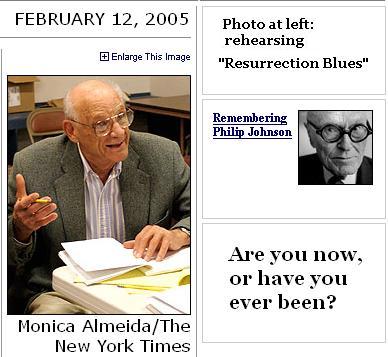
Saturday, February 12, 2005 12:00 AM
Memorial
For Abraham, Arthur, and Murray
Friday, February 11, 2005 2:09 AM
The Blues
and the
Abstract Truth
An obituary of jazz artist Jimmy Smith, who died on Mardi Gras, leads, via his album Got My Mojo Workin', to a 1961 album of Oliver Nelson that in turn suggests the following quotation:
"After this it was noised abroad that Mr. Valiant-for-truth was taken with a summons by the same post as the other, and had this for a token that the summons was true, 'That his pitcher was broken at the fountain.' (Eccles. 12:6) When he understood it, he called for his friends, and told them of it. Then said he, I am going to my Father’s; and though with great difficulty I have got hither, yet now I do not repent me of all the trouble I have been at to arrive where I am. My sword I give to him that shall succeed me in my pilgrimage, and my courage and skill to him that can get it. My marks and scars I carry with me, to be a witness for me that I have fought His battles who will now be my rewarder. When the day that he must go hence was come, many accompanied him to the river-side, into which as he went, he said, 'Death, where is thy sting?' And as he went down deeper, he said, 'Grave, where is thy victory?' (1 Cor. 15:55) So he passed over, and all the trumpets sounded for him on the other side."
-- John Bunyan, The Pilgrim's Progress
| Windows Media | Real Player | |
| Yearnin' | Listen | Listen |
| Stolen Moments | Listen | Listen |
| Cascades | Listen | Listen |
Tuesday, February 8, 2005 11:32 PM

Tuesday, February 8, 2005 10:00 AM


Sunday, February 6, 2005 3:33 PM
The Equation
David Thomson on The Last Tycoon in The Guardian on 1/29/05:"There's a passage in the book, early on, where Cecilia's narration says: 'You can take Hollywood for granted like I did, or you can dismiss it with the contempt we reserve for what we don't understand. It can be understood, too, but only dimly and in flashes. Not half a dozen men have ever been able to keep the whole equation of pictures in their heads.'....
That phrase stuck in my head: The Whole Equation was a title, waiting to have its book written. And the book might be all the more intriguing (and difficult to do) because Fitzgerald had never been able to give us the equation itself, a tidy little e=mc2. That equation was as elusive as magic: it was a vision, a power, a passion, a kind of perfection that could change the world."
David Thomson's book The Whole Equation was published recently.
Friday, February 4, 2005 7:00 PM
Fountainhead

Dominique and
Dominique

"Architecture is a dangerous profession,
because it is a poisonous mixture
of impotence and omnipotence,
in the sense that the architect
almost invariably harbors
megalomaniacal dreams
that depend upon others,
and upon circumstances,
to impose and
to realize those
fantasies and dreams."
-- Rem Koolhaas,
Conversations With Students,
quoted at http://www.treyf.com