Friday, March 31, 2006 9:00 PM

As
performed by
Princess Grace of Monaco
Friday, March 31, 2006 12:00 PM
Women's History Month continues...Thursday, March 30, 2006 8:24 PM
| Galatians 4:4 But when the fulness of the time was come....  |
Luke 2:13 And suddenly there was with the angel a multitude....  |
|
Inscape: The Christology and
Poetry of Gerard Manley Hopkins, by James Finn Cotter, University of Pittsburgh Press, 1972. See esp. the references to pleroma on, according to the index, pages 40-48, 51, 65, 70, 81, 85, 92, 93, 106, 119, 122, 132, 135, 149, 159, 162-63, 168, 169, 171, 176, 186, 193, 199, 200, 203, 207, 220, 230, 278, 285, 316n12. |
Wednesday, March 29, 2006 8:00 PM

Wednesday, March 29, 2006 12:00 PM
Tuesday, March 28, 2006 4:00 PM
| "By groping toward the light we are made to realize how deep the darkness is around us." -- Arthur Koestler, The Call Girls: A Tragi-Comedy, Random House, 1973, page 118 |
|
"It would have been |
| Sanskrit (transliterated) -- nada: the universal sound, vibration. "So Nada Brahma means not only: -- Joachim-Ernst Berendt, |
Monday, March 27, 2006 11:17 AM
A Living Church
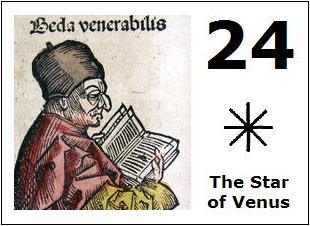
24

The Star
of Venus
"He looked at the fading light
in the western sky and saw Mercury,
or perhaps it was Venus,
gleaming at him as the evening star.
Darkness and light,
the old man thought.
It is what every hero legend is about.
The darkness which is more than death,
the light which is love, like our friend
Venus here...."
-- Roderick MacLeish, Prince Ombra
From Log24, Oct. 23, 2002:
An excerpt from
Robert A. Heinlein's
classic novel Glory
Road --
|
"I have many names. What
would you like to call me?" "Is one of them 'Helen'?" She
smiled like sunshine and I learned that she had dimples. She looked
sixteen and in her first party dress. "You are very gracious. No, she's
not even a relative. That was many, many years ago." Her face turned
thoughtful. "Would you like to call me 'Ettarre'?" "Is that one of your names?" "It
is much like one of them, allowing for different spelling and accent.
Or it could be 'Esther' just as closely. Or 'Aster.' Or even
'Estrellita.' " " 'Aster,' " I repeated. "Star. Lucky Star!" |
Sunday, March 26, 2006 5:00 PM
LOS
ANGELES -- Singer Buck Owens, the flashy rhinestone cowboy who shaped
the sound of country music... died Saturday. He was 76.
From Log24, Feb. 2, 2003:
Head White House speechwriter Michael Gerson:
"In the last two weeks, I've been returning to Hopkins. Even in the 'world's wildfire,' he asserts that 'this Jack, joke, poor potsherd, patch, matchwood, immortal diamond,/Is immortal diamond.' A comfort."
-- Vanity Fair, May 2002, page 162
Related material:
See the five Log24 entries ending with The Diamond as Big as the Monster (Dec. 21, 2005).
Note particularly the following:
From Fitzgerald's
The Diamond as Big as the Ritz:
"Now," said John eagerly, "turn out your pocket and let's see what jewels you brought along. If you made a good selection we three ought to live comfortably all the rest of our lives."
Obediently Kismine put her hand in her pocket and tossed two handfuls of glittering stones before him.
"Not so bad," cried John, enthusiastically. "They aren't very big, but-- Hello!" His expression changed as he held one of them up to the declining sun. "Why, these aren't diamonds! There's something the matter!"
"By golly!" exclaimed Kismine, with a startled look. "What an idiot I am!"
"Why, these are rhinestones!" cried John.


Sunday, March 26, 2006 2:02 PM


Sunday, March 26, 2006 12:00 AM

|
Compare and contrast:
(Click on pictures
for details.)   |
"Recollect what I have said to you,
that this world is a comedy
to those who think,
a tragedy to those who feel.
This is the quint-essence of all
I have learnt in fifty years!"
-- Horace
Walpole,
letter
to Horace Mann,
5 March, 1772
Saturday, March 25, 2006 4:23 PM


|
Liza Lou 03.03.06 - 08.04.06 White Cube is pleased to present the first UK solo exhibition by Los Angeles-based artist Liza Lou.Combining visionary, conceptual and craft approaches, Lou makes mixed-media sculptures and room-size installations that are suggestive of a transcendental reality. Lou’s work often employs familiar, domestic forms, crafted from a variety of materials such as steel, wood, papier-mâché and fibreglass, which is then covered with tiny glass beads that are painstakingly applied, one at a time, with tweezers. Dazzling and opulent and constantly glistening with refracted light, her sculptures bristle with what Peter Schjeldahl has aptly described as ‘surreal excrescence’. This exhibition, a meditation on the vulnerability of the human body and the architecture of confinement, will include several new figurative sculptures as well as two major sculptural installations. Security Fence (2005) is a large scale cage made up of four steel, chain link walls, topped by rings of barbed wire and Cell (2004-2006), as its name suggests, is a room based on the approximate dimensions of a death row prison cell, a kind of externalized map of the prisoner’s mind. Both Security Fence and Cell, like Lou’s immense earlier installations Kitchen (1991-1995) and Back Yard (1995-1999) are characterized by the absence of their real human subject. But whereas the absent subject in Kitchen and Back Yard could be imagined through the details and accessories carefully laid out to view, in Lou’s two new installations the human body is implied simply through the empty volume created by the surrounding architecture. Both Cell and Security Fence are monochromatic and employ iconic forms that make direct reference to Minimalist art in its use of repetition, formal perfection and materiality. In contrast to this, the organic form of a gnarled tree trunk, Scaffold (2005-2006), its surface covered with shimmering golden beads, juts directly out from the wall. Lou’s work has an immediate ‘shock’ content that works on different levels: first, an acknowledgement of the work’s sheer aesthetic impact and secondly the slower comprehension of the labour that underlies its construction. But whereas in Lou’s earlier works the startling clarity of the image is often a counterpoint to the lengthy process of its realization, for the execution of Cell, Lou further slowed down the process by using beads of the smallest variety with their holes all facing up in an exacting hour-by-hour approach in order to ‘use time as an art material’.Concluding this body of work are three male figures in states of anguish. In The Seer (2005-2006), a man becomes the means of turning his body back in on himself. Bent over double, his body becomes an instrument of impending self-mutilation, the surface of his body covered with silver-lined beads, placed with the exactitude and precision of a surgeon. In Homeostasis (2005-2006) a naked man stands prostrate with his hands up against the wall in an act of surrender. In this work, the dissolution between inside and outside is explored as the ornate surface of Lou’s cell-like material ‘covers’ the form while exposing the systems of the body, both corporeal and esoteric. In The Vessel (2005-2006), Christ, the universal symbol of torture and agony holds up a broken log over his shoulders. This figure is beheaded, and bejewelled, with its neck carved out, becoming a vessel into which the world deposits its pain and suffering. Lou has had numerous solo exhibitions internationally, including Museum Kunst Palast, Düsseldorf, Henie Onstad Kunstsenter, Oslo and Fondació Joan Miró, Barcelona. She was a 2002 recipient of the MacArthur Foundation Fellowship. Liza Lou’s film Born Again (2004), in which the artist tells the compelling and traumatic story* of her Pentecostal upbringing in Minnesota, will be screened at 52 Hoxton Square from 3 - 25 March courtesy of Penny Govett and Mick Kerr. Liza Lou will be discussing her work following a screening of her film at the ICA, The Mall, London on Friday 3 March at 7pm. Tickets are available from the ICA box office (+ 44 (0) 20 7930 3647). A fully illustrated catalogue, with a text by Jeanette Winterson and an interview with Tim Marlow, will accompany the exhibition. White Cube is open Tuesday to Saturday, 10.00 am to 6.00 pm.For further information please contact Honey Luard or Susannah
Hyman on + 44 (0) 20 7930 5373 * Warning note from Adrian Searle |
Friday, March 24, 2006 4:30 PM
Women's History Month continues...|
Combinatorics in higher mathematics is the study of permutations and combinations of elements in finite sets. In an interview with M.I.T. News last year, [Gian-Carlo Rota (pdf)] gave this definition of his field of study: "Combinatorics is putting different-colored marbles in different-colored boxes, seeing how many ways you can divide them. I could rephrase it in Wall Street terms, but it's really just about marbles and boxes, putting things in sets.'' Indeed, Dr. Rota added, some of his
best students go to Wall Street. "It turns out that the best financial
analysts are either mathematicians or theoretical physicists," he said. |
Rota graduated from
Princeton University in 1953.
Some may prefer the following
marbles and boxes:
Friday, March 24, 2006 2:22 PM


Friday, March 24, 2006 2:45 AM
Dreaming GameLust und Freud.
This phrase, together with the concluding song from the recent film "Good Night and Good Luck," suggests the following links (the first two from Sinatra's birthday, 2004):
One For His Baby,
One
More for the Road,
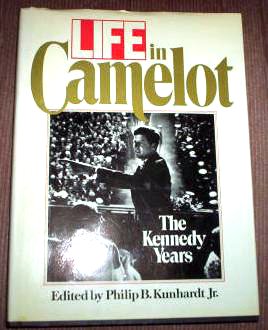
and LIFE in Camelot: The Kennedy Years.
In this morning's New York Times obituaries:
Philip B.Kunhardt Jr., editor of "LIFE in Camelot:
The Kennedy Years." Kunhardt was also the author of memoirs about
his parents, My Father's House and The Dreaming Game--
the latter about his mother, herself the author of the classic Pat
the Bunny. Kunhardt died on Tuesday.
Related material:
Tuesday's Log24 entry The Kennedy School and yesterday's entry Welcome to the Hotel Hassler.
"There were voices down the corridor,
I thought I heard them say..."
Thursday, March 23, 2006 3:03 PM

Related material:
Thursday, March 23, 2006 5:55 AM
Happy Birthday, Hassler Whitney
Wednesday, March 22, 2006 4:30 AM
Former PresidentTuesday, March 21, 2006 6:25 PM
Monday, March 20, 2006 3:33 PM
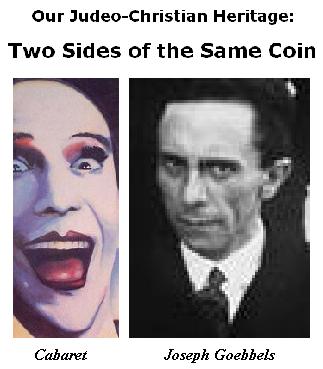

"It's Springtime for Esther and Israel!"
and to Grammy night, 2006:
Sunday, March 19, 2006 6:09 PM

Saturday, March 18, 2006 4:07 PM
ART WARS:
The Crimson Passion continues...
| How to Grow a Crimson Clover Published in the Harvard Crimson on Thursday, March 16, 2006, 6:24 PM by Patrick R. Chesnut, Crimson staff writer Stephen Dedalus, James Joyce's literary alter ego, once described the trappings of Irish culture as nets that hold a soul back from flight. By his standards, Harvard has soared. Irish culture has been an indelible part of Boston, but the names on our red-brick buildings tell a different story: Adams, Lowell, Winthrop. It would be easy to assume that for Harvard students, Irish culture consists of little more than guzzling alcohol in Tommy Doyle's Irish Pub or at St. Patrick's Day Stein Club. Recently, however, a small but lively Irish subculture, centered on Celtic music and language, has been developing at Harvard. But despite its vivacity, it remains largely unnoticed by the broader student body. Efforts by groups like the Harvard College Celtic Club and by the producers of the upcoming Loeb mainstage of J.M. Synge's "The Playboy of the Western World" may be just the sort of first step needed to finally make Harvard a place where Irish artistic culture lives.... REACHING OUT "The Playboy"-- which will run from April 28 through May 6-- revolves around the disruption of life in a provincial Irish village when an outsider arrives with an extravagant story. All points converge at this play's production: members of the Celtic Club coordinated and will perform the play's music, the producers hope to draw Boston's Irish community, and the production will present Harvard's students with a script deeply entrenched in Irish history, but that boasts a universal appeal. As Kelly points out, the Irish roots of "The Playboy" are clearer than in the plays of the nominally Irish, but Francophone, absurdist writer Samuel Beckett. And unlike the plays of Sean O'Casey, which are extremely rooted in Irish culture, "The Playboy" boasts a visceral appeal that will be accessible to Harvard students. |
From a site linked to in yesterday's St. Patrick's Day sermon as the keys to the kingdom:
"In
the western world, we tend to take for granted our musical scale,
formed of whole tone and half tone steps. These steps are arranged in
two ways: the major scale and the minor."
|
From the obituary in today's online New York Times of
fashion designer Oleg Cassini, who died at 92 on St. Patrick's Day,
Friday, March 17, 2006: "... he was always seen in the company of heiresses, debutantes, showgirls, ingenues. Between, before or after [his first] two marriages, he dated young starlets like Betty Grable and Lana Turner and actresses like Ursula Andress and Grace Kelly, to whom he was briefly engaged. 'He
was a true playboy, in the Hollywood sense,' said Diane von
Furstenberg, the fashion designer and a friend of Mr. Cassini's. 'Well
into his 90's, he was a flirt.'" |
"How strange the change from major to minor...
Ev'ry time we say goodbye."
-- Cole Porter
Friday, March 17, 2006 5:00 PM


Friday, March 17, 2006 2:28 AM