From the journal of Steven H. Cullinane...
2008 August 16-31
Saturday, August 30, 2008 6:28 PM
Movie-Teller, Part Deux:
Ready when
you are, C. B.
"Hurricane Gustav is bearing down on the
Gulf Coast, a reminder of Hurricane Katrina in 2005 and the Bush
administration's poor response. The storm was clearly on McCain's mind
Saturday.
'You know, it just wouldn't be appropriate
to have a festive occasion while a near tragedy or a terrible challenge
is presented in the form of a natural disaster....' McCain said in an
interview taped for 'Fox News Sunday.'" --AP
Aug. 30
Photos from John McCain's
birthday three years ago:
The Gulf Coast,
Aug. 29, 2005:
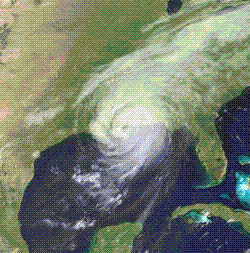
The same day:
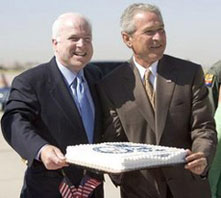
President George W. Bush
joins John McCain
in a celebration of
McCain's 69th birthday
"... liberal filmmaker Michael Moore...
said Friday that the timing of Hurricane Gustav is '
proof that
there is a God in heaven,' since the storm approaching the Gulf Coast
could disrupt next week’s Republican National Convention." --
Fox
News
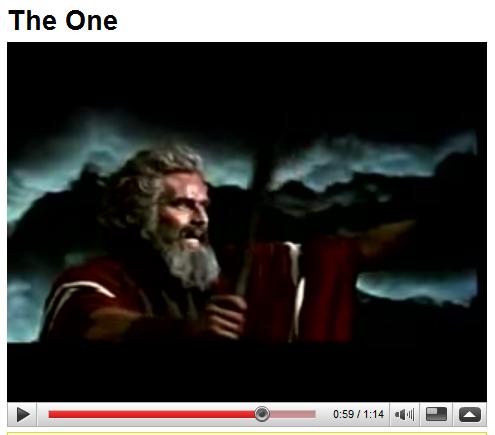 "Behold his mighty
hand!"
"Behold his mighty
hand!"
Saturday, August 30, 2008 9:00 AM
On Style, continued:
Poetry
and Politics* --
Movie-Teller
"... maybe it was McCain's role as 'movie-teller' that
he cherishes most-- the man who used to narrate the plots of films to
his fellow PoWs in the compound. 'I must have told a hundred movies,'
says McCain. 'Of course I don't know a hundred movies-- I made them
up.'"
-- The Guardian, quoted here on McCain's
birthday, August 29, 2006. (McCain's birthday nine years earlier
was the date of Judgment
Day in "Terminator 2.")
A story from McCain's
birthday this year:
"Hail Sarah!"
-- Newsweek

"At the still point,
there the dance is."
-- Four Quartets
"... the Four Quartets themselves appear, in
all their complexity, as the poetry of simple civic virtue-- the poetry
of a poet trying to read the writing of the law that has become all but
illegible. This, you may say, has nothing to do with poetry. On the
contrary, it is one of the few truly hopeful signs that this civic
virtue could once more be realized poetically."
-- Erich Heller, quoted here
on
August
25, 2008
(Feast of St. Louis)
Related material:
St. Sarah's Day,
The Dance:
5/24
See also the remarks of St. Augustine and others
on time (August
28 entry) and, from May 24, a song hook thanks to Cyndi
Lauper:
|
* Also known as smoke and mirrors.
Thursday, August 28, 2008 12:00 PM
For St. Augustine's Day:
Thursday, August 28, 2008 5:24 AM
On Style:
Associations
for the writer
known as UD
"Have liberty not as
the air within a grave
Or down a well. Breathe freedom,
oh, my native,
In the space of horizons
that neither love nor hate."
-- Wallace Stevens,
"Things of
August" |
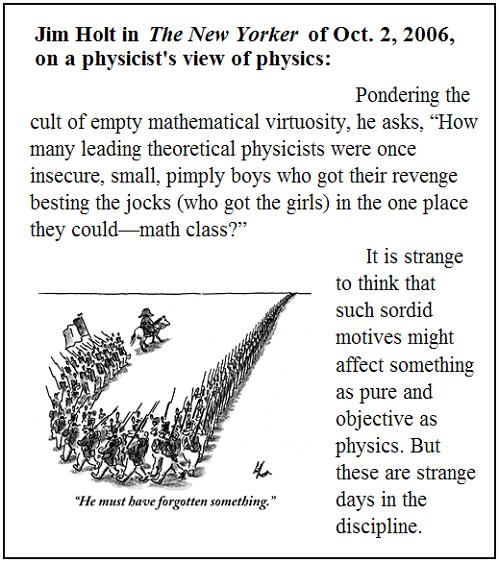
A related visual
association of ideas --
("The association
is the idea"
-- Ian Lee,
The
Third Word War)
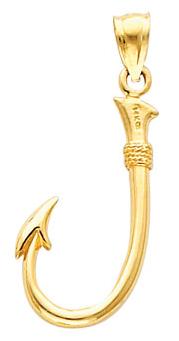
From UD
Jewelry:
|
by John Braheny
"Hook" is the term you'll hear most often in the business and
craft of commercial songwriting. (Well, maybe not as much as "Sorry, we
can't use your song," but it's possible that the more you hear about
hooks now, the less you'll hear "we can't use it" later.)

The hook has been described as "the part(s) you remember after the song
is over," "the part that reaches out and grabs you," "the part you
can't stop singing (even when you hate it)" and "the catchy repeated
chorus...."
|
See also UD's recent
A Must-Read and
In My Day*
as well as the five
Log24 entries ending
Sept.
20, 2002.
More seriously:
Stevens's "space of horizons" may, if one likes, be
interpreted as a reference to
projective
geometry. Despite the bleak physicist's view of mathematics quoted
above, this discipline is-- thanks to
Blaise Pascal--
not totally lacking in literary and spiritual
associations.
*
Hey Hey
Wednesday, August 27, 2008 6:23 AM
Songlines:
"One Shot"
--
Keynote
Address,
Democratic
National Convention
|
Of the People,
by the People,
for the People
From the autobiography of Reba McEntire:
"...my major field of study was elementary education and my minor was
music. I received my bachelor's degree, but never taught school as my
Mama and Grandma had done before me...." --My Story,
Bantam, 1994
From a notable production of "Annie Get Your Gun" starring Reba
McEntire:
"Doin' what comes naturally...."
-- Irving Berlin
From Zenna Henderson's first story of the People:
"Suddenly I felt her, so plainly that I knew with a feeling of fear and
pride that I was of my grandmother, that soon I would be bearing the
burden and blessing of her Gift -- the Gift that
develops into free access to any mind, one of the People or an
Outsider, willing or not. And besides the access, the ability to
counsel and help, to straighten tangled minds and snarled emotions....
It was the first time I had ever sorted anybody."
-- "Ararat," in The Magazine of Fantasy & Science Fiction,
October 1952 (reprinted in Ingathering,
NESFA Press, 1995) |
"You know, I spent 20 years in business. If you ran a company whose
only strategy was to tear down the competition, it wouldn't last long.
So why is this wisdom so hard to find in Washington?
I know we're at the Democratic convention, but if an idea works, it
really doesn't matter if it has an 'R' or 'D' next to it. Because this
election isn't about liberal versus conservative. It's not about left
versus right. It's about the future versus the past.
In this election, at this moment in our history, we know what the
problems are. We know that at this critical juncture, we have only one
shot to get it right....
Let me tell you about a place called Lebanon-- Lebanon, Virginia."
-- Last night's keynote
address at the Democratic National Convention

"The lunatic,
the lover,
and the poet
are of imagination
all compact."
-- Shakespeare
For further details,
see the sons and
daughters of
Bluefield, Pikeville,
and Asheville.
|
Monday, August 25, 2008 3:23 AM
Annals of Poetry:
The concluding paragraph of Erich Heller's 1953 essay, "The Hazard of
Modern Poetry"--
"'The
poetry does not matter.' These words from Mr. T.S. Eliot's Four
Quartets acquire an all but revolutionary significance if we
understand them not only in their particular context but also in the
context of a period of poetry in which nothing mattered except poetry.
Against this background the Four Quartets themselves appear, in
all their complexity, as the poetry of simple civic virtue-- the poetry
of a poet trying to read the writing of the law that has become all but
illegible. This, you may say, has nothing to do with poetry. On the
contrary, it is one of the few truly hopeful signs that this civic
virtue could once more be realized poetically. For in speaking to the
hazard of modern poetry I did not wish to suggest that the end had come
for singers and skylarks. There will always be skylarks; perhaps even a
few nightingales. But poetry is not only the human equivalent of the
song of singing birds. It is also Virgil, Dante, and Hölderlin. It
is also, in its own terms, the definition of the state of man."
Sunday, August 24, 2008 7:00 AM
Context-Sensitive Theology continued:
Cross-Purposes
Yesterday's entry, Absurdities,
quoted Erich Heller:
"All relevant objective truths are born and die as absurdities.
They come into being as the monstrous claim of an inspired rebel and
pass away with the eccentricity of a superstitious crank."
The context for this remarkable saying is Heller's essay "The Hazard of
Modern Poetry." (See p. 270 in the links below.)
Discussing "the century of Pascal and Hobbes," he says (see the link to
p. 269 below) that
"... as for spiritual cunning, it was in the conceits
of metaphysical poetry, in the self-conscious ambiguities of poetical
language (there are, we are told, as many types of it as deadly sins),
and in the paradoxes of Pascal's religious thought. For ambiguity and
paradox are the manner of speaking when reality and symbol, man's mind
and his soul, are at cross-purposes."
Heller's description of "relevant objective truths" as
"absurdities" seems to be an instance of such ambiguity and paradox.
For further details, see
The Disinherited Mind: Essays in Modern German
Literature and Thought (Harvest paperback, 1975)--
"The Hazard of Modern Poetry" (pp. 263-300), Section 1, pages
263, 264, 265, 266, 267, 268, 269, 270, 271, 272.
For material related to Pascal, see the five Log24 entries ending on D-Day,
2008.
For material related to Hobbes, see the five Log24 entries ending on St.
Patrick's Day, 2007.
Saturday, August 23, 2008 5:01 AM
The Lottery Theater presents:
Absurdities
| "The balance-beam of Fate was bent; |
|
| The bounds of good and ill were rent; |
|
| Strong Hades could not keep his own, |
|
But all slid to confusion."
-- "Uriel," by
Ralph Waldo Emerson:
Oxford Book of
English Verse, 1919,
number
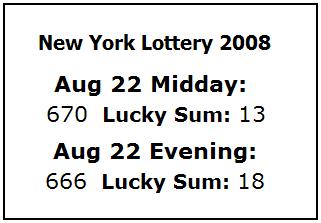
670
|
"All relevant objective truths are born and die as absurdities. They
come into being as the monstrous claim of an inspired rebel and pass
away with the eccentricity of a superstitious crank."
-- Erich Heller, The
Disinherited Mind
Friday, August 22, 2008 5:01 AM
ART WARS continued --
Tentative movie
title:
Blockheads
 The Kohs Block Design
Intelligence Test
Samuel
Calmin Kohs, the designer (
but
not the originator) of the above intelligence test, would likely
disapprove of the "Aryan Youth types" mentioned in passing by a film
reviewer in today's
New York Times. (See below.) The Aryan
Youth would also likely disapprove of
Dr.
Kohs.

Other related material:
1. Wechsler Cubes (intelligence testing cubes derived from
the Kohs cubes shown above). See...
Harvard psychiatry and...
The
Montessori Method;
The Crimson Passion;
The Lottery
Covenant.
2. Wechsler Cubes of a different sort (
Log24,
May 25, 2008)
3. Manohla
Dargis in today's New York Times:
"... '
Momma’s
Man' is a touchingly true film, part weepie, part comedy, about the
agonies of navigating that slippery slope called adulthood. It was
written and directed by Azazel Jacobs, a native New Yorker who has set
his modestly scaled movie with a heart the size of the Ritz in the same
downtown warren where he was raised. Being a child of the avant-garde
as well as an A student, he cast his parents, the filmmaker Ken Jacobs
and the artist Flo Jacobs, as the puzzled progenitors of his
centerpiece, a wayward son of bohemia....
In American movies, growing up tends to be a job for either
Aryan Youth types or
the oddballs and outsiders...."
4. The bohemian who named his son
Azazel:
"... I think that the deeper opportunity, the greater
opportunity film can offer us is as an exercise of the mind. But an
exercise, I hate to use the word, I won't say 'soul,' I won't say
'soul' and I won't say 'spirit,' but that it can really put our deepest
psychological existence through stuff. It can be a powerful exercise.
It can make us think, but I don't mean think about this and think about
that. The very, very process of powerful thinking, in a way that it can
afford, is I think very, very valuable. I basically think that the mind
is not complete yet, that we are working on creating the mind. Okay.
And that the higher function of art for me is its contribution to the
making of mind."
-- Interview
with Ken Jacobs, UC Berkeley, October 1999
5. For Dargis's "Aryan Youth types"--
Wednesday, August 20, 2008 11:29 PM
Flashback:
For Madeleine L'Engle,
wherever she may be
The entries of yesterday
(updated today) and the
day before suggest a flashback to the five
"Dungeons & Dragons" entries ending on March 6, 2008. For
more about dungeons, see Jan.
7, 2007. For more about dragons, see Crystal and
Dragon: The Cosmic Dance of Symmetry and Chaos in Nature, Art and
Consciousness, by David Wade.
Tuesday, August 19, 2008 8:30 AM
ART WARS continued:
Three Times
|
"Credences
of Summer," VII,
by Wallace Stevens, from
Transport to Summer (1947)
"Three times the concentred
self takes hold, three times
The thrice concentred self,
having possessed
The object, grips it
in savage scrutiny,
Once to make captive,
once to subjugate
Or yield to subjugation,
once to proclaim
The meaning of the capture,
this hard prize,
Fully made, fully apparent,
fully found."
|
Stevens does not say what object he is discussing.
One possibility --
Bertram
Kostant, Professor Emeritus of Mathematics at MIT, on
an object
discussed in
a recent New Yorker:
"A word about E(8). In my opinion, and shared by
others, E(8) is the most magnificent 'object' in all of
mathematics. It is like a diamond with thousands of facets. Each facet
offering a different view of its unbelievable intricate internal
structure."

A more modest object --
the 4x4 square.
Update of Aug. 20-21 --
Symmetries and Facets
Kostant's poetic comparison might be applied also to
this
object.
The natural rearrangements (symmetries) of the 4x4
array might also be described poetically as "thousands of facets, each
facet offering a different view of... internal structure."
More precisely, there are 322,560 natural rearrangements-- which a poet
might call
facets*-- of the array,
each offering a different view of the array's internal structure--
encoded as a unique ordered pair of symmetric graphic designs. The
symmetry of the array's internal structure is reflected in the symmetry
of the graphic designs. For examples, see the
Diamond
16 Puzzle.
For an instance of Stevens's "three times" process, see the three parts
of the 2004 web page
Ideas and Art.
* For the metaphor of rearrangements as
facets,
note that each symmetry (rearrangement) of a Platonic solid corresponds
to a
rotated facet: the number of symmetries equals the number
of facets times the number of rotations (edges) of each facet--

The metaphor of rearrangements as facets breaks down,
however, when we try to use it to compute, as above with the Platonic
solids, the
number of natural rearrangements, or symmetries, of
the 4x4 array. Actually, the true analogy is between the 16 unit
squares of the 4x4 array, regarded as the 16 points of a finite 4-space
(which has finitely many symmetries), and the infinitely many points of
Euclidean 4-space (which has infinitely many symmetries).
If Greek geometers had started with a finite space (as in
The Eightfold Cube),
the history of mathematics might have dramatically illustrated Halmos's
saying (
Aug.
16) that
"The problem is-- the genius is-- given an infinite
question, to think of the right finite question to ask. Once you
thought of the finite answer, then you would know the right answer to
the infinite question."
The Greeks, of course, answered the infinite questions first-- at least
for
Euclidean space. Halmos was concerned with more general
modern infinite spaces (such as
Hilbert space)
where the intuition to be gained from finite questions is still of
value.
Monday, August 18, 2008 9:00 AM
To the Journeyers to the East:
Lotteries on
August 17,
2008 |
Pennsylvania
(No revelation)
|
New York
(Revelation)
|
Mid-day
(No belief)
|
No belief,
no revelation
492
Chinese
Magic
Square:
4 9 2
3 5 7
8 1 6
(See below.)
|
Revelation
without belief
423
4/23:
Upscale
Realism:
Triangles
in Toronto
|
Evening
(Belief)
|
Belief without
revelation
272
Rahner
on Grace
(See below.)
|
Belief and
revelation
406
4/06:
Ideas
and Art
|
No belief, no revelation:
An encounter with "492"--
"What is combinatorial mathematics?
Combinatorial mathematics, also referred to as combinatorial analysis
or combinatorics, is a mathematical discipline that began in ancient
times. According to legend the Chinese Emperor Yu (c. 2200 B.C.)
observed the magic square
4 9 2
3 5 7
8 1 6
on the shell of a divine turtle...."
-- H.J. Ryser, Combinatorial Mathematics, Mathematical
Association of America, Carus Mathematical Monographs 14 (1963) |
Belief without revelation:
Theology and human experience,
and the experience of "272"--
From Christian
Tradition Today,
by Jeffrey C. K. Goh
(Peeters Publishers, 2004), p. 438:
"Insisting that theological statements are not simply deduced
from human experience, Rahner nevertheless stresses the experience of
grace as the 'real, fundamental reality of Christianity itself.'
272
272 'Grace' is a key category
in Rahner's theology. He has expended a great deal of energy on
this topic, earning himself the title, amongst others, of a 'theologian
of the graced search for meaning.' See G. B. Kelly (ed.), Karl Rahner,
in The Making of Modern Theology series (Edinburgh: T&T
Clark, 1992)."
|
Sunday, August 17, 2008 6:20 AM
ART WARS continued:
Saturday, August 16, 2008 8:00 AM
Halmos on Depth in Mathematics:
Seeing the Finite Structure
The following supplies some context for remarks of Halmos on
combinatorics.
From Paul Halmos: Celebrating 50 years of Mathematics,
by John H. Ewing, Paul Richard Halmos, Frederick W. Gehring, published
by Springer, 1991--
Interviews with Halmos, "Paul Halmos by Parts," by Donald J. Albers--
"Part II: In Touch with God*"-- on pp.
27-28:
The Root of All Deep Mathematics
"Albers. In the conclusion of 'Fifty Years of Linear
Algebra,' you wrote: 'I am inclined to believe that at the root of all
deep mathematics there is a combinatorial insight... I think that in
this subject (in every subject?) the really original, really deep
insights are always combinatorial, and I think for the new discoveries
that we need-- the pendulum needs-- to swing back, and will swing back
in the combinatorial direction.' I always thought of you as an analyst.
Halmos: People call me an analyst, but I think I'm a born
algebraist, and I mean the same thing, analytic versus
combinatorial-algebraic. I think the finite case illustrates and guides
and simplifies the infinite.
Some people called me full of baloney when I asserted that the deep
problems of operator theory could all be solved if we knew the answer
to every finite dimensional matrix question. I still have this religion
that if you knew the answer to every matrix question, somehow you could
answer every operator question. But the 'somehow' would require genius.
The problem is not, given an operator question, to ask the same
question in finite dimensions-- that's silly. The problem is-- the
genius is-- given an infinite question, to think of the right finite
question to ask. Once you thought of the finite answer, then you would
know the right answer to the infinite question.
Combinatorics, the finite case, is where the genuine, deep insight is.
Generalizing, making it infinite, is sometimes intricate and sometimes
difficult, and I might even be willing to say that it's sometimes deep,
but it is nowhere near as fundamental as seeing the finite structure."
Finite Structure
on a Book Cover:

Walsh Series: An Introduction
to Dyadic Harmonic Analysis,
by F. Schipp
et al.,
Taylor & Francis, 1990
Halmos's above remarks on combinatorics as a source
of "deep mathematics" were in the context of operator theory. For
connections between operator theory and harmonic analysis, see (for
instance) H.S. Shapiro, "Operator Theory and Harmonic Analysis," pp.
31-56 in
Twentieth Century Harmonic Analysis-- A Celebration,
ed. by J.S. Byrnes, published by Springer, 2001.
Walsh Series states that Walsh functions provide "the simplest
non-trivial model for harmonic analysis."
The patterns on the faces of the cube on the cover of
Walsh Series above illustrate both the
Walsh
functions of order 3 and the same structure in a different guise,
subspaces
of the affine 3-space over the binary field. For a note on the
relationship of Walsh functions to finite geometry, see
Symmetry
of Walsh Functions.
Whether the above sketch of the passage from operator theory to
harmonic analysis to Walsh functions to finite geometry can ever help
find "the right finite question to ask," I do not know. It at least
suggests that finite geometry (and my own work on
models
in finite geometry) may not be completely irrelevant to mathematics
generally regarded as more
deep.
* See the
Log24 entries following Halmos's death.