From the journal of Steven H. Cullinane... 2008 July 01-15

Tuesday, July 15, 2008  10:10 PM

Elliptic comment:

My comment on a discussion of elliptic curves and modular forms at Secret Blogging Seminar, about 10 PM tonight:

How does this affect popularized discussions of the Taniyama-Shimura conjecture-- for instance, Ivars Peterson's, in "Curving Beyond Fermat," November 1999-- which claim, for instance, that "Elliptic curves and modular forms are mathematically so different that mathematicians initially [in the 1950's, the early days of the conjecture] couldn't believe that the two are related."?

Update of about 10:45 PM tonight:

A reply by the author of the discussion, Scott Carnahan:

I don’t think anyone doubted that there is a connection between elliptic curves and modular forms on the level I described above. However, the Taniyama-Shimura conjecture refers to a more advanced idea about a deeper connection.

Carnahan then gives a one-paragraph summary, definitely not popularized, of the deeper connection.


Sunday, July 13, 2008  12:24 PM

Star Quality:

Christ's High Table

C. P. Snow in A Mathematician's Apology:

FOREWORD

"It was a perfectly ordinary night at Christ's high table, except that Hardy was dining as a guest. He had just returned to Cambridge as Sadleirian professor, and I had heard something of him from young Cambridge mathematicians. They were delighted to have him back: he was a real mathematician, they said, not like those Diracs and Bohrs the physicists were always talking about: he was the purest of the pure. He was also unorthodox, eccentric, radical, ready to talk about anything. This was 1931, and the phrase was not yet in English use, but in later days they would have said that in some indefinable way he had star quality."

Perhaps now also at Christ's high table-- Scarlett O'Hara's Younger Sister, Evelyn Keyes, who died on July 4, 2008:

"... the memory of Evelyn Keyes looking at herself on the screen, exclaiming: 'There's star quality! Look at those tits!'"

http://www.log24.com/log/pix08/Evelyn_Keyes_in_99_River_Street.jpg

Evelyn Keyes in 99 River Street


See also "Supper at Eight" and
Irreconcilable Differences.


Sunday, July 13, 2008  12:06 PM

Annals of Philosophy:

Footprint

Sweden
608410039/philosophy-w...
7/13/2008 11:55 AM
O blinding hour, O holy, terrible day,
When first the shaft into his vision shone
Of light anatomized! Euclid alone
Has looked on Beauty bare. Fortunate they
Who, though once only and then but far away,
Have heard her massive sandal set on stone.

-- Edna St. Vincent Millay

Sunday, July 13, 2008  11:00 AM

Today's Sermon:

On the beach: 'Once again the castle's architect is taken to task for using sand instead of stone.' --Sally Forth 7/13/08
 
See also
St. Peter's Day, 2005,
and Michiko Kakutani
on tribal delusions.


Saturday, July 12, 2008  10:31 AM

In the Details:

Advertisement

"God is like Me,
only more so."

-- Norman Mailer,
Advertisements for Myself

NY Times online front page July 12, 2008-- detail from review of 'Hellboy 2'-- 'jokey, sometimes touching and a lot of fun'

Context:

NY Times online front page July 12. 2008, 10:02 AM-- Tony Snow, former White House press secretary, dies

See also
Context-Sensitive Theology.


Friday, July 11, 2008  9:11 PM

The Lottery Theater presents:
Ready When
You Are, C. B.


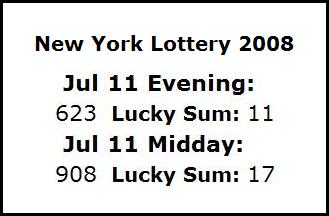
New  York Lottery July 11, 2008: Mid-day 908, Evening 623

For related material, see
"Goodbye and Hello"
from 9/08, 2003 and
"Requiem for a Storyteller"
from 9/08, 2007,
as well as
"Raiders of the Lost Stone"
from 6/23, 2007 and
"George Carlin Dies"
from 6/23, 2008.

See also
today's previous entries.


Friday, July 11, 2008  7:11 PM

The 7/11 Alignment:

De Haut en Bas
continued from July 3

"I say high, you say low,
you say why,
and I say I don't know.
Oh, no.
You say goodbye
and I say hello."

-- Hello Goodbye *

Thanks to NBC Nightly News tonight for a story on the following:

Manhattanhenge
is an evening when "the Sun sets in exact alignment with the Manhattan grid, fully illuminating every single cross-street...."

Full Sun on grid:
Friday, July 11--
8:24 PM EDT

Related material from the late
Tom Disch on St. Sarah's Day:

Saturday, May 24th, 2008

9:15 pm

What I Can See from Here

I face east toward the western wall
Of a tall many-windowed building
Some distance off. I don't see the sunset
Directly, only as it is reflected
From the facade of that building.
Those familiar with Manhattan know
How the evening sun appears to slide
Into the slot of any east/west street,
And so its beams are channeled
Along those canyon streets to strike
Large objects like that wall
And scrawl their anti-shadows there,
A Tau of twilight luminescence
At close of day. I've seen this
For some forty years and only tonight
Did I realize what I had been looking at:
The way god tries to say good-bye.

-- Tom Disch

* Stanley Cavell, in The Claim of Reason: Wittgenstein, Skepticism, Morality, and Tragedy, has a note on the song "Hello Goodbye"--

"189. The extra-long coda... was referred to as the 'Maori finale' from the start...."


Friday, July 11, 2008  1:00 PM

Serious Numbers, continued:

AND MORE LOGOS:

"Serious numbers will
always be heard."
-- Paul Simon  

http://www.log24.com/log/pix08/080711-DowLg.jpg

http://www.log24.com/log/pix08/080711-NYSE.jpg

http://www.log24.com/log/pix08/080711-HSBClogo.jpg

The HSBC Logo Designer --

Henry Steiner

He is an internationally recognized corporate identity consultant. Based in Hong Kong, his work for clients such as HongkongBank, IBM and Unilever is a major influence in Pacific Rim design.

Born in Austria and raised in New York, Steiner was educated at Yale under Paul Rand and attended the Sorbonne as a Fulbright Fellow. He is a past President of Alliance Graphique Internationale. Other professional affiliations include the American Institute of Graphic Arts, Chartered Society of Designers, Design Austria, and the New York Art Directors' Club.

His Cross-Cultural Design: Communicating in the Global Marketplace was published by Thames and Hudson (1995).

-- Yaneff.com


Related material
from the past --


Wittgenstein and Fly from Fly-Bottle

Fly from Fly Bottle:

Graphic structures from Diamond Theory and from Kyocera logo

Charles Taylor,
"Epiphanies of Modernism,"
Chapter 24 of Sources of the Self
  (Cambridge U. Press, 1989, p. 477) --

"... the object sets up
 a kind of frame or space or field
   within which there can be epiphany."


Related material
from today --

Escape from a
  cartoon graveyard:


http://www.log24.com/log/pix08/080711-BabyBlues.jpg


Friday, July 11, 2008  9:00 AM

Annals of Philosophy:

LOGOS

"Religions are hardy."
-- TIME magazine,
issue dated July 14

"I confess I do not
believe in time."
-- Vladimir Nabokov  

"I can hardly do better than
go back to the Greeks."
-- G. H. Hardy

'The Greeks and the Irrational,' by E.R. Dodds

Figure 1:
The Greeks

Diagonal of the Square

Figure 2:
The Irrational

'You cannot find the limits of the soul even by travelling all roads-- so deep is its logos'-- Heraclitus


Thursday, July 10, 2008  12:00 PM

His and Hers:
Something

From the current
issue of TIME:

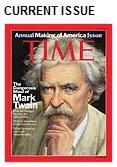
Mark Twain on cover of  TIME, issue dated July 14, 2008

"Religions are hardy. 'Many a time
we have gotten all ready for the
funeral' of one faith or another,
'and found it postponed again,
on account of
the weather or something.'"

-- Mark Twain

Twain was raised
as a Presbyterian
(the Calvinist tradition).

This year's Twain award
for humor went to
George Carlin,
raised in
the Catholic tradition.

On learning he had won
the Twain award,
Carlin said,
"Thank you, Mr. Twain.
Have your people
call my people."

Today's Birthdays:

Born July 10, 1509 --

John Calvin portrait

John Calvin

His people: see

The Authority of Narrative.

Born July 10, 1984 --

Maria Julia Mantilla website screenshot

Maria Julia Mantilla


Her people: see 

Catholic Tastes.


Wednesday, July 9, 2008  8:00 PM

Translation, continued:

Ah! Bright Wings

A poem by the late Thomas Disch:

Sundays at the Colosseum

I think you always had to be a little juiced
to enjoy the show. Or Jewish!
    I never attended
without a flask of red, and would salute
the dying singers--
    martyrs they called themselves--
when the lions drew first blood.
    The songs
went on until either terror or death
had silenced the last of them. I doubt
we would have gone so religiously
if it weren't for the singing.
Sometimes we'd even sing along.
Circuses aren't the same these days.
    Pity.

-- From Disch's weblog on Friday,
   May 23, 2008, at 8:26 AM

Related material on a novel by Disch:

"On Wings of Song, published in 1979, tells the story of a repressive Amesville, Iowa, in the 21st century. The main character, Daniel Weinreb, tries to master the art of song and flight, 'driven by the knowledge that some have attained flight, their spirits separated from their physical bodies and propelled on the waves of their own singing voices-- literally born on wings of song.'"

-- Jocelyn Y. Stewart in a Los Angeles Times obituary of July 8, 2008

See also the Log24 entries for
 the date of Disch's poem--
 St. Sarah's Eve-- and for
 the evening of July 8.


Wednesday, July 9, 2008  8:28 AM

Review:

God, Time, Epiphany

8:28:32 AM

Anthony Hopkins, from
All Hallows' Eve
last year
:

"For me time is God,
God is time. It's an equation,
like an Einstein equation."

James Joyce, from
June 26 (the day after
Anti-Christmas) this year
:

"... he glanced up at the clock
of the Ballast Office and smiled:
-- It has not epiphanised yet,
he said."

Ezra Pound (from a page
linked to yesterday morning):


"It seems quite natural to me
that an artist should have
just as much pleasure in an
arrangement of planes
or in a pattern of figures,
  as in painting portraits...."

From Epiphany 2008:

An arrangement of planes:

http://www.log24.com/log/pix08/080709-Epiphany.gif

From May 10, 2008:

A pattern of figures:
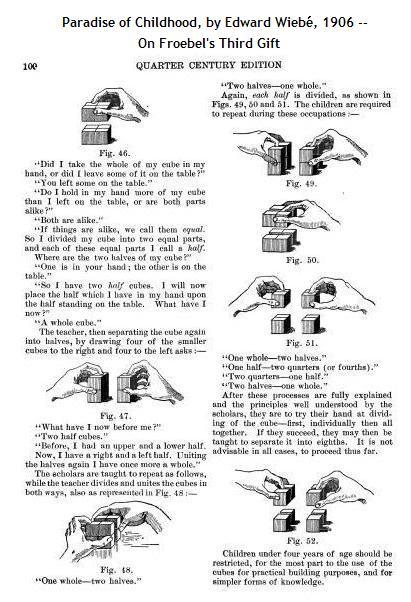
Seven partitions of the 2x2x2 cube in a book from 1906

See also Richard Wilhelm on
Hexagram 32 of the I Ching:

"Duration is a state whose movement is not worn down by hindrances. It is not a state of rest, for mere standstill is regression. Duration is rather the self-contained and therefore self-renewing movement of an organized, firmly integrated whole, taking place in accordance with immutable laws and beginning anew at every ending. The end is reached by an inward movement, by inhalation, systole, contraction, and this movement turns into a new beginning, in which the movement is directed outward, in exhalation, diastole, expansion."

'The Middle-English Harrowing of Hell,' by Hulme, 1907, page 64, line 672: 'with this he gaf the gaste'

-- The Middle-English
    Harrowing of Hell...


    by Hulme, 1907, page 64


Tuesday, July 8, 2008  9:34 PM

The Final Hit:

Translation
to a Higher Plane


New York State Lottery
this evening: 737.

Boeing 737 in flight

"Don't know when 
  I'll be back again."

-- Peter, Paul, and Mary --
the final hit


Tuesday, July 8, 2008  3:17 PM

Final Arrangements, continued:
And the Templeton Prize
  goes to...


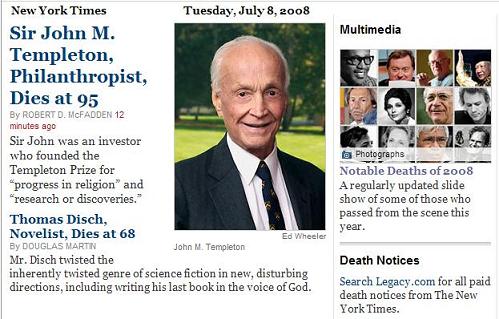
Sir John M. Templeton and Thomas Disch in the New York Times obituaries on Tuesday, July 8, 2008

Click on image for further details.


Tuesday, July 8, 2008  1:14 PM

The Holy Spook continued:

New York Lottery mid-day today: 672

'The Middle-English Harrowing of Hell,' by Hulme, 1907, page 64, line 672: 'with this he gaf the gaste'

-- The Middle-English
    Harrowing of Hell...
    by Hulme, 1907, page 64


Tuesday, July 8, 2008  3:33 AM

Annals of Poetry continued:

Translation

Yesterday's entry discussed T.E. Hulme-- a co-founder, with Ezra Pound, of the Imagist school of poetry. Recent entries on randomness, using the New York Lottery as a source of examples, together with Hulme's approach to poetry discussed yesterday, suggest the following meditation-- what Charles Cameron might call a "bead game."

Part I:

Ezra Pound on Imagism (from Gaudier-Brzeska,* 1916):
Three years ago in Paris I got out of a "metro" train at La Concorde, and saw suddenly a beautiful face, and then another and another, and then a beautiful child’s face, and then another beautiful woman, and I tried all that day to find words for what this had meant to me, and I could not find any words that seemed to me worthy, or as lovely as that sudden emotion. [....]

The "one image poem" is a form of super-position, that is to say, it is one idea set on top of another. I found it useful in getting out of the impasse in which I had been left by my metro emotion. I wrote a thirty-line poem, and destroyed it because it was what we call work "of second intensity." Six months later I made a poem half that length; a year later I made the following hokku-like sentence: --

"The apparition of these
    faces in the crowd:
 Petals, on a
    wet, black bough."

I dare say it is meaningless unless one has drifted into a certain vein of thought. In a poem of this sort one is trying to record the precise instant when a thing outward and objective transforms itself, or darts into a thing inward and subjective.

Part II:

Eleanor Goodman on translation (in a July 7, 2008, weblog entry, "Pound and Process: An Introduction"):

"... all translations exist on an axis. Indeed, they exist in a manifold of many axes intersecting. One axis is that of foreignness and familiarity. One axis is that of structural mimicry, another of melodic mimicry. And one axis is that of semantic fidelity."
Goodman's use of the word "manifold" here is of course poetic, not mathematical.

Part III:

New York Lottery, mid-day on July 7, 2008: 771.

Part IV:

A Google search on manifold 771 reveals that 771 is, according to Google's scanners, an alternate form (a "translation," via structural mimicry) of a script version of the letter M. (See Part V below.)

Part V:

Long version of a 
one-image poem --

"Random apparition:
  manifold translated."

This poem summarizes the
relationship (See Part IV above) of
the (apparently) random number 771
to the rather non-random concept of
a linear manifold:

Paul R. Halmos, Finite Dimensional Vector Spaces, Princeton, 1948-- Definition of linear manifold (denoted by script M)

[Such lines and planes have not
been, in mathematical language,
"translated."]

-- Paul R. Halmos,
Finite Dimensional Vector Spaces,
Princeton University Press, 1948

Short version of the   
above one-image poem
--

 771:
Script M

* Gaudier-Brzeska created the artifact shown of the cover of Solid Objects, a work of literary theory by Douglas Mao. For more on that artifact and on the New York Lottery, see Sermon for St. Peter's Day. "It is not in the premise that reality/ Is a solid...." --Wallace Stevens

"I was like, Oh My God." --Poet Billy Collins at Chautauqua Institution, morning of July 7, 2008


Monday, July 7, 2008  7:00 AM

On Dryness, continued:

Classicism

Last evening's entry referred to a 1961 essay by Iris Murdoch titled "Against Dryness."  Murdoch's use of "dryness" as a literary term is taken from a 1911 essay by T. E. Hulme, "Romanticism and Classicism." Hulme says that
"There is a general tendency to think that verse means little else than the expression of unsatisfied emotion. People say: 'But how can you have verse without sentiment?' You see what it is: the prospect alarms them. A classical revival to them would mean the prospect of an arid desert and the death of poetry as they understand it, and could only come to fill the gap caused by that death. Exactly why this dry classical spirit should have a positive and legitimate necessity to express itself in poetry is utterly inconceivable to them."
Related philosophy from Hollywood:
Bentley: ... What is it, Major Lawrence, that attracts you personally to the desert?
Lawrence:  It's clean.
Bentley:  Well, now, that's a very illuminating answer.

Sunday, July 6, 2008  9:00 PM

On Dryness:

"Hancock" Powers to the Top
of July Fourth Box Office

--
This evening's online
  New York Times

New York Lottery
Sunday, July 6,
2008:

Mid-day 307
Evening  921

Log24  3/07:

Symbols:

Three 3x3 symbols of a language game:  the field, the game, checkmate

Log24  9/21:

"The consolations of form,
the clean crystalline work"

-- Iris Murdoch, 
"Against Dryness"

Will Smith
on Chess


Will Smith with chessboard

Will Smith

The Independent, 9 July 2004:

"A devoted father, Smith passes on his philosophy of life to his children through chess, among other things.

'My father taught me how to play chess at seven and introduced beautiful concepts that I try to pass on to my kids. The elements and concepts of life are so perfectly illustrated on a chess board. The ability to accurately assess your position is the key to chess, which I also think is the key to life.'

He pauses, searching for an example. 'Everything you do in your life is a move. You wake up in the morning, you strap on a gun, and you walk out on the street-- that's a move. You've made a move and the universe is going to respond with its move.

'Whatever move you're going to make in your life to be successful, you have to accurately access the next couple of moves-- like what's going to happen if you do this? Because once you've made your move, you can't take it back. The universe is going to respond.'

Smith has just finished reading The Alchemist, by the Brazilian writer Paulo Coelho: 'It says the entire world is contained in one grain of sand, and you can learn everything you need to learn about the entire universe from that one grain of sand. That is the kind of concept I'm teaching my kids.'"

Related material:

"Philosophers' Stone"
and other entries
of June 25, 2008


Sunday, July 6, 2008  9:00 AM

Today's Sermon:

The Pursuit of Happyness

"Remember that we deal with
Mary Chapin Carpenter --
cunning, baffling, and powerful."

-- Saying adapted
from the Big Book of
Alcoholics Anonymous

Mary Chapin Carpenter sings 'I Am a Town'

"I'm Pabst Blue Ribbon, American."

Barack Obama hoists a Pabst at the Raleigh Times Bar in Raleigh, North Carolina, on May 6, 2008

-- The Telegraph, May 7, 2008

Former U.S. Senator Jesse Helms

was city editor at the Raleigh Times.

See the Fourth of July
.

SHOE cartoon, Sunday, July 6, 2008: At a bar, a patron to the editor: 'Each day is a gift.' Editor: 'Oh? Then where do I go to return last Thursday?'

See also last Thursday.


Saturday, July 5, 2008  8:00 AM

The Lottery Theater presents...

The Bacchae
by Euripides

New York Lottery
on the Fourth of July:
 
Mid-day 678
Evening 506

These numbers may be
interpreted as references to a
current Lincoln Center play --
The Bacchae, by Euripides.

Line 678 of The Bacchae --

From a Brandeis class's translation (2006):

Messenger:

[677] Our feeding herds of cattle were just climbing
[678] above the treeline when the sun
[679] sent forth its rays to warm the earth.

Related cartoon by Ed Arno
(See yesterday morning's Log24
and entries of June 27):

Van Gogh portrait by Ed Arno: the artist in sunlight, having written 'DEAR THEO' on his canvas

Related review by Charles Isherwood in today's New York Times:
"A god deserves a great entrance. And Dionysus, the god of wine and party boy of Mount Olympus, whose celebratory rituals got the whole drama thing rolling in the first place, surely merits a spectacular one...."
Line 506 of The Bacchae --

From a 1988 translation (pdf) by Matthew A. Neuburg--

Dionysus:

[506] You don’t know what you’re saying, what you’re doing, who you are.

Translator's note:

506 The state of this line in the MSS has driven editors to despair; in particular, the first of the things Pentheus is said not to know is, in Greek, “what you are living,” which seems doubtful Greek. Many emendations have been proposed; I accept here DODDS’s emendation, but I have a feeling we’re missing something.

AMEN.


Friday, July 4, 2008  11:30 AM

For the Fourth of July...

In memory of
Senator Jesse Helms, R-NC:

"I'm a church beside the highway
       where the ditches never drain,
I'm a Baptist like my daddy,
       and Jesus knows my name."

-- Mary Chapin Carpenter


Friday, July 4, 2008  8:00 AM

ART WARS continued:

REDEMPTION

"I need a photo-opportunity,
I want a shot at redemption.
Don't want to end up a cartoon
In a cartoon graveyard."
-- Paul Simon


From Log24 on June 27, 2008,
the day that comic-book artist
Michael Turner died at 37 --

Van Gogh (by Ed Arno) in
The Paradise of Childhood
(by Edward Wiebé):


'Dear Theo' cartoon of van Gogh by Ed Arno, adapted to illustrate the eightfold cube


Two tomb raiders: Lara Croft and H.S.M. Coxeter

For Turner's photo-opportunity,
click on Lara.


Thursday, July 3, 2008  7:11 PM

ART WARS continued:

De Haut en Bas

"... this hard prize,
Fully made, fully apparent,
     fully found"

-- Wallace Stevens,
"Credences of Summer"

Marlon Brando and Robert De Niro in 'The Score'

Marlon Brando and Robert De Niro
in "The Score"

The Prize:

Billie Holiday, 'On the Sentimental Side' 3-CD set


Thursday, July 3, 2008  11:00 AM

For Champlain at Cap Diamant:

Highs and Lows

From today's New York Times:

This week, we the people of North America are staging two celebrations. The Fourth of July is the 232nd birthday of the United States....

In Canada, today, another ceremony will mark the 400th anniversary of Quebec City, the first permanent settlement in New France.

Paul Simon on religion:

"I need a photo opportunity,      
I want a shot at redemption...."

Log24 on August 8, 2002
--

The cast of "Some Girls,"
a film set in Quebec City:

The cast of 'Some Girls'

"Don't want to end up a cartoon
in a cartoon graveyard."

Sally Forth on the Bicentennial and the Starland Vocal Band: 'Well, the mid-70s were a period of highs and lows.'
Amen, sister.


Thursday, July 3, 2008  7:59 AM

Catholic Koan:

Blasphemous Thoughts
about Thor

Commonweal on Gopnik on Chesterton
:

"Gopnik thinks Chesterton’s aphorisms are better than any but Oscar Wilde’s, and he describes some of them as 'genuine Catholic koans, pregnant and profound.' For example: 'Blasphemy depends on belief, and is fading with it. If anyone doubts this, let him sit down seriously and try to think blasphemous thoughts about Thor.'"

Pregnant and Profound:
Douglas Adams on Thor

Kate felt quite dizzy. She didn't know exactly what it was that had just happened, but she felt pretty damn certain that it was the sort of experience that her mother would not have approved of on a first date.

"Is this all part of what we have to do to go to Asgard?" she said. "Or are you just fooling around?"

"We will go to Asgard... now," he said.

At that moment he raised his hand as if to pluck an apple, but instead of plucking he made a tiny, sharp turning movement.The effect was as if he had twisted the entire world through a billionth part of a billionth part of a degree. Everything shifted, was for a moment minutely out of focus, and then snapped back again as a suddenly different world.

-- The Long Dark Tea-Time of the Soul
See also
The Turning:


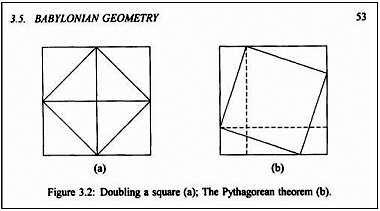
"A theorem proposed betwen the two--"

-- Wallace Stevens, "The Rock"

The Turning: An Approach to the Theorem of Pythagoras

From The History of Mathematics,
by Roger Cooke


"... point A
In a perspective that begins again
At B...."

-- Wallace Stevens, "The Rock"


Wednesday, July 2, 2008  12:00 PM

Review:

Let Noon Be Fair

"The serpent's eyes shine
As he wraps around the vine"

-- "The Garden of Allah"

Scene from 'A Good Year'

A Good Year

-- Last summer's journal

Related material:

'The Power Of The Center: A Study of Composition in the Visual Arts,' by Rudolf Arnheim

Cover illustration:

'Spies returning from the land of Canaan with a cluster of grapes,' Biblia Sacra Germanica

Spies returning from the land of
Canaan with a cluster of grapes.

 Colored woodcut from
Biblia Sacra Germanica,
Nuremberg, Anton Koberger, 1483.
Victoria and Albert Museum, London.


Wednesday, July 2, 2008  8:28 AM

The Last Target:

Bull's-Eye

On this date in 1961,
Ernest Hemingway shot
himself.

The Talented Patricia Highsmith

The Talented Patricia Highsmith

"Yes, oh, God, Robin was beautiful. [....] A sort of first position in attention, a face that will age only under the blows of perpetual childhood. The temples like those of young beasts cutting horns, as if they were sleeping eyes. And that look on a face we follow like a witch-fire."

-- Djuna Barnes, Nightwood

Related material:

The Languages of Addiction,
Ch. 13: The Barnes Complex

See also
The Garden of Eden.


Wednesday, July 2, 2008  3:33 AM

Annals of Religion:

Sacerdotal Jargon

Wallace Stevens, from
"Credences of Summer" in
Transport to Summer (1947):

"Three times the concentred
     self takes hold, three times
The thrice concentred self,
     having possessed
The object, grips it
     in savage scrutiny...."

In memory of the former
first lady of Brazil,
who died on June 24 --

Emily Dickinson
:

Till Summer folds her miracle --
As Women -- do -- their Gown --
Or Priests -- adjust the Symbols --
When Sacrament -- is done --

Symbols of the
thrice concentred self:


Symbols of the Thrice Concentred Self

The circular symbol is from July 1.
The square symbol is from June 24,
the date of death for the former
first lady of Brazil.

Wallace Stevens quotes Paul Klee:

"'... what artist would not establish himself there where the organic center of all movement in time and space-- which he calls the mind or heart of creation-- determines every function.' Conceding that this sounds a bit like sacerdotal jargon, that is not too much to allow...."

-- "The Relations between Poetry and Painting" in The Necessary Angel (Knopf, 1951)


Tuesday, July 1, 2008  3:33 AM

Annals of Poetry:

THE USUAL SUSPECT
 
Emily Dickinson and the Mighty Merchant

Click image to enlarge.

Related material:


The three Log24 entries from
the date of Macke's death