From the journal of Steven H. Cullinane...
2008 February 01-15
Friday, February 15, 2008 10:10 AM
ART WARS continued:
Door
 Step:
"Many dreams have been
Step:
"Many dreams have been
brought to your doorstep.
They just lie there
and they die there."
-- Lyricist Ray Evans,
who died at 92
one year ago today
Associated Press -
Today in History -
Thought for Today:
"Like all dreamers I confuse
disenchantment with truth."
--Jean-Paul Sartre
The
Return of the Author, by Eugen Simion:
On Sartre's
Les Mots --
"Writing helps him find his own place within this
vast comedy. He does not take to writing seriously yet, but he is eager
to write books in order to escape the comedy he has been compelled to
take part in.
The craft of writing appeared to me as an adult activity,
so ponderously serious, so trifling, and, at bottom, so lacking in
interest that I didn't doubt for a moment that it was in store for me.
I said to myself both 'that's all it is' and 'I am gifted.' Like all
dreamers, I confused disenchantment with truth."
This is given in The Oxford Dictionary of Quotations (1999)
as
Like all dreamers, I mistook disenchantment for truth.
Also from the AP's
Today in History --
Today's Birthdays:
Actor Kevin McCarthy is 94.
Thursday, February 14, 2008 11:20 AM
Valentine to a Dark Lady:
"Hanging from the highest limb of the apple tree are the three God's
Eyes Quiston and Caleb made out of yarn at Camp Nebo. The eyes aren't
moving a wink in the thick hot air, but they likely see the world
spinning around as well as any Fool's."
-- Ken Kesey,
"Last Time the Angels Came Up,"
in Demon Box
Wednesday, February 13, 2008 10:00 PM
Where Entertainment is God:
"My God, it's
full of numbers!"
Roger Ebert:
"This movie is....
the most scandalous
cinematic waste I have
ever seen, and remember,
I've seen
Paint Your Wagon."
Tuesday, February 12, 2008 5:01 PM
For Lincoln's Birthday:
Centerpiece
"Kirk Browning... television director of 'Live* From Lincoln Center,' died on Sunday [Feb. 10, 2008] in
Manhattan. He was 86.
The cause was a heart attack, his son, David, said.
... In addition to his 'Live From Lincoln Center' programs, 10 of
which won Emmy Awards, Mr. Browning... directed, among other
productions... the first TV show with Frank Sinatra
as host (1957); and 'Hallmark Hall of Fame' music and drama specials
(1951 to 1958)."
-- The New York Times
Tuesday, February 12, 2008 9:00 AM
Philosophy Wars continued:
First Lesson
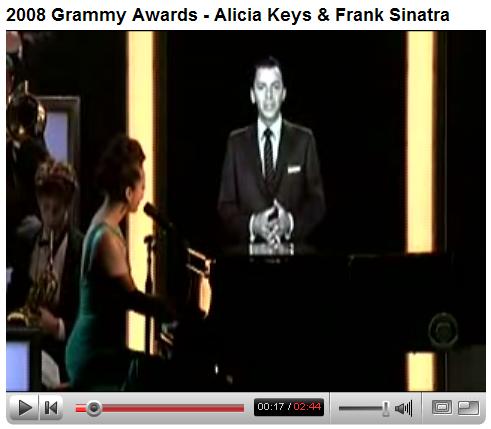
"That's the beginning -
just one of those clues.
You've had your first lesson
in learnin' the blues."
Related material:
All That Jazz
(
previous entry)
Tuesday, February 12, 2008 4:09 AM
ART WARS continued:
At the Still Point...
"
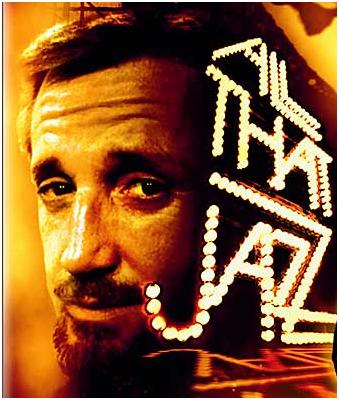
Rhapsody in Blue was commissioned in January
of 1924 by Paul Whiteman for an experimental concert of popular music.
It was... premiered at Aeolian Hall in New York City on February 12,
1924 with the composer at the piano." --
Matthew Naughtin
"Whiteman's concept of the 'true form of jazz,' even as late as 1924,
was the original Dixieland Jazz Band's 1917 recording of...
Livery
Stable Blues, with which he opened the program." --
The New York Times
For another sort of livery stable blues, see
Readings for Candlemas (Log24, Feb. 2, 2008).
Monday, February 11, 2008 7:00 AM
Epiphany for Roy, Part III
Monolith
"A shape of some kind
for something that
has no shape."

-- Roy Scheider
in "2010"
For further details,
click on the monolith.
See also the Keystone State's
lottery numbers for Sunday--
Grammy night and the
date of Scheider's death:

These numbers suggest
the following links.
For further details related
to death and religion, see
a version of the cheer
"1
234, who are
we for?"
For further details related
to
Grammy night, see
6/17, 2007:
A selection from the
Stephen King Hymnal
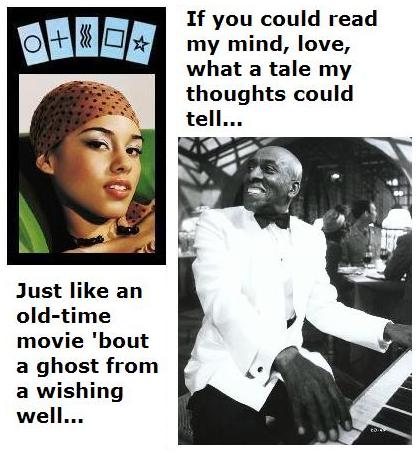
"... it's going to be
accomplished in steps,
this establishment
of the Talented in
the scheme of things."
-- Anne McCaffrey,
Radcliffe '47,
To
Ride Pegasus
Sunday, February 10, 2008 7:59 AM
Epiphany for Roy, Part II
The timestamp of this entry, 7:59 AM, may be regarded as a
reference to the Log24 entry of July 17, 2003 "A Constant Idea: 759."
The word "idea" in that entry is a reference to Plato--
who, along with Shakespeare, appears in a Chesterton quote in "An
Epiphany for Roy, Part I."
(This entry, on the other hand, was written, along with parts I and III of "An Epiphany for Roy," on the morning of
Monday, Feb. 11, 2008.)
Saturday, February 9, 2008 4:23 AM
Epiphany for Roy, Part I
The timestamp of this entry, 4:23 AM, may be regarded as a memorial to
Fra' Andrew Bertie (see Andrew
Cusack's journal). It was at about this time that I heard of Fra'
Andrew's death. The timestamp is a reference to Shakespeare's birthday
and to the following thought:
Page 162 of Orthodoxy, by G. K. Chesterton (1908), reprinted
in 1995 by Ignatius Press, San Francisco--
The man who lives in contact with what he believes to be a
living Church is a man always expecting to meet Plato and Shakespeare
tomorrow at breakfast. He is always expecting to see some truth that he
has never seen before.
The entry itself was written later... on the morning of Monday, Feb.
11, 2008. For a similar reference of sorts, to Plato, see "Epiphany for Roy, Part II" (timestamped 7:59 AM
Sunday, Feb. 10, 2008).
Friday, February 8, 2008 8:06 AM
Cheap Epiphany continued:
Thursday, February 7, 2008 7:59 AM
The Prize:
The Football
Mandorla
New York Lottery, 2008:

 7/01
7/01
"He pointed at the football
on his desk. 'There it is.'"
-- Glory Road
"The Rock" --
Goodspeed:
"I'll do my best."
Mason:
"Your best. Losers
always whine about
their best. Winners
go home and ...."
"The
Wu Li
Masters know
that physicists are
doing more than
'discovering the endless
diversity of nature.' They
are dancing with Kali,
the Divine Mother of
Hindu mythology."
-- Gary Zukav,
Harvard
'64
Wednesday, February 6, 2008 5:01 AM
Musical Brocade
Tuesday, February 5, 2008 6:05 AM
Philosophy at Mardi Gras
A literary complaint:
Philip Larkin on his fear of death--
This is a special way
of being afraid
No trick dispels.
Religion used to try,
That vast, moth-eaten
musical brocade
Created to pretend
we never die....
A literary response
quoted in The Last Enemy:
Stately, plump Buck Mulligan came from the stairhead, bearing a
bowl of lather on which a mirror and a razor lay crossed. A yellow
dressinggown, ungirdled, was sustained gently behind him by the mild
morning air. He held the bowl aloft and intoned:
-- Introibo ad altare Dei.
Halted, he peered down the dark winding stairs and called up
coarsely:
-- Come up, Kinch! Come up, you fearful jesuit!
Solemnly he came forward and mounted the round gunrest. He faced
about and blessed gravely thrice the tower, the surrounding country and
the awaking mountains. Then, catching sight of Stephen Dedalus, he bent
towards him and made rapid crosses in the air, gurgling in his throat
and shaking his head. Stephen Dedalus, displeased and sleepy, leaned
his arms on the top of the staircase and looked coldly at the shaking
gurgling face that blessed him, equine in its length, and at the light
untonsured hair, grained and hued like pale oak.
Buck Mulligan peeped an instant under the mirror and then covered
the bowl smartly.
-- Back to barracks! he said sternly.
He added in a preacher's tone:
-- For this, O dearly beloved, is the genuine Christine: body and
soul and blood and ouns. Slow music, please. Shut your eyes, gents. One
moment. A little trouble about those white corpuscles. Silence, all.
He peered sideways up and gave a long low whistle of call, then
paused awhile in rapt attention, his even white teeth glistening here
and there with gold points. Chrysostomos. Two strong shrill whistles
answered through the calm.
-- Thanks, old chap, he cried briskly. That will do nicely.
Switch off the current, will you?
-- James Joyce, Ulysses
From a musical brocade:
"My shavin' razor's cold
and it stings."
-- John Stewart,
who died on January 19
For the rest of
the brocade, see
The Last Enemy.
Related material:
The Crimson Passion:
A Drama at Mardi Gras
and the quote by Susan Sontag
in yesterday's entry,
as well as a recent
New York Times book review:
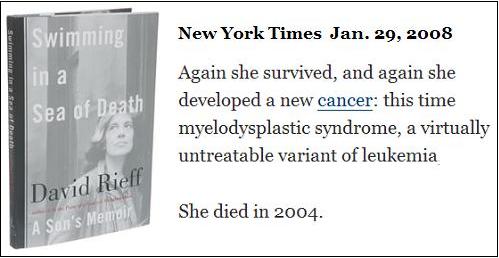
"Slow music, please.
Shut your eyes, gents.
One moment. A little trouble
about those white corpuscles.
Silence, all."
Ite, missa est.
Monday, February 4, 2008 7:59 AM
ART WARS continued:
New York Lottery,
Super Bowl Sunday, 2008:
 Susan Sontag,
"Against Interpretation"
"Of course, I don't mean interpretation in the
broadest sense, the sense in which Nietzsche (rightly) says, 'There are
no facts, only interpretations.' By interpretation, I mean here a
conscious act of the mind which illustrates a certain code, certain
'rules' of interpretation."
A Certain Code
Edward Gibbon on the Trinity:
"perhaps the deepest and darkest corner of the whole theological
abyss"
Friedrich Nietzsche on the abyss:
"Whoever fights monsters should see to it that in the
process he does not become a monster. And when you look long into
an abyss, the abyss also looks into you."
Frank Sinatra on narrative:
"You gotta be true to your code."
Saturday, February 2, 2008 2:19 AM
Readings for Candlemas
Trevanian,
Incident
at Twenty-Mile:
Matthew had a couple of hours on his hands before dinner with the
Kanes, so he drifted up to the only grassy spot in Twenty-Mile, the
triangular, up-tilted little meadow crossed by a rivulet running off
from the cold spring that provided the town's water. This meadow
belonged to the livery stable, and half a dozen of its donkeys lazily
nosed in the grass while, at the far end, a scrawny cow stood in the
shade of the only tree in Twenty-Mile, a stunted skeleton whose
leafless, wind-raked branches stretched imploringly to leeward, like
bony fingers clawing the clouds. The meadow couldn't be seen from any
part of the town except the Livery, so Matthew felt comfortably
secluded as he sauntered along, intending to investigate the burial
ground that abutted the donkey meadow, but B. J. Stone called to him
from the Livery, so he turned back and began the chore they had found
for him to do: oiling tools.
LATER....
After they did the dishes, Matthew and Ruth Lillian walked down the
Sunday-silent street, then turned up into the donkey meadow. He was
careful to guide her away from the soggy patch beneath the tree, where
the Bjorkvists had slaughtered that week's beef. Lost in their own
thoughts, they strolled across the meadow, the uneven ground causing
their shoulders to brush occasionally, until they reached the fenced-in
burying ground.
STILL LATER....
"Matthew?" she asked in an offhand tone.
"Hm-m-m?"
"What's 'the Other Place'?"
He turned and stared at her. "How do you know about that?"
"You told me."
"I never!"
"Yes, you did. You were telling about your fight with the Benson boys,
and you said you couldn't feel their punches because you were in this
'Other Place.' I didn't ask you about it then, 'cause you were all
worked up. But I've been curious about it ever since."
"Oh, it's just..." In a gesture that had something of embarrassment in
it and something of imitation, he threw his stick as hard as he could,
and it whop-whop-whop'd through the air, landing against the sagging
fence that separated the burying ground from the donkey meadow.
"If you don't want to tell me, forget it. I just thought... Never
mind." She walked on.
"It's not that I don't want to tell you. But it's... it's hard
to explain."
She stopped and waited patiently.
"It's just... well, when I was a little kid and I was scared-- scared
because Pa was shouting at Ma, or because I was going to have to fight
some kid during recess-- I'd fix my eyes on a crack in the floor or a
ripple in a pane of glass-- on anything, it didn't matter what-- and
pretty soon I'd slip into this-- this Other Place where everything was
kind of hazy and echoey, and I was far away and safe. At first, I had
to concentrate real hard to get to this safe place. But then, this one
day a kid was picking on me, and just like that-- without even trying--
I was suddenly there, and I felt just as calm as calm, and not afraid
of anything. I knew they were punching me, and I could hear the kids
yelling names, but it didn't hurt and I didn't care, 'cause I was off
in the Other Place. And after that, any time I was scared, or if
I was facing something that was just too bad, I'd suddenly find myself
there. Safe and peaceful." He searched here eyes. "Does that make any
sense to you, Ruth Lillian?"
"Hm-m... sort of. It sounds kind of eerie." And she added quickly, "But
really interesting!"
"I've never told anybody about it. Not even my ma. I was afraid to
because... This'll sound funny, but I was afraid that if other people
knew about the Other Place, it might heal up and go away, and I
wouldn't be able to get there when I really needed to. Crazy, huh?"
Friday, February 1, 2008 5:01 AM
Annals of Philosophy:
Kindergarten Theology
On the late
James Edwin Loder,
a Presbyterian minister and
a professor of Christian education
at Princeton Theological Seminary,
co-author of
The Knight's Move (1992):
"At his memorial service his daughter Tami told the
story of 'little Jimmy,' whose kindergarten teacher recognized a
special quality of mind that set him apart. 'Every day we read a story,
and after the story is over, Jimmy gets up and wants to tell us what
the story means.'" --
Dana R. Wright
For a related story about
knight moves and kindergarten,
see
Knight
Moves: The Relativity
Theory of Kindergarten Blocks,
and Log24, Jan.
16,
17, and
18.
See also Loder's book
(poorly written, but of some
interest in light of the above):

Opening of The Knight's Move --
"In a game of chess, the knight's move is unique because it alone goes
around corners. In this way, it combines the continuity of a set
sequence with the discontinuity of an unpredictable turn in the middle.
This meaningful combination of continuity and discontinuity in an
otherwise linear set of possibilities has led some to refer to the
creative act of discovery in any field of research as a 'knight's move'
in intelligence.
The significance of the title of this volume might
stop there but for Kierkegaard's use of the 'knight' image. The force
of Kierkegaards's usage might be described in relation to the chess
metaphor by saying that not merely does Kierkegaard's 'knight of faith'
undertake a unique move within the rules of the human game, but faith
transposes the whole idea of a 'knight's move' into the mind of the
Chess Master Himself. That is to say, chess is a game of multiple
possibilities and interlocking strategies, so a chess master must
combine the continuity represented by the whole complex of the
game with the unpredictable decision he must make every time it is his
turn. A master chess player, then, does not merely follow the rules; in
him the game becomes a construct of consciousness. The better the
player the more fully the game comes into its own as a creation of
human intelligence. Similarly, for Kierkegaard, the knight of faith is
a unique figure in human experience. The knight shows how, by existing
in faith as a creative act of Christ's Spirit, human existence comes
into its own as an expression of the mind of Christ. Thus, the ultimate
form of a 'knight's move' is a creative act raised to the nth power by Spiritus
Creator, but it still partakes fully in the concrete pieces and
patterns that comprise the nature of the human game and the game of
nature."
-- James E. Loder and W. Jim Neidhardt (Helmers & Howard
Publishing, 1992)
For a discussion, see Triplett's
"
Thinking Critically as a Christian."
Many would deny that such
a thing is possible; let them
read the works of T. S. Eliot.
Related material:
The Knight's Move
discusses (badly) Hofstadter's
"strange loop" concept; see
Not Mathematics but Theology
(Log24, July 12, 2007).