Saturday, March 31, 2007
3:00 PM
Women's History Month Ends
And the Oscar
goes to...
Obituaries in the News
By THE ASSOCIATED PRESS
Filed at 7:24 a.m. ET
Maria Julia Hernandez
SAN
SALVADOR, El Salvador (AP) -- Renowned human rights activist Maria
Julia Hernandez, who aided victims of El Salvador's civil war, died
Friday [March 30, 2007]. She was 68.
Hernandez died of a heart attack, friends and colleagues said.
She was best known as director of the Roman Catholic Church-sponsored
group Legal Protection, which aids impoverished victims of El
Salvador's 12-year civil war, and she had worked alongside the late
Archbishop Oscar Arnulfo Romero.
Hernandez had been hospitalized
since March 9 for heart problems, and suffered a heart attack Wednesday
night in addition to the fatal one on Friday.
She worked with
Romero on some of the conflict's first rights cases, said Jose Roberto
Lazo, a lawyer for Legal Protection. Romero was assassinated in 1980
after he urged the military to halt the death squads that killed
thousands of suspected guerrillas and leftist opponents of the
government.
Born to Salvadoran parents in the Honduran town of
San Francisco Morazan in 1939, Hernandez and her family moved to El
Salvador days later. She dedicated her life to social work in the
church and never married.
Source:
The New York Times,
Saturday,
March 31, 2007
Friday, March 30, 2007
9:48 PM
A Text for the Times:
Rings "Philosophers
ponder the idea of identity: what it is to give something a name on
Monday and have it respond to that name on Friday...."
-- Bernard Holland in
The New York Times
Monday, May 20, 1996
The headline for Edward Rothstein's "Connections" column in The New York Times of Monday, March 26, 2007, was "Texts That Run Rings Around Everyday Linear Logic."
Here is such a text.
The New York Lottery,
Friday, March 30, 2007:
Mid-day 002
Evening 085 |
Continuing yesterday's lottery meditation, let us examine today's New
York results in the light of Rothstein's essay. The literary "ring"
structure he describes is not immediately apparent in Friday's numbers,
although the mid-day number, 002-- which in the I Ching signifies yin, the feminine, receptive principle-- might be interpreted as referring to a ring of sorts.
Last night's reference to last
year's entry on this date provides,
like the last and first pages of
Finnegans Wake, an example
of literary "ring" structure.
Today's New York evening number,
85, reinforces this "ring" reference.
For related material, see
an entry for Reba McEntire's
birthday four years ago.
Friday, March 30, 2007
12:07 AM
Women's History Month continues...
A Year of
Magical Thinking 12:07:57 AM ET
March 30, 2007

See also this date
last year.
Wednesday, March 28, 2007
10:10 PM
Magical Thinking:
Plato, God, Stories
Peter Woit's
latest
weblog entry links to a discussion of Plato's cave and the modular
group, which in turn suggests a second look at an entry linked to,
indirectly, at the end of
Saturday's Log24 entry:
Natasha's Dance. This leads to the following:
"To me, to worship God means to recognize that mind and intelligence
are woven into the fabric of our universe in a way that altogether
surpasses our comprehension."
-- Freeman Dyson, "
Science & Religion: No Ends in Sight,"
The New York Review of Books, issue dated five years ago today-- March 28, 2002.
If Dyson's "recognition" is correct, why should mind and intelligence not be woven into the fabric of the Pennsylvania Lottery?

The
practiced reader of Log24 will have little difficulty in constructing a
story based on these numbers. Briefly, the story is...
2/26 and
8/26. The way the story was written may "surpass our comprehension," but
the story itself need not.
Those more interested in the writing than the story may consult Edward Rothstein's piece in the March 26
New York Times, "
Texts That Run Rings Around Everyday Linear Logic." There they will find a brief discussion of, appropriately, the Bible's
Book of Numbers.
Wednesday, March 28, 2007
1:00 PM
Happy Birthday, Reba
Logical Songs 
Logical Song I
(Supertramp)
"When I was young, it seemed that
Life was so wonderful, a miracle,
Oh it was beautiful, magical
And all the birds in the trees,
Well they'd be singing so happily,
Joyfully, playfully watching me" Logical Song II
(Sinatra)
"You make me feel so young,
You make me feel like
Spring has sprung
And every time I see you grin
I'm such a happy in-
dividual....
You and I are
Just like a couple of tots
Running across the meadow
Picking up lots
Of forget-me-nots"
Saturday, March 24, 2007
3:09 PM
Crown Affair:
Gambit
Saturday, March 24, 2007
2:12 AM
The Composer Takes a Bow
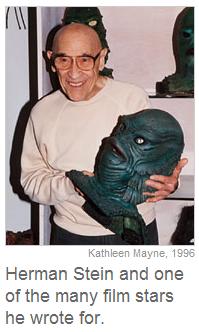
Stein died on March 15.
It is not known whether he
wrote the musical theme
for Log24 on that day,
"
Boink, Boink."
Saturday, March 24, 2007
2:09 AM
The Aesthetic Object:
Savage Scrutiny
"They sang desiring an object that was near,
In face of which desire no longer moved,
Nor made of itself that which it could not find...
Three times the concentred self takes hold, three times
The thrice concentred self, having possessed
The object, grips it in savage scrutiny,
Once to make captive, once to subjugate
Or yield to subjugation, once to proclaim
The meaning of the capture, this hard prize,
Fully made, fully apparent, fully found."
-- "Credences of Summer," VII,
by Wallace Stevens, from
Transport to Summer (1947)
Clifford Geertz on Levi-Strauss, from The Cerebral Savage:
"Savage logic works
like a kaleidoscope whose chips can fall into a variety of patterns.... "
Related material:
The kaleidoscope puzzle and "
Claude Levi-Strauss and the Aesthetic Object," a videotaped interview with Dr. Boris Wiseman.
Thursday, March 22, 2007
12:00 PM
A Game for Letterman
Chess Letter:
x
Click on a picture
for the meaning of
the chess notation.
"Shakespeare, Rilke, Joyce,
Beckett and Levi-Strauss are
instances of authors for whom
chiasmus and chiastic thinking
are of central importance,
for whom chiasmus is a
generator of meaning,
tool of discovery and
philosophical template."
Wednesday, March 21, 2007
7:29 PM
ART WARS continued:
Art Appreciation
A rectangle in memory of
Harvard mathematician George Mackey:
The five Log24 entries ending at
7:00 PM on March 14, 2006,
the last day of Mackey's life:
A rectangle in memory of
artist Mark Rothko:
 Sotheby's
Rothko Painting
Is Up for Auction
By CAROL VOGEL of
THE NEW YORK TIMES,
March 21, 5:35 PM ET
"David Rockefeller plans to sell
a seminal painting by Mark Rothko
for what Sotheby's hopes will be
more than $40 million. Above,
a detail from the painting."
From the story:
"Mr. Rockefeller has owned the
painting since 1960, when he
bought it for less than $10,000....
He said that in November, during a
periodic appraisal of his art collection,
he noticed to his surprise that of all
his paintings, the Rothko had
appreciated in value the most.
'That got me thinking,' he said."
Art appreciation:
When Crayolas worked, I dreamed an angel,
a bar of light, your messenger,
beckoning from a wallpaper corner,
blushing in the porcelain gas glow. When Crayolas worked and chariots swung low,
and America was beautiful and time was slow. Then all that died in life's longer year.
Autumn came, colors turned sere.
Brittle Crayolas crumbled when touched.
The friends of life were cold and hushed. Still you were there, shining and warm
behind snow clouds, safe from our harm.
The seed I am again burst out,
drank your heat, suckled your light in another fair spring to live again
on billowing oceans of bottomless green.
-- Excerpt from C. K. Latham's
When Crayolas Worked,
from Shiva Dancing:
The Rothko Chapel Songs,
1972-1997
|
Wednesday, March 21, 2007
3:18 PM
Sequel
Finite Relativity
continued This afternoon I added a paragraph to
The Geometry of Logic that makes it, in a way, a sequel to the webpage
Finite Relativity:
"As
noted previously, in Figure 2 viewed as a lattice the 16 digital labels
0000, 0001, etc., may be interpreted as naming the 16 subsets of a
4-set; in this case the partial ordering in the lattice is the
structure preserved by the lattice's group of 24 automorphisms-- the
same automorphism group as that of the 16 Boolean connectives. If,
however, these 16 digital labels are interpreted as naming the 16
functions from a 4-set to a 2-set (of two truth values, of two colors,
of two finite-field elements, and so forth), it is not obvious that the
notion of partial order is relevant. For such a set of 16 functions,
the relevant group of automorphisms may be the affine group of A
mentioned above. One might argue that each Venn diagram in Fig. 3
constitutes such a function-- specifically, a mapping of four
nonoverlapping regions within a rectangle to a set of two colors-- and
that the diagrams, considered simply as a set of two-color mappings,
have an automorphism group of order larger than 24... in fact, of order
322,560. Whether such a group can be regarded as forming part of a
'geometry of logic' is open to debate."
The epigraph to "Finite Relativity" is:
"This
is the relativity problem: to fix objectively a class of equivalent
coordinatizations and to ascertain the group of transformations S
mediating between them."
-- Hermann Weyl, The Classical Groups, Princeton University Press, 1946, p. 16
The added paragraph seems to fit this description.
Monday, March 19, 2007
10:31 AM
For St. Joseph's Day:
The Naked Brain
The cover (pdf) of the
Notices of the American Mathematical Society for April 2007 (
Mathematics Awareness Month) features a naked disembodied brain (
Log24, March 16), courtesy of
researchers at the
Catholic University of Louvain.
Related material:
Log24, Jan. 26
"... at last she realized what the Thing on the dais was. IT was a brain. A disembodied brain...."
"There could not be an objective test
that distinguished a clever robot from a really conscious person." -- Daniel Dennett in TIME magazine, |
Sunday, March 18, 2007
2:20 PM
The Symmetries of Logic
Update to
The Geometry of Logic:
A detailed description of a group of 16 "logical automorphisms" of the
16 binary connectives has been given in the paper "Simetria y Logica:
La notacion de Peirce para los 16 conectivos binarios," by Mireya
Garcia, Jhon Fredy Gomez, and Arnold Oostra. (Published in the
Memorias del XII Encuentro de Geometria y sus Aplicaciones, Universidad Pedagogica Nacional, Bogota, June 2001; on the Web at
http://www.unav.es/gep/Articulos/SimetriaYLogica.pdf.) The authors do not identify this group as a subgroup of the affine group of
A
(the finite affine geometry of four dimensions over the two-element
field); this can serve as an exercise. Another exercise: determining
whether the authors' order-16 group includes
all transformations that might reasonably be called "logical automorphisms" of the 16 binary connectives.
Saturday, March 17, 2007
10:48 AM
For St. Patrick:
Friday, March 16, 2007
10:48 AM
ART WARS continued:
"Geometry,
Theology,
and Politics:
Context and Consequences of
the Hobbes-Wallis Dispute" (
pdf)
Excerpt:
"We are left to conclude that there was something significant in
Hobbes's philosophy that motivated Wallis to engage in the lengthy and
vitriolic denunciation of all things Hobbesian.
In point of
fact, Wallis made no great secret of his motivations for attacking
Hobbes's geometry, and the presence of theological and political
motives is well attested in a 1659 letter to Huygens. He wrote:
But
regarding the very harsh diatribe against Hobbes, the necessity of the
case, and not my manners, led to it. For you see, as I believe, from
other of my writings how peacefully I can differ with others and bear
those with whom I differ. But this was provoked by our Leviathan (as
can be easily gathered fro his other writings, principally those in
English), when he attacks with all his might and destroys our
universities (and not only ours, but all, both old and new), and
especially the clergy and all institutions and all religion. As if the
Christian world knew nothing sound or nothing that was not ridiculous
in philosophy or religion; and as if it has not understood religion
because it does not understand philosophy, nor philosophy because it
does not understand mathematics. And so it seemed necessary that now
some mathematician, proceeding in the opposite direction, should show
how little he understand this mathematics (from which he takes his
courage). Nor should we be deterred from this by his arrogance, which
we know will vomit poison and filth against us. (Wallis to Huygens, 11
January, 1659; Huygens 1888-1950,* 2: 296-7)
The
threats that Hobbes supposedly posed to the universities, the clergy,
and all religion are a consequence of his political and theological
doctrines. Hobbes's political theory requires that the power of the
civil sovereign be absolute and undivided. As a consequence, such
institutions as universities and the clergy must submit to the dictates
of the sovereign in all matters. This extends, ironically enough, to
geometry, since Hobbes notoriously claimed that the sovereign could ban
the teaching of the subject and order 'the burning of all books of
Geometry' if he should judge geometric principles 'a thing contrary to
[his] right of dominion, or to the interest of men that have dominion' (Leviathan (1651) 1.11, 50; English Works**
3: 91). In the area of church government, Hobbes's doctrines are a
decisive rejection of the claims of Presbyterianism, which holds that
questions of theological doctrine is [sic] to be decided by the
elders of the church-- the presbytery-- without reference to the claims
of the sovereign. As a Presbyterian minister, a doctor of divinity, and
professor of geometry at Oxford, Wallis found abundant reason to reject
this political theory."
* Huygens, Christiaan. 1888-1950. Les oeuvres complètes de Chrisiaan Huygens. Ed. La Société Hollandaise des Sciences. 22 vols. The Hague: Martinus Nijhoff.
** Hobbes, Thomas. [1839-45] 1966. The English Works of Thomas Hobbes of Malmesbury, now First Collected and Edited by Sir William Molesworth. Edited by William Molesworth. 11 vols. Reprint. Aalen, Germany: Scientia Verlag.
Related material: "But what is it?"
Calvin demanded.
"We know that it's evil,
but what is it?"
"Yyouu hhave ssaidd itt!"
Mrs. Which's voice rang out.
"Itt iss Eevill. Itt iss thee
Ppowers of Ddarrkknesss!"
-- A Wrinkle in Time

"After
A Wrinkle in Time
was finally published, it was pointed out to me that the villain, a
naked disembodied brain, was called 'It' because It stands for
Intellectual truth as opposed to a truth which involves the whole of
us, heart as well as mind. That acronym had never occurred to me. I
chose the name It intuitively, because an IT does not have a heart or
soul. And I did not understand consciously at the time of writing that
the intellect, when it is not informed by the heart, is evil."
See also
"Darkness Visible"
in
ART WARS.