Sunday, December 31, 2006 8:00 PM
St. Stephen's Goes Hollywood

St. Thomas Becket's day--
Sunday, December 31, 2006 7:15 PM
Aesthetics of Evil, Part III
-- Martin Gardner interview in AMS Notices, June/July 2005
Sunday, December 31, 2006 7:14 PM
Aesthetics of Evil, Part II
7/14, 2004:Time Magazine,
issue dated July 19, 2004 --
 |
Movie sequels are getting raves..."
Sunday, December 31, 2006 7:13 PM
Aesthetics of Evil, Part I
7/13, 2003:Sunday, December 31, 2006 9:00 AM
Garden Party
vs. Christ Church
"... the closing number
for Spielberg's tribute
and the gala itself...
[is] the finale to
the opera 'Candide,'
'Make Our Garden Grow.'"
-- Press release from CBS
on this year's
Kennedy Center Honors
Wallace Stevens,
"Esthétique du Mal, XI"--
"We are not
At the centre of a diamond."
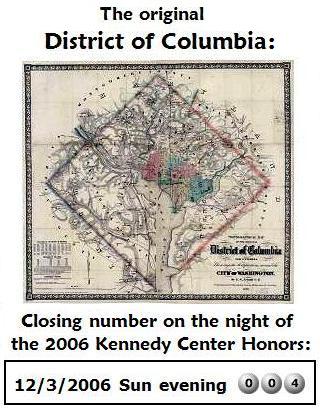
The map shows the original
(pre-1846) diamond shape
of the District of Columbia.
For the relevance of the
closing number of "Candide"
to diamonds, see
the previous entry.
For the relevance of the
closing number of the
12/3/06 DC lottery, see
Theme and Variations.
For the relevance of the
earlier mid-day number,
see the conclusion of
"Esthétique du Mal" --
| "And out of what one sees and hears and out Of what one feels, who could have thought to make So many selves, so many sensuous worlds, As if the air, the mid-day air, was swarming With the metaphysical changes that occur, Merely in living as and where we live." |
A search on the mid-day number
in the context of metaphysics
yields the following:

Related material:
-- Conversations with the Dead:
The Ontological Substructure of
Wallace Stevens's "Esthétique du Mal"--
a 1999 Master's thesis
For further remarks on
ontological substructure,
see A First Class Degree
(on a notable graduate of
Christ Church, Oxford).
Friday, December 29, 2006 11:01 AM
For St. Thomas Becket's Day
of Christ Church
"For every kind of vampire,
there is a kind of cross."
-- Thomas Pynchon

Click on picture for details.
Today is the feast
of St. Thomas Becket.
In his honor, a meditation
on tools and causation:
-- Review by H. Allen Orr in
The New York Review of Books,
Vol. 54, No. 1, January 11, 2007
"An odd extension"--
Wolpert's title is, of course,
from Lewis Carroll.
Related material:
"It's a poor sort of memory
that only works backwards."
-- Through the Looking-Glass
An event at the Kennedy Center
broadcast on
December 26, 2006
(St. Steven's Day):
-- CBS press release
from the conclusion to
"Mathematics and Narrative"
(Log24, Aug. 22, 2005):

"At times, bullshit can
only be countered
with superior bullshit."
-- Norman Mailer
"The concept of possible worlds dates back to at least Leibniz who in his Théodicée tries to justify the apparent imperfections of the world by claiming that it is optimal among all possible worlds. Voltaire satirized this view in his picaresque novel Candide....
Borges' seminal short story El jardín de senderos que se bifurcan ("The Garden of Forking Paths") is an early example of many worlds in fiction."
-- Voltaire
"We symbolize
logical necessity
with the box
 )
)and logical possibility
with the diamond
 )."
)."-- Keith Allen Korcz

"The possibilia that exist,
and out of which
the Universe arose,
are located in
a necessary being...."
-- Michael Sudduth,
Notes on
God, Chance, and Necessity
by Keith Ward,
Regius Professor of Divinity,
Christ Church College, Oxford
(the home of Lewis Carroll)
For further details,
click on the
Christ Church diamond.
Wednesday, December 27, 2006 7:14 AM
In memory of Gerald Ford:
Tuesday, December 26, 2006 8:00 AM
Matunda Ya Kwanza:

Tuesday, December 26, 2006 7:59 AM
"History, Stephen said...."
Today in Historyby The Associated Press:
Today is Tuesday, Dec. 26, the 360th day of 2006. There are five days left in the year. The seven-day African-American holiday Kwanzaa begins today. This is Boxing Day.

Monday, December 25, 2006 8:00 AM
The Midnight Special
"the Godfather of Soul,"
died at about 1:45 AM EST
today, Christmas Day, 2006.
A picture from a set of
five Log24 entries ending,
at 2:56 AM on
Sept. 18, 2004, with an
entry on Brown titled
"Soul at Harvard"--

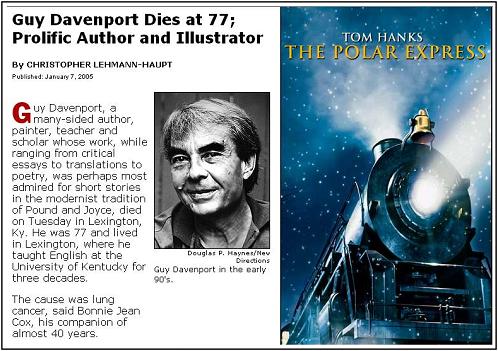
Click on picture for further details.
Sunday, December 24, 2006 7:15 AM
Christmas Eve Story, Part II:


Click on picture
for further details.
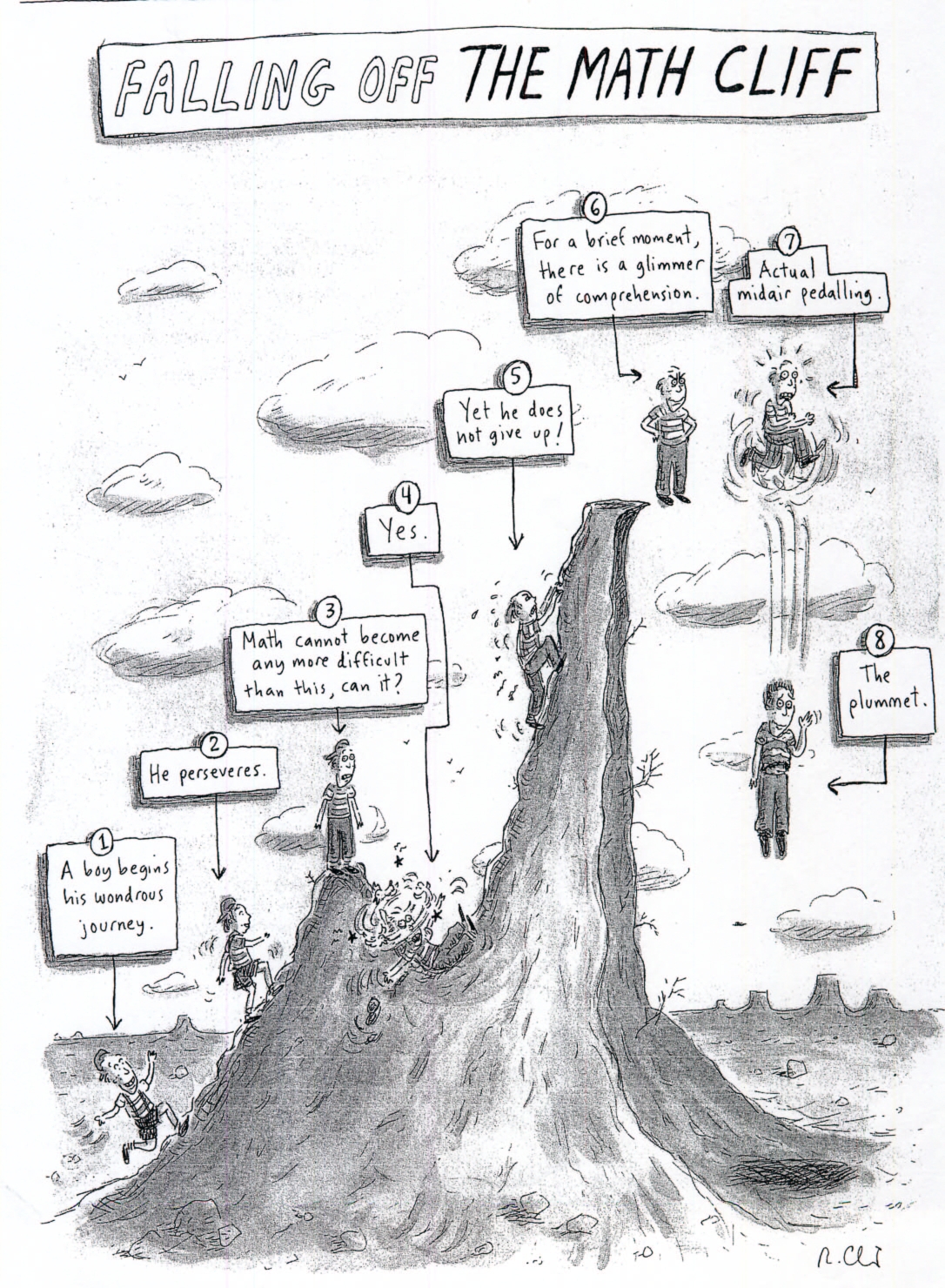
Click on picture
for further details.
Sunday, December 24, 2006 7:00 AM
Christmas Eve Story, Part I:
(in memory of George Latshaw,
who died on Tuesday, Dec. 19, 2006)
Brightness Doubled Seven is Heaven "Love is the shadow that ripens the vine. Set the controls for the heart of the Sun. Witness the man who Allusions to Classical Chinese Poetry in Pink Floyd |

"At Home in Landscape:
Mannheim's Chiliastic Mentality
in 'Tintern Abbey'"
"... 'the present becomes the breach through which what was previously inward, bursts out suddenly, takes hold of the outer world and transforms it' [p. 193]. This breaking through into ecstasy can only be brought about through 'Kairos' or 'fulfilled time'"....
See translators' note, p. 198: "In Greek mythology Kairos is the God of Opportunity-- the genius of the decisive moment. The Christianized notion of this is given thus in Paul Tillich's The Religious Situation [1925, translation by H. Richard Niebuhr, New York, Holt, 1932, pp. 138-139]: 'Kairos is fulfilled time, the moment of time which is invaded by eternity. But Kairos is not perfection or completion in time.'"
Garrett quotes Wordsworth's 1850 Prelude:
"And in book 14 Wordsworth.... symbolizes how man can find transcendent unity with the universe through the image of himself leading his group to the peak of Mt. Snowdon. Climbing at night in thick fog, he almost steps off a cliff, but at the last instant, he steps out of the mist, the moon appears, and his location on the brink is revealed. Walking in the darkness of reason, his imagination illumed the night, revealed the invisible world, and spared him his life."There are in our existence spots of time,
That with distinct pre-eminence retain
A renovating virtue ... (12.208-210)
See also Charles Frazier on the edge of eternity:
"They climbed to a bend and from there they walked on great slabs of rock. It seemed to Inman that they were at the lip of a cliff, for the smell of the thin air spoke of considerable height, though the fog closed off all visual check of loftiness.... Then he looked back down and felt a rush of vertigo as the lower world was suddenly revealed between his boot toes. He was indeed at the lip of a cliff, and he took one step back...."
-- Cold Mountain
Part II -- 7/15
From Log24 on 7/15, 2005:
Christopher Fry's obituary
in The New York Times--
"His plays radiated
an optimistic faith in God
and humanity, evoking,
in his words, 'a world
in which we are poised
on the edge of eternity,
a world which has
deeps and shadows
of mystery,
and God is anything but
a sleeping partner.'"
Accompanying illustration:

Adapted from cover of
German edition of Cold Mountain
Saturday, December 23, 2006 9:00 AM
Meet Max Black, continued
Bernard Holland in The New York Times on Monday, May 20, 1996:
"Philosophers ponder the idea of identity: what it is to give something a name on Monday and have it respond to that name on Friday...."
| Log24 on Monday, Dec. 18, 2006: "I did a column in Scientific American on minimal art, and I reproduced one of Ed Rinehart's [sic] black paintings." -- Martin Gardner (pdf) "... the entire profession has received a very public and very bad black mark." -- Joan S. Birman (pdf) Lottery on Friday, Dec. 22, 2006: 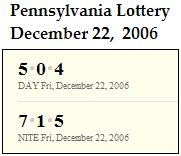 |
Analysis of the structure
of a 2x2x2 cube

projective points
in a Fano plane.
"Art history was very personal
through the eyes of Ad Reinhardt."
-- Robert Morris,
Smithsonian Archives
of American Art
a quotation on Usenet:
"A set having three members is a
single thing wholly constituted by
its members but distinct from them.
After this, the theological doctrine
of the Trinity as 'three in one'
should be child's play."
-- Max Black,
Caveats and Critiques:
Philosophical Essays in
Language, Logic, and Art
Thursday, December 21, 2006 10:02 AM
2001 Revisited:
The three main characters "spend much of the play discussing quantum mechanics, string theory and Schrödinger’s Cat experiment....
Ms. Buggé's frequently clever script makes the audience feel smart by offering up fairly recognizable literary references (from, among other things, T. S. Eliot's 'Love Song of J. Alfred Prufrock' and William Wordsworth's 'Tintern Abbey'). But the play suffers from abrupt, sometimes motivation-free exits and entrances."
As does life itself.
Yau rated the conjecture as one of the major mathematical puzzles of the 20th Century. |
| Five years have passed; five summers, with the length Of five long winters! -- William Wordsworth |
on this date:
There is one story and one story only
That will prove worth your telling....
-- Robert Graves,
"To Juan at the Winter Solstice"
Exits and Entrances:

Halmos exited on Yom Kippur.
He may or may not achieve
re-entry. For details, see
Log24 entries of Oct. 1-15:
Ticket Home


The Unity of Mathematics,
Heisenberg on Beauty, and
Theme and Variations.
Wednesday, December 20, 2006 9:26 AM
Continued from previous entry...
"For every kind of vampire,
there is a kind of cross."
-- Thomas Pynchon

"Also on the card is Adrien Brody ('The Thin Red Line') as a poseur proto-punk who lives in his parents' converted garage and strips at an underground gay club. He takes heat from his former friends-- the aforementioned neighborhood toughs-- for affecting an English accent and wearing a mohawk...."
-- Rob Blackwelder review of Spike Lee's "Summer of Sam" (1999)

"With its white community focus, Summer of Sam is something of a departure for Lee. But with its immaculate script, faultless acting and Lee's own cameo performance, it is a typical Spike Lee film. Plenty of rapid-fire, wise-cracking dialogue and hectic crowd scenes make it fraught with tension from beginning to end. Hectic, inventive, gritty, witty, edgy and provocative, no detail is too small to escape Lee's attention and no issue too large as the film's perceptive dissection of human nature moves effortlessly between humour and horror."
-- Andrea Henry review

"At another end of the sexual confusion spectrum, there's Vinny's childhood friend, now turned spiky-haired punk rocker, Ritchie (Adrien Brody). Recently he's started dating Ruby (Jennifer Esposito), erstwhile neighborhood tramp. They are both redeemed by their relationship, which at least at first, involves no sex, technically. Where Vinny struggles with his culturally instilled madonna-whore complex, Ritchie's just back from a stint living in the Village, looking for an identity that's distinct from his Italian gotta-be-macho upbringing. Eventually, he gets a gig at CBGB's ('How do you spell that?' wonders Vinny), but in order to make ends meet (and pay for his new guitar), he's dancing and turning tricks at Male World, a decrepit gay club where he performs fellatio with a life-sized dummy on stage, and, you assume, with clients offscreen."
-- Cynthia Fuchs revew (title: "Sex and the City")
"I watched Halle Berry wipe her mouth off after Adrien Brody, in the heat of his excitement, laid the lip-lock on her for five full excruciating seconds. She was stunned, and seemed to have no idea what had happened to her. I'll tell you what happened, Halle: it's called sexual assault."


Where's the Oscar
for the mouth-wipe?
Tuesday, December 19, 2006 9:00 AM
Cartoon Graveyard
at the Apollo

Click on picture
for related symbolism.
"This is the garden of Apollo,
the field of Reason...."
John Outram, architect
I need a photo-opportunity
I want a shot at redemption
Don't want to end up a cartoon
In a cartoon graveyard
-- Paul Simon
In memory of Joseph Barbera--
co-creator ot the Flintstones--
who died yesterday, a photo
from today's Washington Post:

Playing the role of
recording angel --
Halle Berry as
Rosetta Stone:

Related material:
"Citizen Stone"
and
"Putting the X in Xmas."
Tuesday, December 19, 2006 8:00 AM
ART WARS continued
Allan Stone,
art dealer and collector,
died at 74 on Friday,
Dec. 15, 2006.
From his obituary in
yesterday's
New York Times:
The Log24 entry for the date of Stone's death, titled "Putting the X in Xmas," suggests the following picture as a memorial:

with paint, the picture
is, in a sense, realistic.
It should be noted of the
obituary by Roberta Smith
that
"This is the exact opposite
of what echthroi do in
their X-ing or un-naming."
-- Wikipedia on
A Wind in the Door
Monday, December 18, 2006 7:20 AM
For Spielberg's Birthday
continued
"I did a column in Scientific American on minimal art, and I reproduced one of Ed Rinehart's [sic] black paintings. Of course, it was just a solid square of pure black."
Click on picture
for details.

The Notices of the American Mathematical Society, January 2007 (pdf):
"This was just one of the many moments in this sad tale when there were no whistle-blowers. As a result the entire profession has received a very public and very bad black mark."
-- Joan S. Birman
Professor Emeritus of Mathematics
Barnard College and
Columbia University
Saturday, December 16, 2006 10:31 AM
Wake Speech

In Ulysses, there is "... the same quality of simultaneity as in cubist collage. Thus, for example, Bloom surveys the tombstones at Paddy Dignam's funeral and, in the midst of platitudinous and humorous thoughts, remembers Molly 'wanting to do it at the window'...."
Related material from quotations at the poetry journal eratio:
"The guiding law of the great variations in painting is one of disturbing simplicity. First things are painted; then, sensations; finally, ideas. This means that in the beginning the artist's attention was fixed on external reality; then, on the subjective; finally, on the intrasubjective. These three stages are three points on a straight line."
-- Jose Ortega y Gasset ("On Point of View in the Arts," an essay on the development of cubism)
Related material on
tombstones and windows:
Geometry's Tombstones,
Galois's Window, and
Architecture of Eternity.

See also the following part
of the eratio quotations:

Quotations arranged by
Gregory Vincent St. Thomasino
1 Or hypercubism: See 10/31/06.
2 Or "Wake" speech: See 10/31/05.