Tuesday, November 28, 2006 9:00 AM
Judgment at Nuremberg:
The reformation of the church in the 16th century brought changes to the Christmas markets. Nikolaus was replaced by the Christkindl (Christchild) as the gift giver and the Nikolaus markets became Christkindl markets. This custom began in the Protestant areas of Bavaria with Nuremberg being the first city to call its market Christkindlesmarkt. Munich, a Catholic city, changed its Nikolausdult to Christkindlmarkt in 1805."
-- Background for Christkindl Market in Kitchener, Ontario
This will also serve as background for today's New York Times story on Chicago's Christkindlmarkt:
"The Christkindl, the Christmas Fairy, is a cherished highlight during the Holiday Tree Lighting. The Christmas Fairy proclaims the opening of Christkindlmarket Chicago."
Also from the official Chicago Christkindl website:
On the "Christkindl," the Christmas Fairy & our sister-market visit
|
In its English version, the Nuremberg website calls the alleged "Christmas Fairy" an angel:
"The Nuremberg Christmas Angel with her white and golden dress, long blond curls and her golden crown, has been the symbol for the Christmas Market for many decades. During Advent time, the Christmas Angel is the most important representative of the city and of the traditional Christmas Market.
Every year, on the Friday before the first Advent Sunday, the Nuremberg Christmas Angel opens the Nuremberg Christmas Market by reciting a solemn prologue."
The German version of the Nuremberg site calls the Christmas Angel the Christkind
(Christ Child). This confusion of the Christ Child with a supernatural
bringer of gifts-- hence, later, an angel, and, in Chicago, a fairy--
is said to have originated with Martin Luther.
From a Radio Deutsche Welle website--
The making of a myth
The Christkind was originally introduced in the 16th century by religious reformer Martin Luther. Until then, it was always Saint Nicholas who brought gifts on Dec. 6. But as Protestants can't have saints, Luther needed a new Christmas tradition for his followers. "Luther wanted to move the gift-giving away from the Catholic holiday on Dec. 6," said Nuremberg tourism manager Michael Weber. "So he reinvented the tradition for Protestants by moving it to Christmas Eve and making the Christkind-- really, the baby Jesus-- the person who brought the gifts."
It was under the rule of the National Socialists that the image of today's Christkind was ultimately anchored in the collective German mind. They built on Nuremberg's tradition of producing tinsel angels, and in 1933, had a young girl in an angel costume open the city's Christmas Market for the first time. After the second World War, Nuremberg's tinsel angels became simply the Nuremberg Christkind, and the figures were sold nation-wide.
Here is the banner for the Nuremberg site:

The banner reads:
"Nuremberg Christkindlesmarkt--
Where the Christ Child
is at home"

Maybe.
Monday, November 27, 2006 2:45 AM
Concrete Universal:
of Philosophy
"What on earth is
a 'concrete universal'?"
-- Said to be an annotation
(undated)
by Robert M. Pirsig of
A History of Philosophy,
by Frederick Copleston,
Society of Jesus.
For an answer, see
"The Structure of the
'Concrete Universal'
in Literature,"
by W. K. Wimsatt, Jr.,
PMLA, Vol. 62, No. 1
(March, 1947), pp. 262-280.
This is reprinted in Wimsatt's
The Verbal Icon:
Studies in the
Meaning of Poetry.
The final chapter of
The Verbal Icon
is titled
"Poetry and Christian Thinking."
For more on Wimsatt
and this topic, see
"Reclaiming the Bible
as Literature,"
by Louis A. Markos.
Sunday, November 26, 2006 7:26 AM
Today's Sermon
Rosalind Krauss
in "Grids," 1979:
"If we open any tract-- Plastic Art and Pure Plastic Art or The Non-Objective World, for instance-- we will find that Mondrian and Malevich are not discussing canvas or pigment or graphite or any other form of matter. They are talking about Being or Mind or Spirit. From their point of view, the grid is a staircase to the Universal, and they are not interested in what happens below in the Concrete.
Or, to take a more up-to-date example...."
"He was looking at
the nine engravings
and at the circle,
checking strange
correspondences
between them."
-- The Club Dumas,
1993
"And it's whispered that soon
if we all call the tune
Then the piper will lead us
to reason."
-- Robert Plant,
1971
The nine engravings of
The Club Dumas
(filmed as "The Ninth Gate")
are perhaps more an example
of the concrete than of the
universal.
An example of the universal*--
or, according to Krauss, a
"staircase" to the universal--
is the ninefold square:

"This is the garden of Apollo,
the field of Reason...."
-- John Outram, architect
For more on the field
of reason, see
Log24, Oct. 9, 2006.
A reasonable set of
"strange correspondences"
in the garden of Apollo
has been provided by Ezra Brown
in a mathematical essay (pdf).
Unreason is, of course,
more popular.
* The ninefold square is perhaps a "concrete universal" in the sense of Hegel:
"Two
determinations found in all philosophy are the concretion of the Idea
and the presence of the spirit in the same; my content must at the same
time be something concrete, present. This concrete was termed Reason,
and for it the more noble of those men contended with the greatest
enthusiasm and warmth. Thought was raised like a standard among the
nations, liberty of conviction and of conscience in me. They said to
mankind, 'In this sign thou shalt conquer,' for they had before their
eyes what had been done in the name of the cross alone, what had been
made a matter of faith and law and religion-- they saw how the sign of
the cross had been degraded."
-- Hegel, Lectures on the History of Philosophy, "Idea of a Concrete Universal Unity"
"For every kind of vampire,
there is a kind of cross."
-- Thomas Pynchon
Sunday, November 26, 2006 12:25 AM
Galois's Window

Related material from March 2004:
Anschaulichkeit (3/16) and
Readings for St. Patrick's Day.
"For every kind of vampire,
there is a kind of cross."
-- Thomas Pynchon,
Gravity's Rainbow
Saturday, November 25, 2006 1:25 PM
The Concert from Hell
Today's birthdays:Bob Lind, composer of "Elusive Butterfly," and General Augusto Pinochet.
Also today:
Stones tour rolls into Vancouver.
These events prompt fond memories of a Log24 entry from the Feast of the Transfiguration in 2002 and of more recent entries from this date last year-- Buckley and Pinochet and Rehearsing Hell.
Perhaps the afterlife will include, for some, a Mick Jagger rendition of the Lind tune (along with the Percy Faith rendition of "Satisfaction" mentioned in The Last Samurai.)
Friday, November 24, 2006 1:06 PM
"Simplify, simplify...."
Geometry
from Point
to Hyperspace
by Steven H. Cullinane
Euclid is "the most famous
geometer ever known
and for good reason:
for millennia it has been
his window
that people first look through
when they view geometry."
-- Euclid's Window:
The Story of Geometry
from Parallel Lines
to Hyperspace,
by Leonard Mlodinow
"...the source of
all great mathematics
is the special case,
the concrete example.
It is frequent in mathematics
that every instance of a
concept of seemingly
great generality is
in essence the same as
a small and concrete
special case."
-- Paul Halmos in
I Want To Be a Mathematician
Euclid's geometry deals with affine
spaces of 1, 2, and 3 dimensions
definable over the field
of real numbers.
Each of these spaces
has infinitely many points.
Some simpler spaces are those
defined over a finite field--
i.e., a "Galois" field--
for instance, the field
which has only two
elements, 0 and 1, with
addition and multiplication
as follows:
|
|
affine spaces over this simplest
field by using square or cubic
cells as "points":

From these five finite spaces,
we may, in accordance with
Halmos's advice,
select as "a small and
concrete special case"
the 4-point affine plane,
which we may call

Galois's Window.
The interior lines of the picture
are by no means irrelevant to
the space's structure, as may be
seen by examining the cases of
the above Galois affine 3-space
and Galois affine hyperplane
in greater detail.
For more on these cases, see
The Eightfold Cube,
Finite Relativity,
The Smallest Projective Space,
Latin-Square Geometry, and
Geometry of the 4x4 Square.
(These documents assume that
the reader is familar with the
distinction between affine and
projective geometry.)
These 8- and 16-point spaces
may be used to
illustrate the action of Klein's
simple group of order 168
and the action of
a subgroup of 322,560 elements
within the large Mathieu group.
The view from Galois's window
also includes aspects of
quantum information theory.
For links to some papers
in this area, see
Elements of Finite Geometry.
Wednesday, November 22, 2006 9:00 PM
Time and the...
"Who knows where madness lies?"
-- Rhetorical question
in "Man of La Mancha"
(See previous entry.)
Using madness to
seek out madness, let us
consult today's numbers...
Pennsylvania Lottery
Nov. 22, 2006:
Mid-day 487
Evening 814
The number 487 leads us to
page 487 in the
May 1977 PMLA,
"The Form of Carnival
in Under the Volcano":
"The printing presses' flywheel
marks the whirl of time*
that will split La Despedida...."
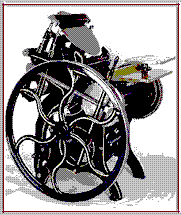
Flywheel
From Dana Grove,
A Rhetorical Analysis of
Under the Volcano,
page 92:
is revealed by the evening
lottery number, 814, which
leads to an entry of 8/14:
Cleavage Term

between the classic and romantic worlds.
Quality, the cleavage term between
hip and square, seemed to be it."
-- Robert M. Pirsig

Rebecca Goldstein
The 8/14 entry also deals with
Rebecca Goldstein, who
seems to understand
such cleavage
very well.
(See also today's previous entry.)
* Cf. Shakespeare's "whirligig of time"
linked to in the previous entry.)
Wednesday, November 22, 2006 12:00 PM
Joyce's nightmare continues...
Windmill and DiamondFrom "Today in History,"
by The Associated Press:
On this date:
In 1965, the musical
"Man of La Mancha"
opened in New York.In 1975, Juan Carlos
was proclaimed
King of Spain.
Today's birthdays:
... Movie director
Arthur Hiller is 83....
Hiller directed the 1972 film
of "Man of La Mancha."
A quotation from that film:
"When life itself seems lunatic,
who knows where madness lies?"
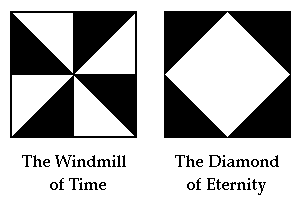
One can approach these symbols in either a mathematical or a literary fashion. For a mathematical discussion of the symbols' structure, see Theme and Variations. Those who prefer literary discussions may make up their own stories.
bless me, what do they
teach them at these schools?"
The Narnia Chronicles
Tuesday, November 21, 2006 7:07 AM
ART WARS (cont. from Halloween)
"Beyond Belief":
This was the name of a
Nov. 5-7 conference on
the religion of Scientism
described in today's
New York Times.
Beyond Despair:
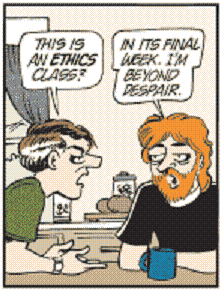
Doonesbury 11/21/06
For some, art serves as
an alternative to both
traditional religion and
the religion of Scientism.
See, for instance, the Log24
entries on All Hallows' Eve
in both 2005 and 2006.
Monday, November 20, 2006 7:20 PM
ART WARS continued
TriumphsYesterday's link to a Log24 entry for the Feast of the Triumph of the Cross led to the following figure:

(Based on Weyl's Symmetry)
Today, an entry in the The New Criterion's weblog tells of Hilton Kramer's new collection of essays on art, The Triumph of Modernism.
From a Booklist review:
Kramer "celebrates the revelations of modern art, defining modernism as nothing less than 'the discipline of truthfulness, the rigor of honesty.'"
Further background: Kramer opposes
"willed frivolity and politicized vulgarization as fashionable enemies of high culture as represented in the recent past by the integrity of modernism."
Perhaps Kramer would agree that such integrity is exemplified by "Two Giants" of modernism described by Roberta Smith in The New York Times recently (Nov. 3-- birthdate of A. B. Coble,
an artist of a different kind). She is reviewing an exhibit, ''Albers
and Moholy-Nagy: From the Bauhaus to the New World,'' that continues
through Jan. 21 at the Whitney Museum of American Art,
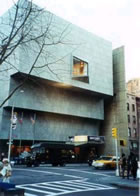
945
Madison Avenue.
This instance of the number 945 as an "artists' signature" is perhaps more impressive than the instances cited in yesterday's Log24 entry, Signature.
Sunday, November 19, 2006 2:02 PM
Morley vs. Sagan:
SignatureFrom AP's "Today in History," Nov. 19, 2006:
Today's birthdays: ... Actress-director Jodie Foster is 44....
Thought for Today: "My theology, briefly, is that the universe was dictated but not signed." --[Attributed to] Christopher Morley, American author and journalist (1890-1957).
A different story: Carl Sagan, Contact, Chapter 24-- "The Artist's Signature."
Yet another story: The Pennsylvania lottery yesterday, November 18, 2006-- mid-day 914, evening 945. For interpretations, see 9/14 (Feast of the Triumph of the Cross) and also the following "signature" (i.e., "denominator"):

Number theorists may prefer to
think of 945 as the smallest
odd abundant number
(Al-Baghdadi, ca. 980-1037).
Neither of these occurrences
of 945 in mathematics seems
particularly divine; perhaps there
are some other properties of
this number that make it more
credible as a divine signature--
other, that is, than its occurrence
in a lottery just in time for
Jodie Foster's birthday.
Saturday, November 18, 2006 4:09 AM
Animated diamond theorem

Copyright © 2006 Steven H. Cullinane
Thursday, November 16, 2006 12:00 PM
Among the Tombstones
Dante, Inf., canto X.
Words
for
G. Robert Crowningshield,
a developer of the
International Diamond
Grading System™
According to a
press release,
Crowningshield
died on
November 8.
See Grave Matters,
an entry of that date,
and its links to
Geometry's Tombstones,
Birth, Death, and Symmetry,
and
Religious Symbolism
at Princeton.
| Dante, Inferno, Canto X, 37-39: E l'animose man del duca e pronte mi spinser tra le sepulture a lui, dicendo: "Le parole tue sien conte." And the bold and ready hands of my Leader pushed me between the tombs to him, saying: "Let thy words be fitting". "Make your words count," Virgil instructs Dante: "Speak aptly, make what you say appropriate to the situation." |
Perhaps Crowningshield's
Leader will be...

Niemoller is noted for his role in
the movement that led to the
Barmen Declaration, discussed in
Presbyterian Creedal Standards--
linked to in the above-cited
Religious Symbolism
at Princeton
(...that lay in the house
that Jack built).

Thursday, November 16, 2006 2:00 AM
Today's New York Times:
G. Robert Crowningshield, 87,Who Set Diamond Grading System, Dies