
Wednesday, June 15, 2005 1:44 AM
Cross-Referenced
From today's New York Times,
a review of a Werner Herzog film,
"Wheel of Time," that opens
today in Manhattan:

"With a little effort, anything can be
shown to connect with anything else:
existence is infinitely cross-referenced."
-- Opening sentence of
Martha Cooley's The Archivist
These images suggest
a Google search on the phrase
"crucified on the wheel of time,"
|
|
 DARK
CITY (1998) DARK
CITY (1998)Crucified on the Wheel Of Time. A visual feast. |
From Dark City: A Hollywood Jesus Movie Review --
"There is
something mesmerizing about this important film. It flows in the same
vein as The Truman Show, The Game, and Pleasantville. Something
isn't real with the world around John Murdoch. Some group is trying to
control things and it isn't God."
Amen.
Related material:
Skewed Mirrors and
The Graces of Paranoia
Tuesday, June 14, 2005
12:00 PM
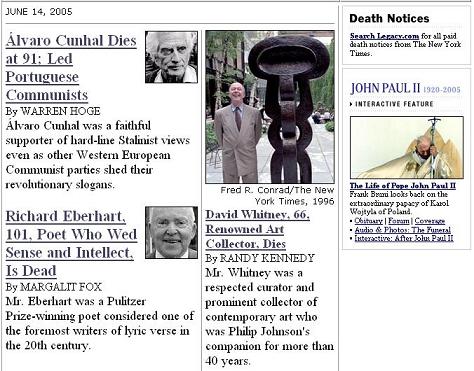

I stood
out in the open cold
To see the essence of the eclipse
Which was its
perfect darkness.
I stood in the cold on the porch
And could not
think of anything so perfect
As man's hope of light in the face of darkness.
-- Richard Eberhart,
"The Eclipse"
See also March 11.
Tuesday, June 14, 2005
12:00 AM
ART WARS:
Dark City
Jennifer Connelly at
premiere of "Cinderella Man" --

In memory of Martin Buber,
author of Good and Evil,
who died on June 13, 1965:
"With a little effort, anything can be
shown to connect with anything else:
existence is infinitely cross-referenced."
-- Opening sentence of
Martha Cooley's The Archivist
|
Woe unto
|

As she spoke |
The world
|
Jennifer Connelly in "Dark City"
(from journal note of June 19, 2002) --

And, one might add for Flag Day,
"you sons of bitches."

Monday, June 13, 2005
9:00 PM
STAR WARS
continued

Picture from Feb. 8
(Martin Buber's birthday)
For John Nash on his birthday:
I know more than Apollo,
For oft when he lies sleeping
I see the stars at mortal wars
In the wounded welkin weeping.
Monday, June 13, 2005
2:00 PM
Cliffs of Moher
My father's father,
his father's father, his --
Shadows like winds
Go back to a parent before thought,
before speech,
At the head of the past.
|
As he came back to the hearth, limping slightly but with a brisk step, Stephen saw the silent soul of a jesuit look out at him from the pale loveless eyes. Like Ignatius he was lame but in his eyes burned no spark of Ignatius's enthusiasm. Even the legendary craft of the company, a craft subtler and more secret than its fabled books of secret subtle wisdom, had not fired his soul with the energy of apostleship. It seemed as if he used the shifts and lore and cunning of the world, as bidden to do, for the greater glory of God, without joy in their handling or hatred of that in them which was evil but turning them, with a firm gesture of obedience back upon themselves and for all this silent service it seemed as if he loved not at all the master and little, if at all, the ends he served. SIMILITER ATQUE SENIS BACULUS, he was, as the founder would have had him, like a staff in an old man's hand, to be leaned on in the road at nightfall or in stress of weather, to lie with a lady's nosegay on a garden seat, to be raised in menace. The dean returned to the hearth and began to stroke his chin. --When may we expect to have something from you on the esthetic question? he asked. --From me! said Stephen in astonishment. I stumble on an idea once a fortnight if I am lucky. --These questions are very profound, Mr Dedalus, said the dean. It is like looking down from the cliffs of Moher into the depths. Many go down into the depths and never come up. Only the trained diver can go down into those depths and explore them and come to the surface again. |
From
Death by Philosophy:
"Although fragments examined earlier may enable Heraclitus’ reader
to believe that the stylistic devices arose directly from his dislike
of humanity, I think rather that Heraclitus deliberately perfected the
mysterious, gnomic style he praises in the following
fragment.
31. The lord whose oracle is at Delphi neither speaks nor hides, but indicates. (fr. 93)
Heraclitus not only admires the oracular style of delivery, but recommends it; this studied ambiguity is, I think, celebrated and alluded to in the Delian diver comment. For just as the prophecies of the Delian or Delphic god are at once obscure and darkly clear, so too are the workings of the Logos and Heraclitus’ remarks on it."
Related material:
A Mass for Lucero.
That web page concludes with a reference to esthetics and a Delian palm, and was written three years ago on this date.
Today is also the date of death for Martin Buber, philosophical Jew.
Here is a Delphic saying in memory of Buber:
"It is the female date that is considered holy, and that bears fruit."
Sunday, June 12, 2005
5:01 PM


Sunday, June 12, 2005
2:29 PM
Bedlam Songs
By a knight of ghosts and shadows
I summoned am to tourney...


In the desert you can
remember your name
'Cause there ain't no one
for to give you no pain.
|
From The New Yorker of June 6, 2005: 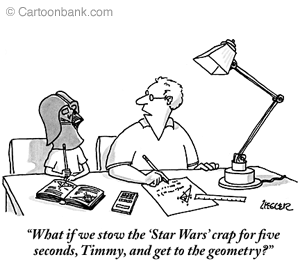 Recommended geometry:  Click on picture to enlarge. Related material: ART WARS Geometry for Jews Mathematics and Narrative. |

|
The Road to Brussels
"History is not, of course, a cookbook offering pretested recipes. It teaches by analogy, not by maxims. It can illuminate the consequences of actions in comparable situations, yet each generation must discover for itself what situations are in fact comparable." — Henry Kissinger, quoted in
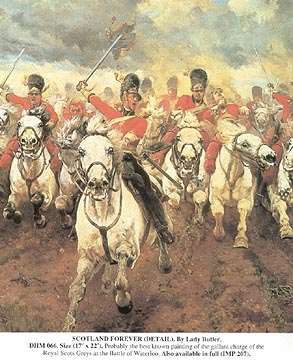
Drama of the Diagonal, Part Deux "Les livres d’histoire et la vie racontent la même comédie...." — Alain Boublil "Along the road from Ohain to Braine-l'Alleud that hemmed in the plain of Mont-St-Jean and cut at right angles the road to Brussels, which the Emperor wished to take, he [Wellington] had placed 67,000 men and 184 cannons." |
| Evil Some academics may feel that a denunciation of an essay by one of their fellow academics as "evil" (see this morning's entry The Last Word) goes too far. Here is a followup to that entry. From the Riviera Presbyterian Church, a sermon quoting Madeleine L’Engle's classic A Wrinkle in Time:
Amen. |
Saturday, June 11, 2005 12:48 PM
Birthday LinksSaturday, June 11, 2005 3:11 AM
The Last Word| Beethoven Was a Narcissistic Hooligan "If Beethoven had dedicated his obvious talents to serving the noble Pythagorean view of music, he might well have gone on to compose music even greater than that of Mozart. You can hear this potential in his early string quartets, where the movements often have neat conclusions and there is a playfulness reminiscent of Mozart or Haydn. If only Beethoven had nourished these tender shoots instead of the darker elements that one can also hear. For the darkness is already evident in the early quartets too, in their sombre harmonies and sudden key changes. As it was, however, his darker side won out; compare, for example, the late string quartets. Here the youthful humour has completely vanished; the occasional signs of optimism quickly die out moments after they appear and the movements sometimes end in uncomfortably inconclusive cadences.... In A Clockwork Orange it is the fourth movement of Beethoven's Ninth Symphony that echoes in the mind of Alex whenever he indulges in one of his orgies of violence. Alex's reaction may be rather extreme, but he is responding to something that is already there in this dark and frenzied setting of Schiller's Ode to Joy; the joy it invites one to feel is the joy of madness, bloodlust and megalomania. It is glorious music, and seductive, but the passions it stirs up are dark and menacing."  -- Dylan Evans, former Lacanian psychotherapist (pdf) and now head of the undergraduate robotics program at the University of the West of England. |
| Beethoven's Birthday "Ludwig van Beethoven’s String Quartet in A Minor, Opus 132, is one of the transcendent masterworks of the Western classical tradition. It is built around its luminous third movement, titled 'Holy song of thanksgiving by one recovering from an illness.' In this third movement, the aging Beethoven speaks, clearly and distinctly, in a voice seemingly meant both for all the world and for each individual who listens to it. The music, written in the ancient Lydian mode, is slow and grave and somehow both a struggle and a celebration at the same time. This is music written by a supreme master at the height of his art, saying that through all illness, tribulation and sorrow there is a strength, there is a light, there is a hope." "Eliot's final poetic achievement—and, for many, his greatest—is the set of four poems published together in 1943 as Four Quartets.... Structurally—though the analogy is a loose one—Eliot modeled the Quartets on the late string quartets of Beethoven, especially... the A Minor Quartet; as early as 1931 he had written the poet Stephen Spender, 'I have the A Minor Quartet on the gramophone, and I find it quite inexhaustible to study. There is a sort of heavenly or at least more than human gaiety about some of his later things which one imagines might come to oneself as the fruit of reconciliation and relief after immense suffering; I should like to get something of that into verse before I die.'" — Anonymous author at a "Each of the late quartets has a unique structure, and the structure of the Quartet in A Minor is one of the most striking of all. Its five movements form an arch. At the center is a stunning slow movement that lasts nearly half the length of the entire quartet... The third movement (Molto adagio) has a remarkable heading: in the score Beethoven titles it 'Hymn of Thanksgiving to the Godhead from an Invalid,' a clear reflection of the illness he had just come through. This is a variation movement, and Beethoven lays out the slow opening section, full of heartfelt music. But suddenly the music switches to D major and leaps ahead brightly; Beethoven marks this section 'Feeling New Strength.' These two sections alternate through this movement (the form is A-B-A-B-A), and the opening section is so varied on each reappearance that it seems to take on an entirely different character each time: each section is distinct, and each is moving in its own way (Beethoven marks the third 'With the greatest feeling'). This movement has seemed to many listeners the greatest music Beethoven ever wrote. and perhaps the problem of all who try to write about this music is precisely that it cannot be described in words and should be experienced simply as music." — Eric Bromberger, In accordance with these passages, here is a web page with excellent transcriptions for piano by Steven Edwards of Beethoven's late quartets: Our site music for today, Beethoven's String Quartet No. 15 in A Minor, Opus 132, Movement 3 (1825), is taken from this web page. |
See also the previous entry.
Friday, June 10, 2005 5:01 AM


Friday, June 10, 2005 3:57 AM
Test
From Log24.net on Sept. 9, 2003,
 | |
January 9, 1989, is the date of The New Yorker's review of Hans Moravec's Mind Children: The Future of Robot and Human Intelligence (Harvard University Press).
Brad Leithauser, reviewing Mind Children, says that if Moravec "is correct in supposing that human minds will be transferred into or otherwise fused with machines, it seems likely that traditional religious questions -- and traditional religions themselves -- will either melt away or suffer wholesale metamorphosis. Debates about Heaven or Hell -- to take but one example -- would hold little relevance for an immortal creature."
Au contraire. Immortal creatures-- such as, according to Christianity, human beings-- are the only creatures for whom such debates hold relevance.
For an example of such a debate, see
The Contrasting Worldviews of
Sigmund Freud and C.S. Lewis,
by Harvard psychiatrist Armand Nicholi.
For more on Nicholi, see my entry
of August 19, 2003,
Friday, June 10, 2005 1:25 AM
From Andrew Cusack's weblog:Though [it is] a purely Protestant institution (literally), I am rather fond of Patrick Henry College. Indeed, it takes some courage in this day and age to only admit students willing to sign a ten-point profession of Protestant Reformed faith. They also happen to have an old-fashioned ball featuring 'English country dancing, delicacies such as cream puffs and truffles and leisurely strolls about the scenic grounds of the historic Selma Plantation'.
Anyhow, the college, whose motto is 'For Christ and Liberty', was visited [by] Anthony Esolen, a contributing editor to Touchstone magazine, who makes these comments:
That such a request came was no surprise. Its provenance is, and cheeringly so. For this De Tocqueville Society is made up of a group of students at the new Patrick Henry College, founded by Mike Farris, the President of the Home School Legal Defense Association. More than ninety percent of the college’s students were homeschooled. If there’s a Roman Catholic in the bunch, I’ve yet to hear about it, and I’ve been to that campus twice to give lectures. [Note: Esolen does not seem to be aware that PHC requires its students to be Protestant.]
More on that in a moment. I could spend all evening singing the praises of PHC (as the students fondly call it), but let me share one discovery I made that should gratify Touchstone readers. The first time I spoke there, two years ago, I was stunned to meet young men and women who—who were young men and women. I am not stretching the truth; go to Purcellville and see it for yourselves if you doubt it; I believe my wife took a couple of pictures, just to quiet the naysayers. The young men stand tall and look you in the eye—they don’t skulk, they don’t scowl and squirm uncomfortably in the back chairs as they listen to yet another analysis of Rebecca of Sunnybrook Farm, or one of the healthier poems of Sylvia Plath. They’re frank and generous and respectful, but they hold their own in an argument, and they are eager to engage you in those. They are comfortable in their skins; they wear their manhood easily. And the young ladies are beautiful. They don’t wither away in class, far from it; but they wear skirts, they are modest in their voices and their smiles, they clearly admire the young men and are esteemed in turn; they are like creatures from a faraway planet, one sweeter and saner than ours.
Two years ago I spoke to them about medieval Catholic drama. They are evangelicals, half of them majors in Government, the rest, majors in Liberal Arts. They kept me and my wife in that room for nearly three hours after the talk was over. “Doctor Esolen, what you say about the habits of everyday life—to what extent is it like what Jean Pierre de Coussade calls ‘the sacrament of the present moment’?” “Doctor Esolen, do you see any connections between the bodiliness of this drama and the theology of Aleksandr Schmemann?” “Doctor Esolen, you have spoken a great deal about our recovery of a sense of beauty, but don’t you think that artists can also use the grotesque as a means of bringing people to the truth?” “You’ve suggested to us that Christians need to reclaim the Renaissance as our heritage, yet we are told that that was an age of the worship of man for his own sake. To what extent is the art of that period ours to reclaim?” And on and on, until nearly midnight.
The questions were superior to any that I have ever heard from a gathering of professors—and alas, I’ve been to many of those. I mean not only superior in their enthusiasm and their insistence, but in their penetrating to the heart of the problem, their willingness to make connections apparently far afield but really quite apropos, and their sheer beauty—I can think of no better word for it.
A few weeks ago I was in town for another talk, on the resurrection of the body. The Holy Father had passed away. At supper, ten or fifteen of the students packed our table, to ask questions before the talk. They were reverent and extraordinarily well informed; most especially they were interested in the Theology of the Body. The questions on that topic continued after the lecture, and I had the same experience I’d had before, but now without the surprise.
And these are the young people who are devoting an entire issue of their journal to the thought of Cardinal Ratzinger, now the new head of the Roman Catholic Church. They are hungry to know about him; in the next week or two they will do what our slatternly tarts and knaves, I mean our journalists, have never done and will not trouble themselves to do, and that is to read what Benedict XVI has said, read it with due appreciation for their differences with him, and due deference to a holy and humble man called by Christ to be a light not only to Roman Catholics but to all the nations.
These students don’t know it, but in their devotion to their new school (they are themselves the guards, the groundskeepers, the janitors; they ‘own’ the school in a way that is hard to explain to outsiders), they live the community life extolled by Leo XIII in Rerum Novarum; in their steadfastness to the truth they are stalwart participators in the quest set out by John Paul II in Fides et Ratio; in their welcoming of me and, God bless them, of the good Benedict XVI, they live in the true spirit of Lumen Gentium, that greathearted document of the council so often invoked for the lame tolerance of every betrayal of the ancient faith. And for what it’s worth, they are readers of Touchstone Magazine.
Be silent, Greeleys and Dowds of the world. These young people have you whipped, if for no other reason than that they believe in the One who is Truth, and who sets us free. How can I praise these my young brothers and sisters any more highly? God bless them and Patrick Henry College. And the rest of us, let’s keep an eye on them. We’ll be seeing quite a harvest from that seedbed!
Many of the points Esolen commends are things I hope will be found in the colleges of my university when I get around to starting it. I particularly admire that Patrick Henry College's young men and women are just that, according to Esolen. This is all too often hard to achieve in modern American higher education, where students are quite often just elderly adolescents. (Though I suspect this has more to do with parents and family than education).
The absurdist drinking age that the Federal government underhandedly coerced each state into passing hinders maturity as well. Indeed, when I start the first college or colleges of the university I'm planning, each will have a private college bar which will serve anyone over the age of 16 or so. (Probably at the barman or barmaid's discretion). Civil disobedience is the only solution.
Though the graduates Patrick Henry College provides will be Protestant (at least at the time of their graduation), I have no doubt that they will act as leaven to raise up the social and political life of our United States. I'm not particularly fond that they proudly advertise their commendation as "One of America's Top Ten Conservative Colleges". I'm not of the view that colleges ought to be 'conservative' or 'liberal' per se. They ought to be seen more as communities of inquisitive, curious, intelligent people united in the quest for truth. Labels like 'conservative' and 'liberal' are far too narrow and allow the simple-minded to pidgeon-hole things which are too complex for such monikers.
But anyhow, cheers for Patrick Henry College.
Posted by Andrew Cusack at April 21, 2005 05:25 PM