
Friday, November 26, 2004 1:11 PM
Dinner Theater?
"Philosophers ponder the idea of identity: what it is to give something a name on Monday and have it respond to that name on Friday...."
-- Bernard Holland in the New York Times of Monday, May 20, 1996
From an entry of last Monday,
"Lynchburg Law" --
Critic Frank Rich in Wednesday's Times on a recent televised promotion:
"... it was a manufactured scandal, as over-the-top as a dinner theater production of 'The Crucible.' "
"the Platonist... is more interested in deriving an abstraction of the object into a universal...."
-- Radu Surdulescu, Form, Structure, and StructuralityFrom El Universal online today:
"Meanwhile, [Mexico] continued to deal with the savagery of Tuesday night's televised lynchings, with some saying the media had exploited the occurrence.
'This is a new and worrisome phenomenon,' security analyst José Reveles said in an interview... 'It's like the evil offspring of all the violent exploitation in the media.' 'It was Fuenteovejuna,' he said, referring to the work by the Spanish golden age playwright Lope de Vega in which an entire town covers up the slaying of a corrupt official."
Frank Rich has the last word:
"A 'moral values' crusade that stands between a TV show this popular and its audience will quickly learn the limits of its power in a country where entertainment is god."
Wednesday, November 24, 2004 10:00 AM
Habeas Corpus
From St. Nicholas Versus the Volcano:
"The day begins with Yvonne’s arrival at the Bella Vista bar in Quauhnahuac. From outside she hears Geoffrey’s familiar voice shouting a drunken lecture, this time on the topic of the rule of the Mexican railway that requires that 'A corpse will be transported by express!' (Lowry, Under the Volcano)."In honor of a particular corpse, from last Friday, November 19, here is part of a Log24 entry from that day:
"The meaning of the poem is 'the full organized body of all the extension and intension that we can find in it.' "
-- Allen Tate
A corpse will be transported by express!
The corpse in question is that of a children's book illustrator. The following screenshot from today's online New York Times illustrates both extension and, in light of the Lowry quotation above, intension.

Monday, November 22, 2004 8:00 PM
Lynchburg Law
From today's New York Times:
| The Rev. Jerry Falwell's Liberty University [at Lynchburg, Virginia] is part of a movement around the nation that brings a religious perspective to the law.
The connection between the Bible and the law is part of the curriculum at Liberty, one of a number of new religiously oriented law schools. |
The Times's photo (above) of books on the Bible and the law, apparently at Lynchburg, suggests a related book that may be of considerable value to the legal scholars there:
Charles Williams on the
Salem witchcraft trials:
"The afflicted children continued to testify; there entered into the cases what was called 'spectral evidence,' a declaration by the witness that he or she could see that else invisible shape before them, perhaps hurting them. It was a very ancient tendency of witnesses, and it had occurred at a number of trials in Europe."
-- Witchcraft, Meridian Books, Inc., New York,
1959 (first published 1941), page 281
Monday, November 22, 2004 12:12 PM

From Four Quartets:
And the pool was filled
with water out of sunlight,
And the lotos rose, quietly, quietly,
The surface glittered out of heart of light...
Related reading:
From a review at Amazon.com
of All Hallows' Eve, by Charles Williams:
"How many other books do you know in which one of the two main characters is dead, in which the dead and living can communicate almost as easily as we do every day, in which magic is serious and scary? Mainstream books, that is, not Goosebumps, with an introduction by T.S. Eliot, with the whole thing to be understood as at least feasible if not truth. This is unusual. And yet, and yet, the whole thing works."
Sunday, November 21, 2004 11:00 PM
Pictures at 11
From today's Maureen Dowd column:
"Trapped in their blue bell jar,
drowning in unfulfilled dreams,
Democrats are the
'Desperate Housewives' of politics."
 Sam Dean for The New York Times The Rev. Jerry Falwell's Liberty University is part of a movement around the nation that brings a religious perspective to the law. Go to Article |
Atticus Finch in To Kill a Mockingbird: "She's... broken a rigid and time-honored code of our society, a code so severe that whoever breaks it is hounded from our midst as unfit to live with." |
Sunday, November 21, 2004 9:00 PM

| " 'Caritas' is a Latin word which means love, charity and compassion. The international symbol of Caritas is a flaming cross, symbolising Christ’s burning love for his people." -- Catholic Lay Organisations of Darwin, Australia  Click on picture for details. |
Sunday, November 21, 2004 3:00 PM
Trinity and Counterpoint
Today's Roman Catholic meditation is from Gerry Adams, leader of Sinn Fein, the political arm of the Irish Republican Army:"I certainly regret what happened and I make no bones about that," Adams said on the 30th anniversary of pub bombings, that killed 21 on Nov. 21, 1974, in Birmingham, England.
Those who care what Roman Catholics think of the Trinity may read the remarks of St. Bonaventure at math16.com.
That site also offers a less holy but more intelligible trinity based on the irrefutable fact that
For a Protestant view of this trinity, see a website at the University of Birmingham in England.
That site's homepage links to Birmingham's City Evangelical Church.
Sunday, November 21, 2004 11:00 AM
Today's Sermon:
Canonization
For more on this concept, see the Log24.net entries of July 16-31, 2004, and in particular the entries of July 25.
Fourteen Canons on the First Eight Notes of the Goldberg Ground.
Saturday, November 20, 2004 10:00 AM
For Janet Leigh, who died on Sunday, Oct. 3, 2004:
On the redesigned "... the ultimate judgment will have to wait: Taniguchi himself told a MoMA curator who'd complimented him that considering the building without the art in it is like admiring the tea cup without the green tea. Next month the museum will have art on the walls and crowds in the galleries—and then the tea ceremony will begin." -- Cathleen McGuigan, Newsweek, |
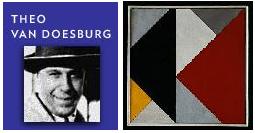   From the book Tangram |
Friday, November 19, 2004 11:00 PM
From Tate to Plato
In honor of Allen Tate's birthday (today)
and of the MoMA re-opening (tomorrow)
"For Allen Tate the concept of tension was the most useful formal tool at the critic’s disposal, as irony and paradox were for Brooks. The principle of tension sustains the whole structure of meaning, and, as Tate declares in Tension in Poetry (1938), he derives it from lopping the prefixes off the logical terms extension and intension (which define the abstract and denotative aspect of the poetic language and, respectively, the concrete and connotative one). The meaning of the poem is 'the full organized body of all the extension and intension that we can find in it.' There is an infinite line between extreme extension and extreme intension and the readers select the meaning at the point they wish along that line, according to their personal drives, interests or approaches. Thus the Platonist will tend to stay near the extension end, for he is more interested in deriving an abstraction of the object into a universal...."
-- from Form, Structure, and Structurality,
by Radu Surdulescu
"Eliot, in a conception comparable to Wallace Stevens' 'Anecdote of the Jar,' has suggested how art conquers time:
-- F. O. MatthiessenOnly by the form, the pattern,
Can words or music reach
The stillness, as a Chinese jar still
Moves perpetually in its stillness."
From Writing Chinese Characters:
"It is practical to think of a character centered within an imaginary square grid.... The grid can... be... subdivided, usually to 9 or 16 squares...."

These "Chinese jars"
(as opposed to their contents)
are as follows:

Various previous Log24.net entries have
dealt with the 3x3 "form" or "pattern"
(to use the terms of T. S. Eliot).
For the 4x4 form, see Poetry's Bones
and Geometry of the 4x4 Square.
Friday, November 19, 2004 11:30 AM
Goin' to Carolina
in My Mind
From today's New York Times:
"Bobby Frank Cherry, the former Klansman whose conviction two years ago for the church bombing that killed four black girls in Birmingham, Ala., in 1963 resolved one of the most shocking cases of the civil rights era, died yesterday at the Kilby Correctional Facility near Montgomery, Ala., a prison spokesman said. He was 74."
"If Trinity is everything you say it is," she said, "then why in God's name would it be based in North Carolina?" This I hadn't expected. "Aren't you the top Jungian analyst in the world?" "Well... one of them." "Why are you based in North Carolina?" |
"The western portions of Virginia and the Carolinas, the northern portions of Georgia and Alabama, and most of Tennessee, were settled by the hardy race of Scotch-Irish, in whose veins the Scotch blood was warm."
"Born in Charlotte, N.C., Graham grew up in a family of Scottish Presbyterians.... Since 1950, [he has] lived in an Appalachian log home... near Asheville, N.C."
 |  |
| Graham in 1972 | Methodist Flag |
"The Cross and Flame is a registered trademark and the use is supervised by the General Council on Finance and Administration of The United Methodist Church. Permission to use the Cross and Flame must be obtained from the General Council on Finance and Administration of The United Methodist Church - Legal Department, 1200 Davis Street, Evanston, IL 60201." -- www.bobmay.info
Thursday, November 18, 2004 6:20 PM
Last Crusade?
Tuesday, November 16, 2004 12:12 PM
Geometry, continued
Added a long footnote on symplectic properties of the 4x4 array to "Geometry of the 4x4 Square."
Friday, November 12, 2004 2:56 AM
The above link is in memory of
Iris Chang,
who ended her life at 36
on Nov. 9, 2004.
A central concept of Zen
is satori, or "awakening."
For a rude awakening, see
Satori at Pearl Harbor.
Fade to Black See, too, my entries of "...that ineffable constellation of talents that makes the player of rank: a gift for conceiving abstract schematic possibilities; a sense of mathematical poetry in the light of which the infinite chaos of probability and permutation is crystallized under the pressure of intense concentration into geometric blossoms; the ruthless focus of force on the subtlest weakness of an opponent." -- Trevanian, Shibumi " 'Haven't there been splendidly elegant colors in Japan since ancient times?' 'Even black has various subtle shades,' Sosuke nodded.' " -- Yasunari Kawabata, The Old CapitalAn Ad Reinhardt painting
Ad Reinhardt, |
Thursday, November 11, 2004 11:11 AM
11/11 11:11:11
Samuel Beckett on Dante and Joyce:
"Another point of comparison is the preoccupation with the significance of numbers. The death of Beatrice inspired nothing less than a highly complicated poem dealing with the importance of the number 3 in her life. Dante never ceased to be obsessed by this number. Thus the poem is divided into three Cantiche, each composed of 33 Canti.... Why, Mr. Joyce seems to say, should.... the Armistice be celebrated at the eleventh hour of the eleventh day of the eleventh month? He cannot tell you because he is not God Almighty, but in a thousand years he will tell you... He is conscious that things with a common numerical characteristic tend towards a very significant interrelationship. This preoccupation is freely translated in his present work...."
-- "Dante... Bruno. Vico.. Joyce," in James Joyce/Finnegans Wake: A Symposium (1929), New Directions paperback, 1972
See also my entry from five years ago on this date:
Plato, Pegasus, and the Evening Star.
Wednesday, November 10, 2004 10:25 AM
Updike on God
"In Exodus 3:14, when Moses asks God his name, the answer in Hebrew, ’Ehyeh-’Asher-’Ehyeh, has been commonly rendered I AM THAT I AM but could be, Alter reports, simply I AM, I AM. An impression grew upon me, as I made my way through these obdurate old texts, that to the ancient Hebrews God was simply a word for what was: a universe often beautiful and gracious but also implacable and unfathomable."
-- John Updike, review of Robert Alter's translation of The Five Books of Moses, in The New Yorker, issue dated Nov. 1, 2004, posted online Oct. 25, 2004
Tuesday, November 9, 2004 12:00 PM
The Nine
(Readings for
Weyl's birthday)
"The grid is a staircase to the Universal....
We could think about Ad Reinhardt, who,
despite his repeated insistence that
'Art is art,'
ended up by painting a series of...
nine-square grids in which the motif
that inescapably emerges is
a Greek cross.

Greek Cross
There is no painter in the West
who can be unaware of
the symbolic power
of the cruciform shape and the
Pandora's box of spiritual reference
that is opened once one uses it."
-- Rosalind Krauss,
Meyer Schapiro Professor
of Modern Art and Theory
at Columbia University
(Ph.D., Harvard U., 1969),
in "Grids"

"Nine is a very powerful Nordic number."
-- Katherine Neville, author of The Eight,

in The Magic Circle,
Ballantine paperback,
1999, p. 339

"To live is to defend a form."
("Leben, das heisst eine Form verteidigen")
-- attributed to Hölderlin

For details on the above picture,
which deals with properties of the
nine-square grid, see
For more on the defense
of this form,

see the Log24.net entry of
June 5, 2004, A Form,
and the Art Wars entries
for St. Peter's Day, 2004.
Friday, November 5, 2004 12:00 PM
A Harvard Education
in a Sentence
Harvard alumnus Norman Mailer:
"At times, bullshit can only be countered with superior bullshit."
For Harvard bullshit, see
The Crimson Passion.
For superior bullshit, see
Shrine of the Holy Whapping.
Friday, November 5, 2004 9:00 AM
Tuesday, November 2, 2004 6:00 AM
| "Remembering speechlessly we seek the great forgotten language, the lost lane-end into heaven, a stone, a leaf, an unfound door. Where? When?" -- Thomas Wolfe |


