Tuesday, September 30, 2003 4:38 PM
Project for the
New Century
"A bully can be stopped, and so can a mob. It takes one person with the courage and a resolute voice."
-- Tim Robbins, speech to National Press Club, April 15, 2003
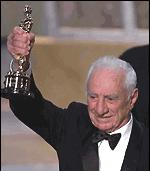
Resoluteness is a necessary, but not sufficient, condition for such a voice. Also needed is eloquence. Here is such a voice:
Postscript:
I wrote the above at 3:38 PM today, thinking I had finally found someone to admire whom my left-leaning friends might also admire.
Perhaps resoluteness and eloquence suffice to stop a mob; they are not, however, sufficient to impress professional journalists, who, to be much impressed, require a third quality — truthfulness.
Since today's major Washington and New York papers indicate that a presidential scandal of Water- or Monica-gate proportions may be in the offing, some minimal fact-checking seems in order. Hence, at 3:40 PM today, I did a Google search on names Pitt discusses:
"karl rove"
"robert mosbacher"
novak.
That search indicates that unfortunately, mob-stopper Pitt seems, like many leftists, to be a liar.
Here is an excerpt from Pitt on Karl Rove dated Tuesday, Sept. 30, 2003:
The Most Insidious of Traitors
"Karl Rove, senior political advisor to George W. Bush, is a very powerful man. That is not to say he has never been in trouble. Rove was fired from the 1992 Bush Sr. campaign for trashing Robert Mosbacher, Jr., who was the chief fundraiser for the campaign and an avowed Bush loyalist. Rove accomplished this trashing of Mosbacher by planting a negative story with columnist Bob Novak. The campaign figured out that Karl had done the dirty deed, and he was given his walking papers.
Demonstrably, Rove is back in the saddle again. The January 2003 edition of Esquire magazine carried an article by Ron Suskind.... "
Here is an excerpt from columnist Robert Novak dated December 5, 2002:
"The article in Esquire's January edition by Pulitzer Prize-winning journalist Ron Suskind is actually about Karl Rove, Bush's powerful political adviser....
Unfortunately, I did not escape Suskind's article, which includes these sentences: 'Sources close to the former president say Rove was fired from the 1992 Bush presidential campaign after he planted a negative story with columnist Robert Novak about dissatisfaction with campaign fund-raising chief and Bush loyalist Robert Mosbacher Jr. It was smoked out, and he was summarily ousted.' I was called by no fact-checker, who would have learned of multiple errors.
Suskind has confused former Secretary of Commerce Robert Mosbacher Sr., Bush's 1992 chief fund-raiser, with his son Rob, who headed the Bush campaign in Texas (Victory '92). Criticism of the younger Mosbacher, a frequent unsuccessful candidate in Texas, was not 'planted' with me by Rove but was passed to me by a Bush aide whom I interviewed. Rove was indeed fired by Mosbacher from Victory '92 but continued as a national Bush-for-president operative.
Three mistakes in two sentences lend credence to claims by White House aides that they were misrepresented in Suskind's July article..."
I say Pitt seems to be lying because in today's editorial he never even mentions Novak's column of December 5, 2002, which is, as noted above, readily available.
It is, of course, possible that Pitt and Suskind are right and Novak is wrong. It is also possible that Orwell was wrong, that Stalin was a great man, and that Communism is the wave of the future.
Tuesday, September 30, 2003 3:16 AM
On the Beach
On this date in 1954, the first nuclear submarine, the USS Nautilus, was commissioned.
Related reading in today's New York Times:
Related reading from yesterday's entries:
Related reading from the Song of Songs:
"Love is strong as death."
Related viewing:
Today's birthday: Deborah Kerr.
Monday, September 29, 2003 3:03 PM
Magic Hawaii
Today, the birthday of singer Jerry Lee Lewis, is also the feast of St. Michael and All Angels.
In honor of Lewis:
Killer Radio, an entry of July 31, 2003, that contains the following...
"When the light came she was sitting on the bed beside an open suitcase, toying with her diamond rings. She saw the light first in the depths of the largest stone."
-- Paul Preuss, Broken Symmetries,
scene at Diamond Head, Oahu,
Hawaii
In honor of the angels:
Mathematics as an Adequate Language,
by Israel Gelfand, Sept. 2, 2003, which contains the following...
"Many people consider mathematics to be a boring and formal science. However, any really good work in mathematics always has in it: beauty, simplicity, exactness, and crazy ideas. This is a strange combination. I understood earlier that this combination is essential on the example of classical music and poetry. But it is also typical in mathematics. It is not by chance that many mathematicians enjoy serious music.
This combination of beauty, simplicity, exactness, and crazy ideas is, I think, common to both mathematics and music."
These qualities seem also to be sought by practitioners of religion and physics... for example, by the spiritually-minded physicist in Preuss's Broken Symmetries. Skeptics might prefer, to the word "religion," the word (pronounced with a sneer) "magic."
What do we find if, following in the footsteps of Gelfand and Preuss, we do a Google search on the following words...
The search yields two results:

These two selections, both on the theme of light and darkness, offer a language that is perhaps more adequate than mathematics for dealing with the nature of the High Holy Days. For a more lighthearted approach to these concerns, also with a Hawaiian theme, see
Monday, September 29, 2003 1:15 AM
 |
Sunday, September 28, 2003 4:13 PM
Spirit of East St. Louis
On Miles Davis and Philly Joe Jones:
Miles said to Jones, "I think this is it." Jones agreed having said of the group, "The first time we played together…we just looked around at each other and said, ‘hum here it is right here. We’ve got musical telepathy here. We have five people who always know what’s going to happen next.’" And those five people became legendary as the classic Miles Davis Quintet was baptized for its first time.
From The American Art Form:
While singing work songs, a leader would call out a phrase, and the rest of the people would answer. This is known as call and response. In Cindy Blackman's "Telepathy" , the lead saxophone who is playing the melody calls out a phrase, and another horn responds. In some jazz music, there is what is known as "trading 4's". This is when one instrument plays 4 measures, and then another plays 4 measures off what the first person played, and so on. This is a modern rendition of call and response.
See also
Desmond and Mulligan, Two of a Mind,
Google search, "musical telepathy,"
and a novel dealing with East St. Louis (where Miles Davis grew up) and telepathy,
The Hollow Man, by Dan Simmons.
From the jacket of The Hollow Man:
Jeremy Bremen has a secret. All his life he has been cursed with the unwanted ability to read minds. He can hear the secret thoughts behind the placid expressions of strangers, colleagues, and friends. Their dreams, their fears, their most secret desires are as intimate to him as his own. For years his wife, Gail, has served as a shield between Jeremy and the intrusive thoughts of those around him. Her presence has protected him from the outside world and allowed him to continue his work as one of the world's leading mathematicians. But now Gail is dying, her mind slipping slowly away, and Jeremy comes face-to-face with the horror of his own omniscience. Vulnerable and alone, he is suddenly exposed to a chaotic flood of others' thoughts, threatening to fill him with the world's pain and longing, to sweep away his very sanity. His mathematical studies have taken him to the threshold of knowledge and enabled him to map uncharted regions of the mind, to recognize the mind itself as a mirror of the universe...and to see in that mirror the fleeting reflection of the creator himself. But his studies taught him nothing at all about the death of the mind, about the loss of love and trust, and about the terrible loneliness of mortality. Now Jeremy is on the run - from his mind, from his past, from himself - hoping to find peace in isolation. Instead he witnesses an act of brutality that sends him on a treacherous odyssey across America, from a fantasy theme park to the mean streets of an uncaring city, from the lair of a killer to the gaudy casinos of Las Vegas, and at last to a sterile hospital room in St. Louis in search of the voice that is calling him to the secret of existence itself.
Friday, September 26, 2003 9:26 PM
Time is a Weapon
"Time is a weapon, it’s cold and it’s cruel."
— Max D. Barnes song lyric,
sung by Ray Price
(See Aug. 1, 2003, entry.)
3:57
was the time of yesterday afternoon's entry,
|
|
The Friday, |
"Only through time time is conquered."
— T. S. Eliot, Four Quartets
Friday, September 26, 2003 3:28 PM
A Mass for
Rosh Hashanah
In memory of playwright Herb Gardner, who died on Wednesday, Sept. 24, 2003, in honor of the Jewish New Year, Rosh Hashanah, which begins at sunset today, and in celebration of T. S. Eliot's birthday, which is today, here is an illustrated Mass from the Catholic News Service dated Sept. 24 (Saint Herb's Day):
|
Proposed Vatican document on liturgy returned to drafting committee
|
See also the two previous entries,
and "Max's Hawaiian Ecstasies" in
Gardner's play "The Goodbye People."
For a musical accompaniment to this
requiem for Gardner,
the "Aloha Mass,"
click here.
Among
those
at the
Mass:

The Mass, at Max's Hawaiian Ecstasies
in Paradise, will conclude with
"Simply Irresistible," sung by
Saint Robert Palmer and performed by...
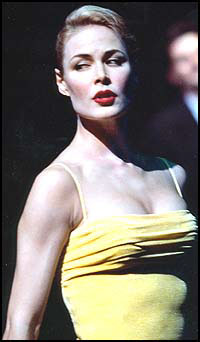
The role of the congregation will, as usual,
be performed by George Plimpton.
Payment for our sins will be made by
Johnny Cash.
Thursday, September 25, 2003 3:57 PM
In Memory of Playwright
Herb Gardner
"Up for auction is a Hawaiian hula girl music box. It plays 'Tiny Bubbles' and spins around. It is approx. 12" tall and the top part of the body is made of hard plastic. It is in great condition."

Aloha.
Wednesday, September 24, 2003 10:01 PM
Bel Canto
The conclusion of tonight's season-
opening episode of "The West Wing"
was a picture of President Bartlet
receiving the Host at Mass.
Related material:

The Source:
Tips On Popular Singing
by Frank Sinatra
in collaboration with
his vocal teacher John Quinlan
What prompted me to find this
booklet on the Web
(at about 8:45 PM tonight) was
40,000 Years of Music
by Jacques Chailley
(Farrar, Straus & Giroux, 1964),
page 162,
on the bel canto style of singing.
I picked up this book this afternoon
at a sale for $1.
See also Sinatra's remarks on bel canto
(various places on the Web).
For the religious significance of
the page number 162, see my
entry of 9/11 2003,
Added at 3:20 AM Sept. 25...
In Related News:

Source: Google News, about 3:15 AM 9/25/03
Tuesday, September 23, 2003 1:15 PM
Intelligence Test
|
|
At left: |
Today's British Intelligence Award
goes to Reuters news agency:
|
Key Phrase Was Dropped LONDON (Reuters) - The British intelligence chief responsible for a pre-war dossier on Iraq's weapons dropped a key sentence from it days before publication after prompting from Downing Street, an inquiry heard Tuesday. He did it at the suggestion of Jonathan Powell, chief of staff to Prime Minister Tony Blair, the inquiry heard. The offending sentence stated that former Iraqi President Saddam Hussein was prepared to use chemical and biological weapons "if he believes his regime is under threat." Powell argued that phrase suggested Iraq was only a threat if attacked. The revelation that Powell ordered the sentence to be omitted raises fresh doubts over the intervention of Blair's office in the compilation of the September dossier. |
Today's British Stupidity Award goes,
of course, to Jonathan Powell.
Monday, September 22, 2003 4:23 AM
What Is Poetry?Sunday, September 21, 2003 4:11 PM
Today in History
Happy birthday, Ronna.
Saturday, September 20, 2003 11:59 PM
Contrapuntal Structure
Click here for a web page based on my Sept. 16 entry The Form, the Pattern.
Friday, September 19, 2003 3:57 AM
The Mysteries of 26
My entry of May 26, 2003 —
dealt with the question of whether this number, said to be of significance (as a number of dimensions) in theoretical physics, has any purely mathematical properties of interest.

That entry contained the above figure, a so-called Levi graph illustrating point/line incidence in the finite projective plane with 13 points and 13 lines, PG(2,3).
It turns out that in a paper of April 7, 2000, John H. Conway and Christopher S. Simons discussed a close connection between this plane and the Monster group. See
(Journal of Algebra. Vol. 235, no. 2.
MR 2001k:20028).
Conway had written about such a connection as early as 1985.
I apologize for not knowing about this sooner, and so misleading any mathematical readers about the number 26, which it seems does have considerable purely mathematical significance.
Thursday, September 18, 2003 2:45 AM
Happy Ending
From yesterday morning:
|
"At three o'clock in the morning For June Carter Cash as Eurydice, Let us pray that Jesus College |
From Jesus College, Oxford —
Not the Jesus I had in mind, but it will do:
"... Filled with despair, Orpheus dragged himself back to earth with only his music left to him.... In death Orpheus once more entered the Underworld, still playing the lyre. He and Eurydice were permanently reunited. Many scholars see Orpheus as another pagan prototype of Christ."
Amen.
Wednesday, September 17, 2003 3:00 AM
Time's Breakdown
"... even if we can break down time into component Walsh functions, what would it achieve?"
-- The Professor, in "Passing in Silence,"
by Oliver Humpage
"Being is not a steady state but an occulting one: we are all of us a succession of stillness blurring into motion on the wheel of action, and it is in those spaces of black between the pictures that we find the heart of mystery in which we are never allowed to rest. The flickering of a film interrupts the intolerable continuity of apparent world; subliminally it gives us those in-between spaces of black that we crave."
-- Gösta Kraken, Perception Perceived: an Unfinished Memoir (p. 9 in Fremder, a novel by Russell Hoban)
"The Underground's 'flicker' is a mechanical reconciliation of light and darkness, the two alternately exhibited very rapidly."
-- Hugh Kenner on T. S. Eliot's "Burnt Norton" in Four Quartets
From last year's entries:
ART WARS September 12, 2002
|
|
|
Artist Ben Shahn was born on this date in 1898. |
For some further reflections on flickering time,
see an essay by Nicholson Baker on
the Geneva mechanism
in movie projectors.
"At three o'clock in the morning
Eurydice is bound to come into it."
—Russell Hoban,
The Medusa Frequency
For June Carter Cash as Eurydice,
see The Circle is Unbroken.
Let us pray that Jesus College
will help this production,
with Johnny Cash as Orpheus,
to have a happy ending.
Tuesday, September 16, 2003 2:56 PM
The Form, the Pattern
"...the sort of organization that Eliot later called musical, in his lecture 'The Music of Poetry', delivered in 1942, just as he was completing Four Quartets: 'The use of recurrent themes is as natural to poetry as to music,' Eliot says:
There are possibilities for verse which bear some analogy to the development of a theme by different groups of instruments ['different voices', we might say]; there are possibilities of transitions in a poem comparable to the different movements of a symphony or a quartet; there are possibilities of contrapuntal arrangement of subject-matter."
-- Louis L. Martz, from
"Origins of Form in Four Quartets,"
in Words in Time: New Essays on Eliot’s Four Quartets, ed. Edward Lobb, University of Michigan Press, 1993
"... Only by the form, the pattern,
Can words or music reach
The stillness...."
-- T. S. Eliot,
Four Quartets

Four Quartets
For a discussion of the above
form, or pattern, click here.
Tuesday, September 16, 2003 2:56 AM
Time
Words move, music moves
Only in time....
-- T. S. Eliot, Four Quartets
It is time that beats in the breast and it is time
That batters against the mind, silent and proud,
The mind that knows it is destroyed by time.
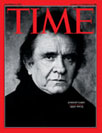
Time is a horse that runs in the heart, a horse
Without a rider on a road at night.
The mind sits listening and hears it pass.
-- Wallace Stevens, "The Pure Good of Theory"
Only through time time is conquered.
-- T. S. Eliot, Four Quartets