|
Tuesday, April 29, 2003 |
Being Time Heidegger's birthday: September 26. Einstein's birthday: March 14. Fred Zinnemann, who won an Oscar Zinnemann's birthday: today, April 29. In honor of Zinnemann, a cheerful man, who died on Einstein's birthday in 1997, our site music today is the cheerful Gershwin tune "Our Love Is Here To Stay." In honor of Olivia Newton-John (granddaughter of physicist Max Born), who notably portrayed the Muse Terpsichore September 26, 1905. ◊ Not to be confused with an Orson Welles † Glockenspiel means "bell-play."
|
|
Monday, April 28, 2003 |
trial entry to see if copied to clipboard Math Awareness Month April is Math Awareness Month. An Offer He Couldn't Refuse Today's birthday: Francis Ford Coppola is 64. "Then came From Here to Eternity. Sinatra lobbied hard for the role, practically getting on his knees to secure the role of the street smart punk G.I. Maggio. He sensed this was a role that could revive his career, and his instincts were right. There are lots of stories about how Columbia Studio head Harry Cohn was convinced to give the role to Sinatra, the most famous of which is expanded upon in the horse's head sequence in The Godfather. Maybe no one will know the truth about that. The one truth we do know is that the feisty New Jersey actor won the Academy Award as Best Supporting Actor for his work in From Here to Eternity. It was no looking back from then on." From a note on geometry of April 28, 1985: |
|
Monday, April 28, 2003 |
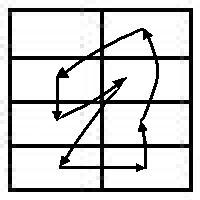
ART WARS: Toward Eternity April is Poetry Month, according to the Academy of American Poets. It is also Mathematics Awareness Month, funded by the National Security Agency; this year's theme is "Mathematics and Art." Some previous journal entries for this month seem to be summarized by Emily Dickinson's remarks: "Because I could not stop for Death-- Since then--'tis Centuries--and yet Feels shorter than the Day I first surmised the Horses' Heads Were toward Eternity-- " Consider the following journal entries from April 7, 2003:
The "horse's head" figure above is from a note I wrote on this date 18 years ago. The following journal entry from April 4, 2003, gives some details:
|
|
Sunday, April 27, 2003 |
ART WARS: Graphical Password From a summary of "The Design and Analysis of Graphical Passwords": "Results from cognitive science show that people can remember pictures much better than words.... The 5x5 grid creates a good balance between security and memorability." -- Ian Jermyn, New York University; Alain Mayer, Fabian Monrose, Michael K. Reiter, Bell Labs, Lucent Technologies; Aviel Rubin, AT&T Labs — Research
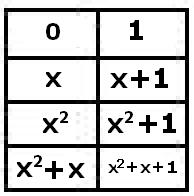
Illustration -- Warren Beatty as "Town & Country," Those who prefer the simplicity of a 3x3 grid are referred to my entry of Jan. 9, 2003, Balanchine's Birthday. For material related to the "Town & Country" theme and to Balanchine, see Leadbelly Under the Volcano (Jan. 27, 2003). ("Sometimes I live in the country, sometimes I live in town..." - Huddie Ledbetter). Those with more sophisticated tastes may prefer the work of Stephen Ledbetter on Gershwin's piano preludes or, in view of Warren Beatty's architectural work in "Town & Country," the work of Stephen R. Ledbetter on window architecture. As noted in Balanchine's Birthday, Apollo (of the Balanchine ballet) has been associated by an architect with the 3x3, or "ninefold" grid. The reader who wishes a deeper meditation on the number nine, related to the "Town & Country" theme and more suited to the fact that April is Poetry Month, is referred to my note of April 27 two years ago, Nine Gates to the Temple of Poetry. Intermediate between the simplicity of the 3x3 square and the (apparent) complexity of the 5x5 square, the 4x4 square offers an introduction to geometrical concepts that appears deceptively simple, but is in reality fiendishly complex. See Geometry for Jews. The moral of this megilla? 32 + 42 = 52. |
|
Friday, April 25, 2003 |
Mark Today is the feast of Saint Mark. It seems an appropriate day to thank Dr. Gerald McDaniel for his online cultural calendar, which is invaluable for suggesting blog topics. Yesterday's entry "Cross-Referenced" referred to a bizarre meditation of mine titled "The Matthias Defense," which combines some thoughts of Nabokov on lunacy with some of my own thoughts on the Judeo-Christian tradition (i.e., also on lunacy). In this connection, the following is of interest: From a site titled Meaning of the Twentieth Century -- "Freeman Dyson has expressed some thoughts on craziness. In a Scientific American article called 'Innovation in Physics,' he began by quoting Niels Bohr. Bohr had been in attendance at a lecture in which Wolfgang Pauli proposed a new theory of elementary particles. Pauli came under heavy criticism, which Bohr summed up for him: 'We are all agreed that your theory is crazy. The question which divides us is whether it is crazy enough to have a chance of being correct. My own feeling is that is not crazy enough.' To that Freeman added: 'When a great innovation appears, it will almost certainly be in a muddled, incomplete and confusing form. To the discoverer, himself, it will be only half understood; to everyone else, it will be a mystery. For any speculation which does not at first glance look crazy, there is no hope!' " -- Kenneth Brower, The Starship and the Canoe, 1979, pp. 146, 147 It is my hope that the speculation, implied in The Matthias Defense, that the number 162 has astonishing mystical properties (as a page number, article number, etc.) is sufficiently crazy to satisfy Pauli and his friend Jung as well as the more conventional thinkers Bohr and Dyson. It is no less crazy than Christianity, and has a certain mad simplicity that perhaps improves on some of that religion's lunatic doctrines. Some fruits of the "162 theory" -- Searching on Google for muses 162, we find the following Orphic Hymn to Apollo and a footnote of interest: 27 Tis thine all Nature's music to inspire, "Page 162 Verse 29.... Now the last string.... Gesner well observes, in his notes to this Hymn, that the comparison and conjunction of the musical and astronomical elements are most ancient; being derived from Orpheus and Pythagoras, to Plato. Now, according to the Orphic and Pythagoric doctrine, the lyre of Apollo is an image of the celestial harmony...." For the "highest chord" in a metaphorical sense, see selection 162 of the 1919 edition of The Oxford Book of English Verse (whose editor apparently had a strong religious belief in the Muses (led by Apollo)). This selection contains the phrase "an ever-fixèd mark" -- appropriately enough for this saint's day. The word "mark," in turn, suggests a Google search for the phrase "runes to grave" Hardy, after a poem quoted in G. H. Hardy's A Mathematician's Apology. Such a search yields a website that quotes Housman as the source of the "runes" phrase, and a further search yields what is apparently the entire poem: Smooth Between Sea and Land by A. E. Housman Smooth between sea and land (Said to be from More Poems (Knopf, 1936), p. 64) Housman asks the reader to tell him of runes to grave or bastions to design. Here, as examples, are one rune and one bastion.
Represents
From Rune Meanings: Dagaz means "breakthrough, awakening, awareness. Daylight clarity as opposed to nighttime uncertainty. A time to plan or embark upon an enterprise. The power of change directed by your own will, transformation. Hope/happiness, the ideal. Security and certainty. Growth and release. Balance point, the place where opposites meet." Also known as "the rune of transformation." For the Dagaz rune in another context, see Geometry of the I Ching. The geometry discussed there does, in a sense, "hold the bursting wave," through its connection with Walsh functions, hence with harmonic analysis.
Four columns, in a sense more suited to Hardy's interests, are also a recurrent theme in The Diamond 16 Puzzle and Diamond Theory. Apart from the word "mark" in The Oxford Book of English Verse, as noted above, neither the rune nor the bastion discussed has any apparent connection with the number 162... but seek and ye shall find. |
|
Thursday, April 24, 2003 |
ART WARS: A Terrible Beauty On this date in 1905, Robert Penn Warren, the first poet laureate of the United States, was born. This is also the date of Ireland's 1916 Easter Monday rebellion, of which Yeats wrote that "a terrible beauty is born," and the date of Vatican I's 1870 attack on reason, Dei Filius. My comment on Yeats's remarks: "No honourable and sincere man, said Stephen, has given up to you his life and his youth and his affections from the days of Tone to those of Parnell, but you sold him to the enemy or failed him in need or reviled him and left him for another. And you invite me to be one of you. I'd see you damned first." -- James Joyce, Portrait of the Artist, published 1914-15 in serial form My comment on the Vatican's remarks: "[Robert Penn] Warren taught for years at Yale and became toward the end of his life one of the most vocal critics of deconstruction, which had Yale as its headquarters. He is said to have exclaimed, 'They got a whole new line of bullshit up here.' ” Warren wrote that "...only, only, For some clues as to whether this, too, is bullshit, see my note of Easter Monday 2003, |
|
Thursday, April 24, 2003 |
Cross-Referenced Shortly after midnight on the night of April 22-23, I updated my entry for Shakespeare's birthday with the following quotation: "With a little effort, anything can be shown to connect with anything else: existence is infinitely cross-referenced." -- Opening sentence of Martha Cooley's The Archivist About 24 hours later, I came across the following obituary in The New York Times: "Edgar F. Codd, a mathematician and computer scientist who laid the theoretical foundation for relational databases, the standard method by which information is organized in and retrieved from computers, died on Friday.... He was 79." The Times does not mention that the Friday it refers to is Good Friday. God will have his little jokes.
From Computerworld.com: 1969: Edgar F. “Ted” Codd invents the relational database.
1973: Cullinane, led by John J. Cullinane, ships IDMS, a network-model database for IBM mainframes.
1976: Honeywell ships Multics Relational Data Store, the first commercial relational database. For a better (and earlier) obituary than the Times's, see The San Jose Mercury News of Easter Sunday. For some thoughts on death and the afterlife appropriate to last weekend, see The Matthias Defense. † The Exorcist, 1973 | |||||||
|
Wednesday, April 23, 2003 |
Midnight in the Garden Tony Scherman on an April 7, 1968, recording by Nina Simone: "...nobody could telescope more emotion into a single, idiosyncratically turned syllable (listen to the way she says the word "Savannah" in her spoken intro to "Sunday in Savannah." It breaks your heart -- and she ain't even singin' yet!)." See also the following entries on midnight in the garden: Trinity, Oct. 25, 2002 Midnight in the Garden, Oct. 26, 2002 Point of No Return, Dec. 10, 2002 Culture Clash at Midnight, Dec. 11, 2002 Dead Poets Society, Dec. 13, 2002 For the Dark Lady, Dec. 18, 2002 Nightmare Alley, Dec. 21, 2002 For the Green Lady, Dec. 21, 2002 "With a little effort, anything can be shown to connect with anything else: existence is infinitely cross-referenced." -- Opening sentence of Martha Cooley's The Archivist
Woe unto Isaiah 5:20
As she spoke about the Trees of Life and Death, I watched her.... The world Cole Porter
|
|
Tuesday, April 22, 2003 |
Temptation
The Star In memory of Nina Simone, a singer who died April 21, whose autobiography was titled (after the Screamin' Jay Hawkins song) I Put a Spell on You, and in honor of Aaron Spelling, producer of "Satan's School for Girls," whose birthday is today, I suggest the following three cultural milestones. First, an accurate, if tasteless, recounting of Scripture at a Christian site that correctly notes that Satan may appear as "an angel of light"... rather like Aaron Spelling? This site also offers, as background music, a lame parody of the evils of Rock 'n' Roll in the form of a midi of "Fire" that would hardly tempt even someone Hell-bent on sinning. Second, a book, The Club Dumas, by Arturo Perez-Reverte, the basis of the Roman Polanski film "The Ninth Gate." This book is notable for the way it skillfully, and perhaps accurately, depicts Satan as an "angel of light" who does not resemble Aaron Spelling in the least. This Satan could really tempt me. Finally, my favorite music video of all time: the 1988 Kylie Minogue "Locomotion." If the Devil could now look, sing, and dance like Kylie in 1988, I would be lost. Fortunately, perhaps, the days when Kylie could make me fall in love with one glance are now over. Still, if I had to fall, I would much rather do it with Kylie than with Spelling. As she herself says, "It's better the Devil you know." For more on Kylie, trains, and death, see the Jan. 3 entry The Shanghai Gesture.
|
|
Monday, April 21, 2003 |
From an obituary of a biographer of Emily Dickinson, Richard B. Sewall, who died on Wednesday, April 16, 2003: "Descended from a line of Congregational ministers dating back to the Salem of the witch trial era, Mr. Sewall was known for infusing his lectures with an almost religious fervor." Riddle What is the hardest thing to keep? For one answer, see my entry of April 16, 2003. For commentary on that answer, see the description of a poetry party that took place last April at Sleepy Hollow, New York. See, too, the story that contains the following passages: "As to the books and furniture of the schoolhouse, they belonged to the community, excepting Cotton Mather's History of Witchcraft, a New England Almanac, and book of dreams and fortune-telling.... The schoolhouse being deserted soon fell to decay, and was reported to be haunted by the ghost of the unfortunate pedagogue, and the plough-boy, loitering homeward of a still summer evening, has often fancied his voice at a distance, chanting a melancholy psalm tune among the tranquil solitudes of Sleepy Hollow." Update of 11:55 PM April 21, 2003, See also the last paragraph of this news story, From the entry of midnight, October 25-26, 2002: Make my bed and light the light, For more on the eight-point star of Venus,
|
|
Monday, April 21, 2003 |
A belated Easter greeting from Durham, North Carolina. |
|
Sunday, April 20, 2003 |
Hall of Shame "You belong with the cowards and ideologues in a hall of infamy and shame." -- Actor Tim Robbins, who played pitcher Nuke LaLoosh in "Bull Durham," in a letter to baseball Hall of Fame president Dale Petroskey. Petroskey cancelled a scheduled April 26-27 Hall of Fame celebration of the Bull film due to the possibility of political remarks. In further remarks at the National Press Club on April 15, Robbins said "Sportswriters across the country reacted with such overwhelming fury at the Hall of Fame that the president of the Hall admitted he made a mistake and Major League Baseball disavowed any connection to the actions of the Hall's president. A bully can be stopped, and so can a mob. It takes one person with the courage and a resolute voice." Shoe, Easter 2003 Update of 2:00 AM April 21, 2003: |
|
Sunday, April 20, 2003 |
Comments on this post:
|
|
Saturday, April 19, 2003 |
"June dawns, July noons, August evenings over, finished, done, and gone forever with only the sense of it all left here in his head. Now, a whole autumn, a white winter, a cool and greening spring to figure sums and totals of summer past. And if he should forget, the dandelion wine stood in the cellar, numbered huge for each and every day. He would go there often, stare straight into the sun until he could stare no more, then close his eyes and consider the burned spots, the fleeting scars left dancing on his warm eyelids; arranging, rearranging each fire and reflection until the pattern was clear." "Socialism or Death" "I'm thinking, I'm thinking!" For what it's worth, both Bradbury and Benny are from Waukegan, Illinois. "Through the unknown, remembered gate...."
|
|
Saturday, April 19, 2003 |
Harrowing In memory of the many who have died on April 19, most notably Octavio Paz. "There is a suggestion of Christ descending into the abyss for the harrowing of Hell. But it is the Consul whom we think of here, rather than of Christ." -- Introduction to Malcolm Lowry's classic novel Under the Volcano, by Stephen Spender
"Hey, big Spender, spend a little time For a somewhat deeper meditation on time, see Architecture of Eternity. See also Literature of the Descent into Hell. "Mexico is a solar country -- but it is also a black country, a dark country. This duality of Mexico has preoccupied me since I was a child." -- Octavio Paz, quoted by Homero Aridjis
Amen. Concluding Unscientific Postscripts: "Once upon a time..." -- Anonymous "It's quarter to three..." -- Sinatra |
|
Friday, April 18, 2003 |
A Red Mass For G. H. Hardy, who, although he kept a portrait of Lenin in his rooms, knew more of truth than most Christians ever know. "317 is a prime, not because we think so, or because our minds are shaped in one way rather than another, but because it is so, because mathematical reality is built that way." |
|
Friday, April 18, 2003 |
To the Society of Jesus Have a Good Friday, Prompted by Pilate's question "What is truth?" and by my March 24 attack on Noam Chomsky, I decided this afternoon to further investigate what various people have written about Chomsky's posing of what he calls "Plato's problem" and "Orwell's problem." The former concerns linguistics, the latter, politics. As my March 24 entry indicates, I have nothing but contempt for both Chomsky's linguistics and Chomsky's politics. What I discovered this afternoon is that Georgetown University, a Jesuit institution, in 2001 appointed a Chomskyite, David W. Lightfoot, as Dean of the Graduate School of Arts and Sciences. "Why do we know so much more than we have evidence for in certain areas, and so much less in others? In tackling these questions -- Plato's and Orwell's problem -- Chomsky again demonstrates his unequalled capacity to integrate vast amounts of material." What, indeed, is truth? I doubt that the best answer can be learned from either the Communist sympathizers of MIT or the "Red Mass" leftists of Georgetown. For a better starting point than either of these institutions, see my note of April 6, 2001, Wag the Dogma. See, too, In Principio Erat Verbum, which notes that "numbers go to heaven who know no more of God on earth than, as it were, of sun in forest gloom." "Examples are the stained glass windows Motto of |
|
Thursday, April 17, 2003 |
Bishops sued for slander |
|
Thursday, April 17, 2003 |
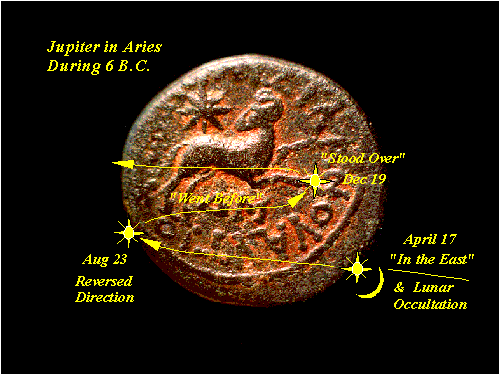
Holiday Affair From a site recommended by oOMisfitOo: In The Star of Bethlehem: The Legacy of the Magi (Rutgers University Press, 1999), Michael R. Molnar explains how the purchase of a $50 Roman coin led him to discover the real date of Jesus's birth. The coin that provided the clue portrayed Aries the Ram looking back at a star. From Molnar's own site, Star of Bethlehem: "On April 17, 6 BC, two years before King Herod died, Jupiter emerged in the east as a morning star in the sign of the Jews, Aries the Ram." Therefore, according to Molnar, today is Christmas. Accordingly, let us sing a (slightly improved) carol in memory of the late Murray L. Bob (see April 15 entries): God rest ye, merry gentleman. Let us also voice a rousing chorus of one of my personal all-time favorites, in memory of a film director (see previous entry), who gave us a vision of Robert Mitchum (Ram) and Sarah Miles ("Lady Caroline Lamb") united in marriage (Ding-Dong): Who put the Ram in the Why, David Lean, of course. Update of April 21, 2003: When You Care Enough "Jan Scott, 88, a television art director and production designer who had won 11 Emmy Awards, died April 17 at her home in Hollywood Hills, Calif. The cause of death was not reported. She started working in television in the 1950s and earned her first Emmy nomination in 1956 for a "Hallmark Hall of Fame" production. Her first Emmy Award came in 1968 for her work as an art director for "Kismet," which appeared on ABC. Her last Emmy was awarded in 1989 for "I'll Be Home for Christmas," on NBC." -- The Washington Post, April 21, 2003 |
|
Wednesday, April 16, 2003 |
Keeping Time Part I From Puck of Pook's Hill, by Rudyard Kipling The Theatre lay in a meadow.... a large old Fairy Ring of darkened grass, which was the stage.... Shakespeare himself could not have imagined a more suitable setting for his play.... Their play went beautifully.... They were both so pleased that they acted it three times over from beginning to end before they sat down in the unthistly centre of the Ring to eat..., This was when they heard a whistle among the alders on the bank, and they jumped. The bushes parted. In the very spot where Dan had stood as Puck they saw a small, brown, broad-shouldered, pointy-eared person.... He stopped, hollowed one hand round his ear, and, with a wicked twinkle in his eye, went on:
The children looked and gasped. The small thing - he was no taller than Dan's shoulder - stepped quietly into the Ring. "I'm rather out of practice," said he; "but that's the way my part ought to be played." Still the children stared at him -- from his dark blue cap, like a big columbine flower, to his bare, hairy feet. At last he laughed. "Please don't look at me like that. It isn't my fault. What else could you expect?" he said. "We didn't expect anyone," Dan answered slowly. "This is our field." "Is it?" said their visitor, sitting down. "Then what on Human Earth made you act Midsummer Night's Dream three times over, on Midsummer Eve, in the middle of a Ring, and under -- right under one of my oldest hills in Old England? Pook's Hill -- Puck's Hill -- Puck's Hill -- Pook's Hill! It's as plain as the nose on my face." ".... You've done something that Kings and Knights and Scholars in old days would have given their crowns and spurs and books to find out. If Merlin himself had helped you, you couldn't have managed better!" Part II From "East Coker," by T. S. Eliot In that open field Part III From The Real World, by Anonymous: Tonight is the night of the Paschal full moon, which is used to calculate the date of Easter. On this date in 1871, playwright John Millington Synge was born. He wrote of "the wonderfully tender and searching light that is seen only in Kerry." On this date in 1991, director David Lean died. He showed us the tender and searching light of Kerry in "Ryan's Daughter." The summer harvest festival of County Kerry is known as "Puck Fair." The song "The Kerry Dance" includes the following lyrics:
Tonight's site music is "The Kerry Dance" arranged in a form appropriate to the spirit of "East Coker" and the spirit of Puck Fair. Eliot and Eleanor Cameron were both concerned with "keeping time" in a very deep sense. For more on this subject, see my previous entries for April 2003, Poetry Month. See, too, Midsummer Eve's Dream. |