|
Thursday, October 31, 2002 |
|
Plato's From The Unknowable (1999), by Gregory J.
Chaitin, who has written extensively about his constant, which he calls
Omega: "What is Omega? It's just the diamond-hard distilled and
crystallized essence of mathematical truth! It's what you get when you
compress tremendously the coal of redundant mathematical
truth..." Charles H. Bennett has written about Omega as a
cabalistic number. Here is another result with religious associations which,
historically, has perhaps more claim to be called the "diamond-hard
essence" of mathematical truth: The demonstration in Plato's Meno
that a diamond inscribed in a square has half the area of the square (or
that, vice-versa, the square has twice the area of the diamond). From Ivars Peterson's discussion of Plato's diamond and the
Pythagorean theorem: "In his textbook The History of Mathematics, Roger Cooke of
the University of Vermont describes how the Babylonians might have
discovered the Pythagorean theorem more than 1,000 years before
Pythagoras. Basing his account on a passage in Plato's dialogue Meno,
Cooke suggests that the discovery arose when someone, either for a
practical purpose or perhaps just for fun, found it necessary to
construct a square twice as large as a given square...." From "Halving a Square," a presentation of Plato's diamond by
Alexander Bogomolny, the moral of the story: SOCRATES: And if the truth about reality is always in our soul, the
soul must be immortal.... From "Renaissance Metaphysics and the History of Science," at The John Dee Society
website: Galileo on Plato's diamond: "Cassirer, drawing attention to Galileo's frequent use of the Meno,
particularly the incident of the slave's solving without instruction a
problem in geometry by 'natural' reason stimulated by questioning,
remarks, 'Galileo seems to accept all the consequences drawn by Plato
from this fact.....'" Roger Bacon on Plato's diamond: "Fastening on the incident of the slave in the Meno, which he had
found reproduced in Cicero, Bacon argued from it 'wherefore since this
knowledge (of mathematics) is almost innate and as it were precedes
discovery and learning or at least is less in need of them than other
sciences, it will be first among sciences and will precede others
disposing us towards them.'" It is perhaps appropriate to close this entry, made on All
Hallows' Eve, with a link to a page on Dr. John Dee
himself.
|
|
Wednesday, October 30, 2002 |
|
Aim for the Stars A young Xangan has been hearing voices...
Specifically, the voice of David Bowie singing "Space Oddity"
-- I'm stepping through the door and the voice of Elton John singing
"Rocket Man" -- It's lonely out in space This suggest the following recommended reading for
Devil's Night, 2002: "I aim at the stars, but sometimes I hit
London" often attributed to the rocket-man Wernher von Braun, developer of the V2. It is of
interest to note that the only web page that accurately
discusses this alleged quotation is in Germany, on the site of
the Deutsches Historisches Museum, Berlin. |
|
Tuesday, October 29, 2002 |
|
Our Judeo-Christian
Heritage: Two Sides of the Same
Coin
On this date in 1897, Joseph Goebbels was born.
Related reading: Cabaret Joseph
Goebbels
|
|
Saturday, October 26, 2002 |
|
From On All Hallows' Eve, by Grace Chetwin:
In honor of Grace Chetwin, this site's music is now a theme more suitable for All Hallows' Eve. 11:59 pm Comments on this post:
|
|
Saturday, October 26, 2002 |
|
Midnight in the
Garden From a Nina Simone Lyrics site: Pack up all my cares and woe, For more on the eight-point star of Venus,
|
|
Friday, October 25, 2002 |
|
Wrestling Pablo
Picasso The old men know when an old man dies. |
|
Friday, October 25, 2002 |
|
From an art
quotes website: Dore Ashton's Picasso on Art -- "We all know that Art is not truth. "You have to believe we are magic." Soul Kiss 1991
Yearbook
Magic Square Book Title |
|
Friday, October 25, 2002 |
|
Trinity
The last two days were eventful on the obituary
front. See below for a reasonably holy trinity of lives: See also Bonaventure's the graves list for Bonaventure Cemetery in Savannah, |
|
Friday, October 25, 2002 |
|
xx 12:00 am |
|
Thursday, October 24, 2002 |
|
Green Music From the online New York Times, Oct. 24, 2002: "On the Town" Opens in New York, 1944 Adolph Green, Betty Comden, Leonard
Bernstein |
|
Thursday, October 24, 2002 |
|
Death of a Chieftain Derek Bell, Harpist of the Chieftains, 66, Is
Dead Derek Bell rehearsing for "Derek Bell, the versatile harpist with The Chieftains, one of the most celebrated Irish
traditional bands, died on Oct. 15 in his hotel in Phoenix. He was
66 and lived in Belfast." In honor of Bell, this site's music is, the following classic tune by Turlough O'Carolan,
|
|
Thursday, October 24, 2002 |
|
A (Very Brief) Course
of In honor of today's anniversary of the 1873 birth of Edmund Taylor Whittaker, here are some references to a
topic that still interests some mathematicians of today. From A Course of Modern Analysis, by E.
T. Whittaker and G. N. Watson, Fourth Edition, Cambridge University
Press, 1927, reprinted 1969: Section 20.7 "...the fact, that x and
y can be expressed as one-valued functions of the
variable z, makes this variable z of considerable
importance... z is called the uniformizing variable of
the equation.... When the genus of the algebraic curve f(x,y) = 0
is greater than unity, the uniformisation can be effected by means of what
are known as automorphic functions. Two classes of such functions
of genus greater than unity have been constructed, the first by
Weber...(1886), the second by Whittaker...(1898)...." The topic of uniformisation of algebraic curves has appeared frequently
lately in connection with Wiles's attack on Fermat's Last Theorem. See,
for instance, Lang's 1995 AMS Notices
article "Shimura's... insight was that the ordinary modular functions for a
congruence subgroup of
SL2(Z) suffice to
uniformize elliptic curves defined over the rationals." "The property of an elliptic curve [over Q] of being
parameterized by modular functions is one way of defining a
modular elliptic curve, and the Taniyama-Shimura conjecture
asserts that every elliptic curve is modular." For a deeper discussion of uniformisation in the context of Wiles's
efforts, see "Elliptic curves and p-adic uniformisation," by H. Darmon,
1999. For a more traditional approach to uniformisation, see "On the
uniformisation of algebraic curves," by Yu. V. Brezhnev (24 May,
2002), which cites two of Whittaker's papers on automorphic functions
(from 1898 and 1929) and a 1930 paper, "The uniformisation of algebraic
curves," by J. M. Whittaker, apparently E. T. Whittaker's son. |
|
Wednesday, October 23, 2002 |
|
Bright Star From the website of Karey Lea
Perkins: "The truth is that man's capacity for symbol-mongering in
general and language in particular is…intimately part and parcel of his
being human, of his perceiving and knowing, of his very consciousness…"
-- Walker Percy, The Message in the Bottle, Farrar,
Strauss, and Giroux, 1975 Today's New York Times story on Richard Helms, together with my
reminiscences in the entry that follows it below, suggest the following
possibility for symbol-mongering:
This comparison is suggested by the Spanish word "Lucero" (the name, which means "Bright Star," of the girl in Cuernavaca mentioned two entries down) and by the following passage from Robert A. Heinlein's classic novel, Glory Road:
The C.I.A. star above is from that organization's own site. The star of Venus (alias Aster, alias Ishtar) is from Symbols.com, an excellent site that has the following variations on the Bright Star theme:
See also my notes The Still Point and the Wheel and Midsummer Eve's Dream. Both notes quote Robinson Jeffers: "For the essence and the end -- Robinson Jeffers, "Point Pinos and Point Lobos," Place the eightfold star in a circle, and you have the Buddhist Wheel of Life:
|
|
Wednesday, October 23, 2002 |
|
In Memoriam From the New York Times of Oct. 23, 2002: Richard M. Helms Dies at 89; Richard M. Helms, a former C.I.A. director, died
today. An urbane and dashing spymaster, Mr. Helms began his
career with a reputation as a
truthteller...." Needless to say, that didn't last. I encountered this story this
afternoon, after writing the entry below this morning. The site I
described there, http://www.geocities.com/Athens/2740/, reads as though it were compiled by an intelligence officer, and may
serve as a small memorial to Helms. |
|
Wednesday, October 23, 2002 |
|
Eleven Years Ago Today... On October 23, 1991, I placed in my (paper) journal various entries
that would remind me of the past... of Cuernavaca, Mexico, and a girl I
knew there in 1962. One of the entries dealt with a book by Arthur
Koestler, The Challenge of Chance. A search for links related to
that book led to the following site, which I find very interesting: http://www.geocities.com/Athens/2740/. This is a commonplace-book site, apparently a collection of readings
for the end of the century and millennium. No site title or owner is
indicated, but the readings are excellent. Accepting the challenge of
chance, I reproduce one of the readings... The author was not writing
about Cuernavaca, but may as well have been. From Winter's Tale, Harcourt Brace
(1983):
|
|
Tuesday, October 22, 2002 |
|
Introduction to From Dr. Mac's Cultural Calendar for Oct. 22:
In honor of Deneuve and of George W. Mackey, author of the
classic 156-page essay, "Harmonic analysis* as the
exploitation of symmetry† — A historical survey" (Bulletin of the American
Mathematical Society (New Series), Vol. 3, No. 1, Part 1 (July 1980), pp.
543-698), this site's music is, for the time being, "Good Vibrations."
For more on harmonic analysis, see "Group Representations
and Harmonic Analysis from Euler to Langlands," by Anthony W. Knapp, Part I
and Part II.
* For "the simplest non-trivial model for harmonic
analysis," the Walsh functions, see F. Schipp et. al., Walsh Series: An Introduction to
Dyadic Harmonic Analysis, Hilger, 1990. For Mackey's
"exploitation of symmetry" in this context, see my note Symmetry of Walsh Functions, and also the footnote below.
† "Now, it is no easy
business defining what one means by the term conceptual.... I think we can
say that the conceptual is usually expressible in terms of broad
principles. A nice example of this comes in form of harmonic analysis,
which is based on the idea, whose scope has been shown by George Mackey...
to be immense, that many kinds of entity become easier to handle by
decomposing them into components belonging to spaces invariant under
specified symmetries."
-- The importance of mathematical
conceptualisation, 1:16 am
Comments on this post:by David Corfield, Department of History and Philosophy of Science, University of Cambridge
|
|
Monday, October 21, 2002 |
|
Birthdays for a Small Planet Today's birthdays: The entry below, "Theology for a Small Planet," sketches an issue that
society has failed to address since the fall of 1989, when it was first
raised by the Harvard Divinity Bulletin. In honor mainly of Ursula K. Le Guin, but also of her fellow authors
above, I offer Le Guin's solution. It is not new. It has been ignored
mainly because of the sort of hateful and contemptible arrogance shown
by Here is an introduction to the theology that should replace the ridiculous and
outdated Semitic religions. "Scholarly translators of the Tao Te Ching, as a manual for rulers, use
a vocabulary that emphasizes the uniqueness of the Taoist 'sage,' his
masculinity, his authority. This language is perpetuated, and degraded, in
most popular versions. I wanted a Book of the Way accessible to a
present-day, unwise, unpowerful, and perhaps unmale reader, not seeking
esoteric secrets, but listening for a voice that speaks to the soul. I
would like that reader to see why people have loved the book for 2500
years. It is the most lovable of all the great religious texts, funny, keen,
kind, modest, indestructibly outrageous and inexhaustibly refreshing. Of
all the deep springs, this is the purest water. To me it is also the
deepest spring." The valley spirit never dies The mystery, Forever this endures, forever.
|
|
Monday, October 21, 2002 |
|
Theology for a Small Planet THE HARVARD DIVINITY BULLETIN for Fall 1989 contained a special
section, "Theology for a Small Planet," with a number of short articles by
divinity school faculty and others addressing environment and theology.
From The Harvard Divinity Bulletin, XIX, 3
(1989): "
While Angels Weep..."
Timothy C. Weiskel ...We continue to strut and prance about with a sense of supreme
self-importance as if all creation were put in place for our
benefit.... From where does such arrogance come? How can our beliefs be so far out
of touch with our knowledge? How can we maintain such an inflated sense of
personal, collective and species self-importance? .... The answer, in part, is that Western religious traditions have
generated and sustained this petty arrogance.... Western cultures have come to believe religiously in their own power,
importance and capacity to dominate and control nature. Some religious groups have transcribed and elaborated creation myths
which serve to ennoble and authorize this illusion of domination. In these
myths a supreme and omnipotent God figure (usually portrayed as male) is
said to have created humankind and enjoined this species to be "fruitful
and multiply" and "subdue" the earth. Moreover, it is often a feature of
these traditions that selected human groups come to feel entitled,
empowered or specially ordained by such a God to be his "chosen people."
Through their actions and history, it is believed, this God allegedly
manifested his intent for the planet as a whole. In short, human groups
created God in their own image and generated divine narratives that
accorded themselves privileged status in the whole of creation.... ...science itself has become the cornerstone of modern mankind's
religiously held belief in human control. In our era, this kind of
arrogant science, like the self-important religious traditions of the
past, must be questioned.... In short, we all stand in need of a theology for a small
planet.
|
|
Sunday, October 20, 2002 |
|
Birthdays for a Small Planet Today's birthdays: |
|
Sunday, October 20, 2002 |
|
ART WARS: Music for Henry HomerTheBrave has provided a link to an excellent Tom Tomorrow strip dealing with
Ford's Feb. 23, 1997, commercial-free sponsorship of "Schindler's List" on
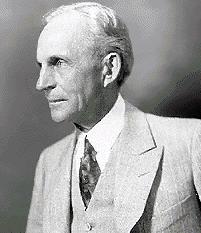
TV. To honor Henry Ford, founder of Ford Motor Co. and author of
which includes a chapter titled Jewish Jazz Becomes Our National Music, this site's music is now Rhapsody in Blue. For more on art and power, see the article on Cardinal Richelieu by Deborah Weisgall in today's New York Times.
|
|
Saturday, October 19, 2002 |
|
What is
Truth? My state of mind My state of mind In light of the entry below ("Mass Confusion," Oct. 19, 2002), some
further literary reflections seem called for. Since this is, after all, a
personal journal, allow me some personal details... Yesterday I picked up some packages, delivered earlier, that included
four books I had ordered. I opened these packages this morning before
writing the entry below; their contents may indicate my frame of mind when
I later read this morning's New York Times story that prompted my remarks.
The books are, in the order I encountered them as I opened packages, Taken as a whole, this quartet of books supplies a rather powerful
answer to the catechism question of Pontius Pilate, "What is truth?"...
The answer, which I pray will some day be delivered at heaven's gate to
all who have lied in the name of religion, is, in Jack Nicholson's classic
words, You can't handle the
truth!
|
|
Saturday, October 19, 2002 |
|
Mass Confusion From Garrison Keillor's Writer's Almanac: "It's the birthday of [novelist] John le Carré, born
David John Moore Cornwell, in Poole, England (1931).... His father was a
con artist who wanted his two sons to be lawyers because he thought it
would come in handy. He sent them to boarding school, where they learned
to speak and act like members of the British upper-class, but when they
went home they knew they might have to bail him out of jail, or spend the
holidays with a bunch of crooks. He learned German and became a spy, but
said he 'never did anything to alter the world order.'" From The New York Times of Oct. 19, 2002: "...victims of sexually abusive priests expressed despair and outrage
yesterday at the Vatican's refusal to endorse the American bishops' zero
tolerance policy.... 'This certainly sends the whole thing into wild confusion,' said Thomas
C. Fox, publisher of The National Catholic Reporter, an independent
newsweekly that helped uncover the church's sexual abuse problem nearly
two decades ago. 'It seems we haven't moved anywhere in finding a
resolution, and that makes it terribly, terribly painful. It's like this
nightmare simply won't end.'" Other classic Catholic quotations... 1. "He ain't heavy, he's
my brother." 2. "What is truth?" 3. "Writers often cry
'Truth! Truth at all costs!' Some are sincere. Others are hypocrites. They
use the truth, distort it, exploit it, for an ulterior purpose. Let us
consider the case of John Cornwell...." -- Inside the Vatican
John Cornwell recently wrote a classic study of the Roman Catholic
Church, Hitler's Pope* (Viking Press, October 1999).
According to the Daily Catholic and to Inside the Vatican, Cornwell is the brother of of spy
novelist John le Carré (born David Cornwell). An article in the Jerusalem Post, however, seems to say that the spy
novelist had only one brother, whose name was in fact Tony, not
John. A Sydney Morning Herald article confirms this version of the
Cornwell family history. Finally, once one learns from the Sydney
article that David Cornwell's father's name was Ronnie, a perfected Google
search reveals a Literary Encyclopedia article that seems to
demonstrate conclusively that the Roman Catholic sources cited above lied
about John Cornwell's family background. Of course, this may be
wrong... Those who wish may investigate further. * (I personally prefer Hitler's own remarks on the Church's "static pole," but tastes differ.) |
|
Friday, October 18, 2002 |
|
Readings for the Oct. 18 A fellow Xangan is undergoing a spiritual crisis. Well-meaning friends
are urging upon her all sorts of advice. The following is my best effort
at religious counsel, meant more for the friends than for the woman in
crisis. Part I... Wallace
Stevens From Brewer's Dictionary of Phrase and Fable: Ox
Emblematic of St. Luke. It is one of the four figures which made up
Ezekiel's cherub (i. 10). The ox is the emblem of the priesthood.... The dumb ox. St. Thomas Aquinas; so named by
his fellow students at Cologne, on account of his dulness and taciturnity.
(1224-1274.) From Wallace Stevens, "The
Latest Freed Man": It was how the sun came shining into his room:
Part II... The Rosy Cross Readings: James Joyce and Albert Einstein join in a metaphysical investigation. "He recited from the anonymous Muses Threnody of 1648: For we be brethren of the Rosy Cross Part III... Stevens Again A major critical work on Wallace Stevens that is not unrelated to the above three works on the Rosicrucian tradition: Leonora Woodman, Stanza My Stone: Wallace Stevens and the Hermetic Tradition, West Lafayette, Indiana: Purdue University Press, 1983 From the Department of English, Purdue University: Leonora Woodman came to Purdue in 1976. In 1979, she became Director of Composition, a position she held until 1986.... At the time of her death in 1991, she was in the midst of an important work on modernist poetry, Literary Modernism and the Fourth Dimension: The Visionary Poetics of D.H. Lawrence, H.D., and Hart Crane. For more on Gnostic Christianity, see
|
|
Thursday, October 17, 2002 |
|
Slieve na mBan The view in the entry below is from Slievenamon or Slieve/Sliabh na
mBan, a mountain in County Tipperary. From an interview with Dr. Mary McAuliffe, an historian who
specializes in women's history of the medieval period in Ireland: "It seems that there were no witchcraft trials in the Gaelic Irish
areas. There isn't a tradition of witchcraft in the Gaelic Irish
communities because people believed in magical women.... Another
interesting thing about the... case was that it happened in Slieve na
mBan, where the barrier between this world and the next is thinnest.
Slieve na mBan means the 'mountain of women.'" From Finn's Household in Part II Book I of and of the Fianna of Ireland, "Where do you come from, little one, yourself and your sweet music?" said Finn. "I am come," he said, "out of the place of the Sidhe in Slieve-nam-ban...." 8:42 am Comments on this post:
|
|
Thursday, October 17, 2002 |
|
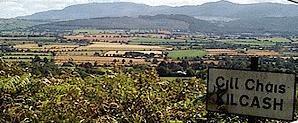
To the Green Lady View from the slopes of Slieve na
mBan In honor of the relationship between theology and literature,
of the Green Lady of C. S. Lewis, and of... John Flood BA,
MA (NUI), Ph.D. (Dublin) ... this site's music is now Caoine Cill Chais, The Lament for Kilcash.
|
|
Wednesday, October 16, 2002 |
|
Garden Party Revisited From the Archives: On this
date in 1992,
The crowd was acting in disapproval of O’Connor’s tearing up a picture of Pope John Paul II on 'Saturday Night Live' October 3, 1992." Go mbeidh rincí fada ag gabháil
timpeall,
|
|
Wednesday, October 16, 2002 |
|
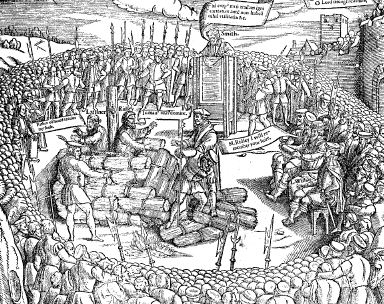
"History is a
nightmare "Be of good cheer, Master Ridley, and play the man, for we shall this
day light such a
candle in England as I trust by God's grace shall never be put
out."
|
|
Wednesday, October 16, 2002 |
|
Hitler's Still Point For the views of the noted philosopher Adolf Hitler on the Roman
Catholic Church, click here.
|