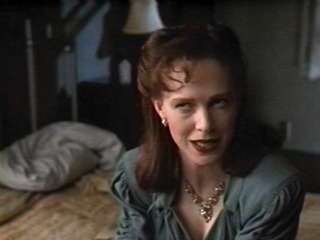
Today's birthday: From Dr. Mac’s Cultural Calendar: "Film star Deborah Kerr was born on this day in 1921.
Deborah Kerr
Her signature film is Night of the Iguana."

Is he
kidding?
|
Monday, September 30, 2002 |
Cal References: |
|
Monday, September 30, 2002 |
Today's birthday: From Dr. Mac’s Cultural Calendar: "Film star Deborah Kerr was born on this day in 1921.
|
|
Monday, September 30, 2002 |
Meditation for the Feast of From a Xanga journalist in the wee small hours: Sara Teasdale For your consideration: From the twilight zone: From the school zone: |
|
Sunday, September 29, 2002 |
Angel Night In honor of Ellis Larkins, jazz musician, who died on Sunday, September 29, 2002, the feast of Saint Michael and All Angels, here is the best midi rendition I can find of the classic melody "Angel Eyes." (This entry was actually made on October 3, 2002, but I had saved a place for it on Michaelmas. The midi is from Wesley Dick's Juke Box page. For some classic New Orleans funeral music, go to Dick's home page.) |
|
Sunday, September 29, 2002 |
New from Miracle Pictures "Fear not, maiden, your prayer is heard. Chapter 1 - Transcendental Numbers In the seventh grade they were studying "pi." It was a Greek letter that looked like the architecture at Stonehenge, in England: two vertical pillars with a crossbar at the top. If you measured the circumference of a circle and then divided it by the diameter of the circle, that was pi. At home, Ellie took the top of a mayonnaise jar, wrapped a string around it, straightened the string out, and with a ruler measured the circle's circumference. She did the same with the diameter, and by long division divided the one number by the other. She got 3.21. That seemed simple enough.
that the shape of every circle in the world was connected with this series of fractions. How could circles know about fractions? She was determined to learn The book said something else: pi was called a "transcendental" number. There was no equation with ordinary numbers in it that could give you pi unless it was infinitely long. She had already taught herself a little algebra and understood what this meant. And pi wasn't the only transcendental number. In fact there was an infinity of transcendental numbers. More than that, there were infinitely more transcendental numbers that ordinary numbers, even though pi was the only one of them she had ever heard of. In more ways than one, pi was tied to infinity. Chapter 24 - The Artist's Signature The anomaly showed up most starkly in Base 2 arithmetic, where it could be written out entirely as zeros and ones. Her program reassembled the digits into a square raster, an equal number across and down. Hiding in the alternating patterns of digits, deep inside the transcendental number, was a perfect circle, its form traced out by unities in a field of noughts. The universe was made on purpose, the circle said. In whatever galaxy you happen to find yourself, you take the circumference of a circle, divide it by its diameter, measure closely enough, and uncover -- another circle, drawn kilometers downstream of the decimal point. There would be richer messages farther in. It doesn't matter what you look like, or what you're made of, or where you come from. As long as you live in this universe, and have a modest talent for mathematics, sooner or later you'll find it. It's already here. It's inside everything. You don't have to leave your planet to find it. In the fabric of space and in the nature of matter, as in a great work of art, there is, written small, the artist's signature. Standing over humans, gods, and demons... there is an intelligence that antedates the universe. The circle had closed. She found what she had been searching for. Song lyric not in Sagan's book: Will the circle be unbroken "Contact," the film:
The above conclusion to Sagan's book is perhaps the stupidest thing by an alleged scientist that I have ever read. As a partial antidote, I offer the following.
| |||||||||||||||||||||||||||||||||||
|
Saturday, September 28, 2002 |
In honor of Degas, of the petite danseuse Leslie Caron, and of the new permanent sculpture exhibition opening Sunday at the National Gallery, this site's music, at least for the weekend, is now Gershwin. 5:55 am |
|
Friday, September 27, 2002 |
ART WARS Edgar Degas died in Paris on September 27, 1917.
|
|
Friday, September 27, 2002 |
ART WARS for the clueless Someone's weblog entry for 9/27/02: [27 Sep 2002|08:33pm]
"After a while you learn to cope with things like seeing your dead grandmother crawling up your leg with a knife in her teeth." My comment:
How to Handle a Thompson "What it all boiled down to really was everybody giving everybody else a hard time for no good reason whatever... You just couldn't march to your own music. Nowadays, you couldn't even hear it... It was lost, the music which each person had inside himself, and which put him in step with things as they should be." -- The Grifters, Ch. 10, 1963, by "The Old Man's still an artist |
|
Friday, September 27, 2002 |
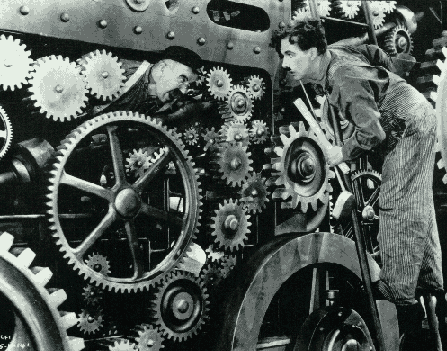
Modern Times ART WARS September 27, 2002: From the Bulletin of the American Mathematical Society, October 2002, p. 563: "To produce decorations for their weaving, pottery, and other objects, early artists experimented with symmetries and repeating patterns. Later the study of symmetries of patterns led to tilings, group theory, crystallography, finite geometries, and in modern times to security codes and digital picture compactifications. Early artists also explored various methods of representing existing objects and living things. These explorations led to.... [among other things] computer-generated movies (for example, Toy Story)." -- David W. Henderson, Cornell University From an earlier log24.net note:
ART WARS September 12, 2002 John Frankenheimer's film "The Train" -- Und was fur ein Bild des Christentums From Today in Science History: Locomotion No. 1
From Inventors World Magazine: Some inventions enjoyed no single moment of birth. For the steam engine or the motion-picture, the birth-process was, on close examination, a gradual series of steps. To quote Robert Stevenson: 'The Locomotive is not the invention of one man, but a nation of mechanical engineers.' George Stevenson (no relation) probably built the first decent, workable steam engines... Likewise the motion camera developed into cinema through a line of inventors including Prince, Edison and the Lumière brothers, with others fighting for patents. No consensus exists that one of these was its inventor. The first public display was achieved by the Lumière brothers in Paris. From my log24.net note of Friday, Sept. 13th: "Dante compares their dance and song to God’s bride on earth, the Church, when she answers the morning bells to rise from bed and 'woo with matins song her Bridegroom's love.' Some critics consider this passage the most 'spiritually erotic' of all the one hundred cantos of the Comedy." From my log24.net note of September 12: Everybody's doin' a brand new dance now... |
|
Friday, September 27, 2002 |
The Dark Lady O dark dark dark. They all go into the dark.... From a list of people who died during 1991:
"Is that the name? Well! Well! Well! That's a fine old name in the west here." "It is so, indeed," said the landlady. "For they were kings and queens in Connaught before the Saxon came. And herself, sir, has the face of a queen, they tell me." "They're right".... -- John Collier, "The Lady on the Grey," Fancies and Goodnights, Bantam paperback, first printing, March 1953, page 131 See also my note of Friday, September 20, 2002. "Madame, all stories, if continued far enough, end in death, and he is no true-story teller who would keep that from you." "Love is strong as death." -- Song of Songs 8:6 "I'm not even sure he has a heart. (...) He's an American." "There is never any ending to Paris...." |
|
Thursday, September 26, 2002 |
Birthday of T. S. Eliot, Time past and time future In time the Rockies may crumble
Today is also the birthday of Martin Heidegger, author of Being and Time. In honor of Heidegger and his girlfriend Hannah Arendt, I looked for a rendition of "Our Love is Here to Stay" on the glockenspiel, but could not find one. The birthday song "Las Mañanitas" will therefore have to do for Tom, George, Olivia, and Martin, as well as Michael and Catherine (see Sept. 25 note below). 2:36 pm |
|
Wednesday, September 25, 2002 |
Birthday of Michael Douglas To honor Michael's adventures in "Romancing the Stone" (filmed near Veracruz, Mexico) and Catherine's impressive performance as the daughter of Zorro, this site's background music is now the Mexican birthday song, "Las Mañanitas," as performed at Classical Guitar Midi Archives. For the lyrics, courtesy of Dale Hoyt Palfrey, De las estrellas del cielo From the stars of the heavens Update of September 28: In honor of Degas, of the petite danseuse Leslie Caron, and of the opening this Sunday of the permanent sculpture exhibition at the National Gallery, this site's background music has been changed, at least for the weekend, to Gershwin. |
|
Tuesday, September 24, 2002 |
The Shining of Lucero From Broken Symmetries, by Paul Preuss, 1983: Peter [Slater] had never thirsted after "hidden variables" to explain what could not be pictured. Mathematical relationships were enough to satisfy him, mere formal relationships which existed at all times, everywhere, at once. It was a thin nectar, but he was convinced it was the nectar of the gods. (Ch. 16) |
|
Tuesday, September 24, 2002 |
The Shining of Lucero From my journal note, "Shining Forth": The Spanish for "Bright Star" is "Lucero." The Eye of the Beholder: When you stand in the dark and look at a star a hundred light years away, not only have the retarded light waves from the star been travelling for a hundred years toward your eyes, but also advanced waves from your eyes have reached a hundred years into the past to encourage the star to shine in your direction. -- John Cramer, "The Quantum Handshake" From Broken Symmetries, by Paul Preuss, 1983: He'd toyed with "psi" himself.... The reason he and so many other theoretical physicists were suckers for the stuff was easy to understand -- for two-thirds of a century an enigma had rested at the heart of theoretical physics, a contradiction, a hard kernel of paradox.... Peter [Slater] had never thirsted after "hidden variables" to explain what could not be pictured. Mathematical relationships were enough to satisfy him, mere formal relationships which existed at all times, everywhere, at once. It was a thin nectar, but he was convinced it was the nectar of the gods.
Those so-called crazy psychics were too sane, that was their problem -- they were too stubborn to admit that the universe was already more bizarre than anything they could imagine in their wildest dreams of wizardry. (Ch. 16) From Secret Passages, by Paul Preuss, 1997: Minakis caught up and walked beside him in silence, moving with easy strides over the bare ground, listening as Peter [Slater] spoke. "Delos One was ten years ago -- quantum theory seemed as natural as water to me then; I could play in it without a care. If I'd had any sense of history, I would have recognized that I'd swallowed the Copenhagen interpretation whole." "Back then, you insisted that the quantum world is not a world at all," Minakis prompted him. "No microworld, only mathematical descriptions." "Yes, I was adamant. Those who protested were naive -- one has to be willing to tolerate ambiguity, even to be crazy." "Bohr's words?" "The party line. Of course Bohr did say, 'It is wrong to think that the task of physics is to find out how nature is. Physics concerns what we can say about nature.' Meaning that when we start to talk what sounds like philosophy, our colleagues should rip us to pieces." Peter smiled. "They smell my blood already." "We are standing where Apollo was born," Minakis said. "Leto squatted just there, holding fast to a palm tree, and after nine days of labor gave birth to the god of light and music...." From On Beauty, by Elaine Scarry, "Homer sings of the beauty of particular things. Odysseus, washed up on shore, covered with brine, having nearly drowned, comes upon a human community and one person in particular, Nausicaa, whose beauty simply astonishes him. He has never anywhere seen a face so lovely; he has never anywhere seen any thing so lovely.... I have never laid eyes on anyone like you, From Secret Passages, by Paul Preuss, 1997: "When we try to look inside atoms," Peter said, "not only can we not see what's going on, we cannot even construct a coherent picture of what's going on." "If you will forgive me, Peter," Minakis said, turning to the others. "He means that we can construct several pictures -- that light and matter are waves, for example, or that light and matter are particles -- but that all these pictures are inadequate. What's left to us is the bare mathematics of quantum theory." .... "Whatever the really real world is like, my friend, it is not what you might imagine." Minakis turned away from the view of the sunset. "Are you familiar with John Cramer's transactional interpretation of quantum mechanics?" "No I'm not." "Read Cramer. I'll give you his papers. Then we can talk." From John Cramer, "The Quantum Handshake": Advanced waves could perhaps, under the right circumstances, lead to "ansible-type" FTL communication favored by Le Guin and Card.... For more on Le Guin and Card, see my journal notes below. For more on the meaning of "lucero," see the Wallace Stevens poem "Martial Cadenza." |
|
Tuesday, September 24, 2002 |
The Group "When shall we four meet again?" This phrase was suggested by a recent weblog entry recounting how the author hesitated to meet for lunch with three of her friends because, while acquainted in pairs, the four had never met before as a group. It was not clear how the previous relationships would play out in this larger context. The author suggested that her readers see the introduction to Orson Scott Card's Speaker for the Dead for details. I did, and found the following: "The idea of community.... This was not easy. Most novels get by with showing the relationships between two or, at the most three characters. This is because the difficulty of creating a character increases with each new major character that is added to the tale. Characters, as most writers understand, are truly developed through their relationships with others. If there are only two significant characters, then there is only one relationship to be explored. If there are three characters, however, there are four relationships: Between A and B, between B and C, between C and A, and finally the relationship when all three are together." This implies that when four people meet, there are 11 relationships going on: six from pairs, four from triplets, and one from the quartet. It gets worse... "Even this does not begin to explain the complexity -- for in real life, at least, most people change, at least subtly, when they are with different people. The changes can be pretty major.... So when a storyteller has to create three characters, each different relationship requires that each character in it must be transformed, however subtly, depending on how the relationship is shaping his or her present identity. Thus, in a three-character story, a storyteller who wishes to convince us of the reality of these characters really has to come up with a dozen different personas, four for each of them." Therefore when four people meet, there are actually 44 personas to account for. This makes the stateroom scene from "A Night at the Opera" look underpopulated. See also my journal note "Metaphysics for Tina." |
|
Sunday, September 22, 2002 |
Force Field of Dreams Metaphysics and chess in today's New York Times Magazine: Joss Whedon, creator of a new TV series -- "I'm a very hard-line, angry atheist" and From "Check This," by Wm. Ferguson: Garry Kasparov on chess -- "When the computer sees forced lines, Putting these quotations together, one is tempted to imagine God having a little game of chess with Whedon, along the lines suggested by C. S. Lewis: As Lewis tells it the time had come for his "Adversary [as he was wont to speak of the God he had so earnestly sought to avoid] to make His final moves." (C. S. Lewis, Surprised by Joy, Harcourt, Brace, and World, Inc., 1955, p. 216) Lewis called them "moves" because his life seemed like a chess match in which his pieces were spread all over the board in the most disadvantageous positions. The board was set for a checkmate.... For those who would like to imagine such a game (God vs. Whedon), the following may be helpful. George Steiner has observed that The common bond between chess, music, and mathematics may, finally, be the absence of language. This quotation is apparently from Fields of Force: George Steiner as quoted in a review of his book Grammars of Creation: "I put forward the intuition, provisional and qualified, that the 'language-animal' we have been since ancient Greece so designated us, is undergoing mutation." The phrase "language-animal" is telling. A Google search reveals that it is by no means a common phrase, and that Steiner may have taken it from Heidegger. From another review, by Roger Kimball: In ''Grammars of Creation,'' for example, he tells us that ''the classical and Judaic ideal of man as 'language animal,' as uniquely defined by the dignity of speech . . . came to an end in the antilanguage of the death camps.'' This use of the Holocaust not only gives the appearance of establishing one's credentials as a person of great moral gravity; it also stymies criticism. Who wants to risk the charge of insensitivity by objecting that the Holocaust had nothing to do with the ''ideal of man as 'language animal' ''? Steiner has about as clear an idea of the difference between "classical" and "Judaic" ideals of man as did Michael Dukakis. (See my notes of September 9, 2002.) Clearly what music, mathematics, and chess have in common is that they are activities based on pure form, not on language. Steiner is correct to that extent. The Greeks had, of course, an extremely strong sense of form, and, indeed, the foremost philosopher of the West, Plato, based his teachings on the notion of Forms. Jews, on the other hand, have based their culture mainly on stories... that is, on language rather than on form. The phrase "language-animal" sounds much more Jewish than Greek. Steiner is himself rather adept at the manipulation of language (and of people by means of language), but, while admiring form-based disciplines, is not particularly adept at them. I would argue that developing a strong sense of form -- of the sort required to, as Lewis would have it, play chess with God -- does not require any "mutation," but merely learning two very powerful non-Jewish approaches to thought and life: the Forms of Plato and the "archetypes" of Jung as exemplified by the 64 hexagrams of the 3,000-year-old Chinese classic, the I Ching. For a picture of how these 64 Forms, or Hexagrams, might function as a chessboard, Other relevant links: "As you read, watch for patterns. Pay special attention to imagery that is geometric..." and |
|
Friday, September 20, 2002 |
Music for Patricias On this date in 1892, actress/author Patricia Collinge was born in Dublin, Ireland. She is not to be confused with the Patricia Collinge of In honor of both Patricias, the backgound music of this site is no longer "Baby, Baby, Don't Get Hooked on Me." It is, instead, a tune that fans of James Joyce may recognize. |
|
Friday, September 20, 2002 |
From the Xanga journal of bluesman43: In Zen tradition, there was a mad poet called Han-shan, or translated, "Cold Mountain." He is pictured dressed in rags and leaning on a broom. When a passerby would dismiss him as a simple lunatic, Han-shan, in one of his many poems, would offer this advice: "Try to make it to Cold Mountain." Now, we don't know for sure where Cold Mountain is or was; we do know that Han-shan had, either personally climbed it and returned, or knew one who had. The title refers to Charles Frazier's |
|
Thursday, September 19, 2002 |
William Golding Author William Golding was born on this date in 1911. Theater review, By Chris Jones "J. M. Barrie's famous 1904 tale of Peter Pan and the Lost Boys is fertile ground for post-modern exploration." See also the Stephen King novel (Forget the movie, which does not even mention William Golding.) For a somewhat more cheerful variation on the Lost Boys theme, see the new Kingdom Hearts game. Of course, mature audiences might react to this Disney production by recalling the classic question, "Why did Mickey Mouse divorce Minnie Mouse?" See also the at the Nobel Prize Foundation site. 4:11 pm |
|
Thursday, September 19, 2002 |
Fermat's Sombrero Mexican singer Vincente Fernandez holds up the Latin Grammy award (L) for Best Ranchero Album he won for "Mas Con El Numero Uno" and the Latin Grammy Legend award at the third annual Latin Grammy Awards September 18, 2002 in Hollywood. REUTERS/Adrees Latif From a (paper) journal note of January 5, 2002: Princeton Alumni Weekly The Sound of Math: How do you make a musical about a bunch of dead mathematicians and one very alive, very famous, Princeton math professor? Wallace Stevens: Consider these lines from Rationalists, wearing square hats, Addendum of 9/19/02: See also footnote 25 in Theological Method and Imagination by Julian N. Hartt |
|
Thursday, September 19, 2002 |
The winner of the self-promotion award Stella! Girl, you're a hot-blooded woman-child And it's warm where you're touchin' me But I can tell by your tremblin' smile You're seein' way too much in me - Mac Davis, 1972 |
|
Wednesday, September 18, 2002 |
Tierra y Cielo: Cuando imaginamos algo en la tierra, este algo también se encuentra bajo el cielo, ante los divinos y junto a los mortales. Esta unidad de ellos designamos la Cuaternidad.... ...Heiddeger nos presenta un ejemplo para aplicar la reflexión: un puente.... El puente coliga según su manera cabe sí tierra y cielo, los divinos y los mortales; es una cosa y lo es en tanto que la coligación de la Cuaternidad que hemos caracterizado antes. El puente coliga la Cuaternidad de tal modo que hace sitio a una plaza. Pero sólo aquello que en sí mismo es un lugar puede abrir espacio a una plaza. Antes del puente, hay muchos sitios que pueden ser ocupados por algo. De entre ellos uno se da como un lugar, y esto ocurre por la propia presencia del puente. Luego, el lugar se da por el puente. El puente es una cosa, coliga la Cuaternidad, pero coliga en el modo de otorgar (hacer sitio a) a la Cuaternidad una plaza. See also HEIDEGGER AND HÖLDERLIN and my note of September 5, |
|
Wednesday, September 18, 2002 |
There she stood in the doorway;
BACKGROUND FROM DON HENLEY "The song is loosely based on a recently published book (actually, I wrote the song before I read the book), The Death of Satan (How Americans Have Lost the Sense of Evil), written by Andrew Delbanco.... ...we land at last smack-dab in the 'culture of irony,' which is where we sit, like Job, in dust and ashes. THE STORY LINE OF THE SONG Satan is quite frustrated because things have gotten so bad that even he is confounded.... He waxes nostalgic about the good ol' days when he hung out in Hollywood with the likes of F. Scott Fitzgerald and Aldous Huxley... [at] the historic Garden of Allah apartment hotel. THE L.A. GARDEN OF ALLAH A 3 1/2-acre hotel complex of Spanish-style bungalows that once stood on Sunset Boulevard.... During its three-decade heyday, the Garden of Allah was the site of robberies, orgies, drunken rages, tense honeymoons, bloody brawls, divorces, suicides, and murder." 3:43 am |
|
Wednesday, September 18, 2002 |
Order of Mystic Mathematicians In honor of David Zindell's "Pilots of the Order of Mystic Mathematicians," today's background music is Ring around the Moon. |
|
Monday, September 16, 2002 |
A Time to Gather Stones Together Readings for Yom Kippur: |